In recent years, technological advancements have transformed the way visually impaired individuals navigate their world. Among these innovations, AI smart glasses for blind users stand out as groundbreaking tools that combine artificial intelligence, computer vision, and wearable technology to provide real-time assistance. These devices are not just assistive tools—they are life-changing companions that enhance independence, mobility, and social interaction.
This comprehensive buying guide will help you understand the different types of AI smart glasses, key features to look for, practical considerations, and tips for selecting the right device to meet individual needs.
Understanding AI Smart Glasses for Blind Users
AI smart glasses are wearable devices equipped with cameras, sensors, and AI-powered software that interpret visual information and provide audio or haptic feedback to users. Unlike traditional mobility aids such as canes or guide dogs, these devices deliver information about the environment in real time, helping users avoid obstacles, recognize objects, read text, and even identify people.
By combining smart glasses technology for blind people with AI, these devices can perform tasks that were previously impossible, such as reading menus, navigating crowded streets, and enhancing social interactions.
Why Invest in AI Smart Glasses for Blind Individuals?
The benefits of AI smart glasses extend far beyond simple convenience. Some of the most significant advantages include:
-
Enhanced Independence
Blind users can perform daily activities without relying heavily on caregivers or guides, gaining confidence in navigating both familiar and unfamiliar environments. -
Improved Safety
Advanced obstacle detection, facial recognition, and environmental awareness reduce accidents and injuries. -
Better Access to Information
Real-time text reading and object recognition empower visually impaired users to interact with printed materials, screens, and public signage. -
Increased Social Engagement
Features such as facial recognition and descriptive scene analysis enable blind individuals to participate more fully in social and professional settings. -
Time and Effort Savings
Automating tasks like object identification or reading frees up mental energy, making daily life less stressful.
Types of AI Smart Glasses for Blind Users
When considering a purchase, it's important to understand the main types of AI smart glasses for blind currently available:
-
Navigation-Focused Glasses
Designed primarily for obstacle detection and spatial orientation, these glasses provide audio or haptic cues to help users navigate streets, buildings, and public spaces safely. -
Text-Reading Glasses
Equipped with optical character recognition (OCR) technology, these devices read printed or digital text aloud, ideal for students, office workers, or anyone who needs regular access to written materials. -
Multi-Functional AI Glasses
The most advanced devices combine navigation, object recognition, facial recognition, and text reading in a single device. While typically more expensive, these provide a comprehensive solution for visually impaired users. -
Wearable Hybrid Devices
Some smart glasses integrate with smartphones or apps, allowing for cloud-based AI processing, remote updates, and personalized user experiences.
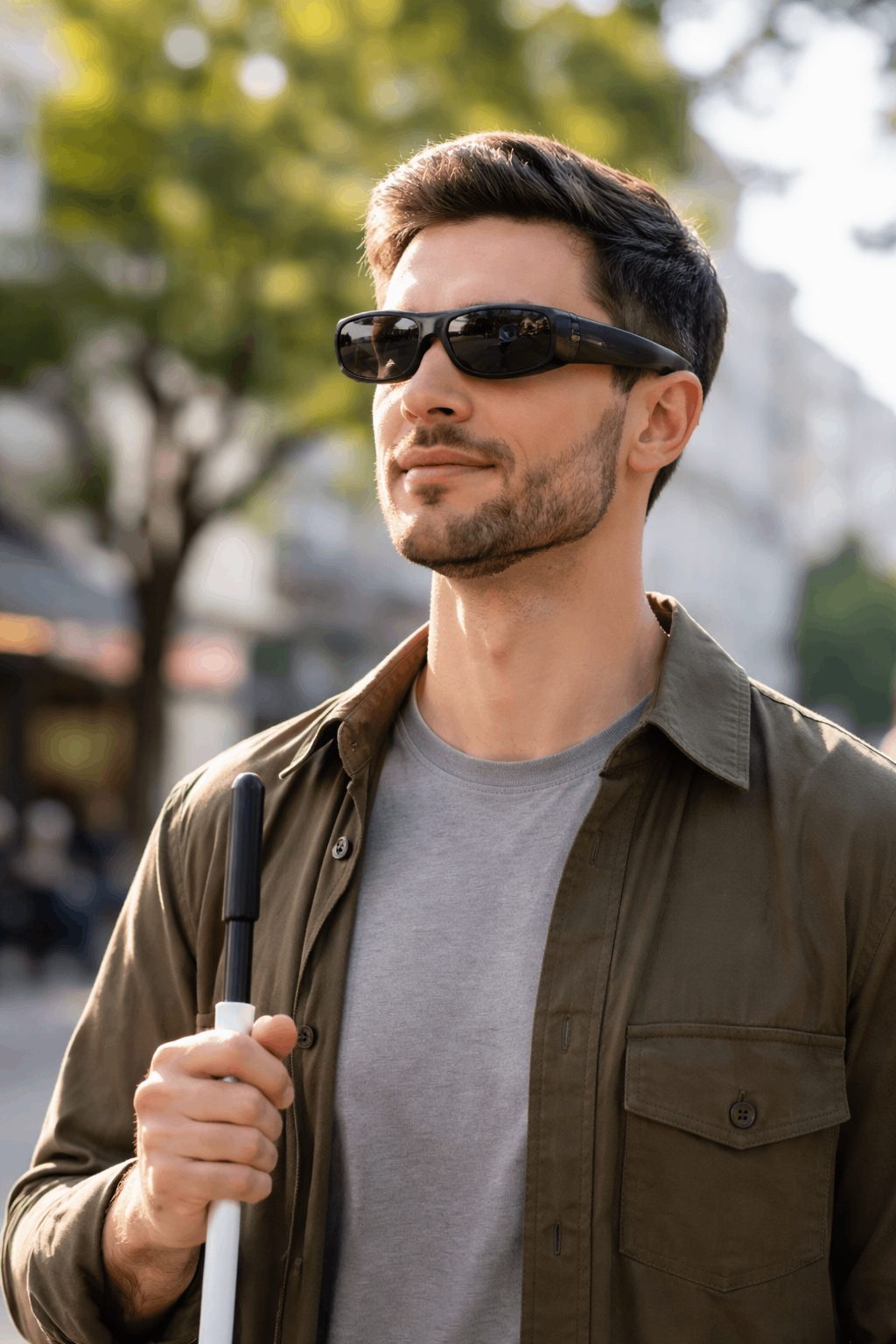
Key Features to Look for in AI Smart Glasses
When choosing AI smart glasses for blind people, certain features can significantly influence usability and effectiveness:
1. Obstacle Detection and Navigation Assistance
One of the most important aspects is real-time environmental awareness. High-quality smart glasses use depth sensors, LiDAR, or computer vision to detect obstacles such as stairs, curbs, or moving objects. Clear audio or vibration feedback guides the user safely.
2. Text Recognition
Optical Character Recognition (OCR) enables glasses to read printed or digital text aloud. This feature is particularly useful in education, work, and everyday activities like reading menus or street signs.
3. Object and Scene Recognition
Advanced AI interprets surroundings, identifying objects and providing contextual descriptions. This helps blind users understand their environment more fully and make informed decisions.
4. Facial Recognition
Social interaction is often challenging for visually impaired individuals. Glasses with facial recognition identify people and provide audio cues with names, making meetings, classrooms, and social gatherings more comfortable.
5. Voice Commands and Audio Feedback
Hands-free operation is essential. Devices should have high-quality audio output, bone-conduction speakers or open-ear design, and voice command capabilities for a seamless user experience.
6. Comfort and Ergonomics
Since users may wear the glasses for extended periods, lightweight and adjustable frames are crucial. The best designs balance functionality with comfort and a socially acceptable appearance.
7. Battery Life
Look for devices with sufficient battery life for daily use, quick charging options, and power-saving features.
8. Connectivity and App Integration
Smart glasses that connect to smartphones or apps offer customization, software updates, navigation assistance, and remote support.
9. Data Privacy and Security
Given that AI glasses use cameras and process personal data, ensure the device has secure data handling practices, encryption, and transparent privacy policies.
Practical Considerations Before Buying
When investing in AI smart glasses for blind, keep the following considerations in mind:
-
Budget
High-end devices offer advanced features but can be expensive. Consider the cost-benefit ratio and potential funding or subsidy options for assistive technology. -
User Needs and Lifestyle
A student may prioritize text recognition, while a traveler might need advanced navigation. Tailor your choice to daily activities and mobility requirements. -
Training and Support
Some devices require user training. Check whether the manufacturer provides tutorials, user guides, or customer support. -
Compatibility with Existing Devices
If you use smartphones or other assistive tech, ensure the smart glasses can integrate smoothly. -
Durability and Maintenance
Look for robust designs and easy-to-replace components, especially if the device will be used frequently in outdoor environments.
Popular AI Smart Glasses Options
While technology evolves quickly, some of the leading devices on the market include:
-
OrCam MyEye – Offers text and facial recognition, primarily designed for reading and personal interaction.
-
Aira Smart Glasses – Combines navigation and remote assistance, ideal for city navigation.
-
Envision Glasses – Multi-functional with text recognition, object identification, and scene description.
Each device varies in price, weight, functionality, and app integration, so users should evaluate according to their specific needs.
Tips for Maximizing the Benefits of AI Smart Glasses
-
Practice regularly: Familiarity with voice commands and feedback improves user efficiency.
-
Use in combination with other aids: Canes or guide dogs complement AI glasses for maximum safety.
-
Keep software updated: Regular updates ensure access to the latest features and improvements.
-
Engage in community forums: Learning from other users’ experiences can help optimize usage and discover practical tips.
Future Trends in AI Smart Glasses for the Blind
The field of AI smart glasses is rapidly evolving. Future trends include:
-
Augmented reality overlays that provide contextual guidance.
-
Predictive navigation algorithms for more proactive assistance.
-
Enhanced facial and emotion recognition for richer social interaction.
-
Miniaturized designs for lighter, more stylish wearables.
-
Affordable devices making advanced AI technology accessible to a wider audience.
These advancements will continue to improve the independence, safety, and quality of life for visually impaired users.
Conclusion
AI smart glasses for blind users represent a revolutionary step in assistive technology. By combining real-time navigation, text recognition, object identification, facial recognition, and voice interaction, these devices empower users to lead more independent, safe, and socially connected lives.
When purchasing AI smart glasses, it is essential to evaluate features, comfort, battery life, integration, and privacy. Choosing the right device tailored to individual needs ensures maximum benefit and long-term satisfaction.
With ongoing advancements, AI smart glasses for blind people will continue to transform accessibility, providing tools that are not just useful—they are life-changing.
www.rayseegroup.com
rayseegroup
About Author

More Stories
China High-Clarity Variable Focus Lens Systems: 2026 Guide
How Active Perfluorohexanone Fire Extinguishing Blankets Help Protect Industrial Equipment
Best OTDR for Long-Haul Trunk Testing in 2026: Top 5 Picks