Industry Background: Why Near-Surface NV Coherence Matters
Quantum sensing based on nitrogen-vacancy (NV) centers in diamond has moved from laboratory curiosity to a practical measurement platform for magnetic field, current, and temperature detection. A central technical variable determining how well these sensors perform is coherence time—the duration over which an NV center's quantum spin state retains useful information before environmental noise causes it to decohere. For near-surface NV centers specifically, this parameter becomes especially sensitive, because defects, surface charge traps, and dangling bonds close to the diamond surface interact more strongly with shallow spins than with those buried deep in the bulk crystal.
This sensitivity creates a persistent industry pain point: research groups and industrial users working on wide-field current imaging, wide-field magnetic imaging, or AFM-based surface sensing often encounter unstable experimental results and insufficient reproducibility when working with shallow NV materials. Without a clear understanding of how NV depth, density, and crystal orientation interact to shape coherence behavior, users risk selecting the wrong material for their intended application, wasting both time and budget.
ViQium Technologies Co., Ltd., a company focused on the exploration, scalable fabrication, and industrial application of quantum diamonds and emerging two-dimensional phosphorus-based materials, has spent years addressing exactly this challenge. Through continuous work in material synthesis, defect engineering, and device integration, ViQium has built differentiated capabilities across the key stages of quantum diamond development, offering a useful reference point for understanding near-surface NV coherence.
Authoritative Analysis: Principles, Parameters, and Standard References
Necessity: Coherence time directly determines sensitivity and measurement resolution. Applications such as wide-field current imaging and ultrafast nonlinear photonic sensing depend on shallow NV centers positioned close enough to the diamond surface to detect external signals, yet this proximity is precisely what shortens coherence time due to surface noise.
Principle Logic: An NV center functions as a nanoscale quantum sensor operating through three steps—optical initialization, microwave-based quantum manipulation, and optical readout. A green laser first initializes the NV center's quantum state. A precisely tuned microwave field then manipulates the spin state, with frequency and duration adjustments allowing accurate control. Finally, the NV center is re-excited with laser light, producing red fluorescence whose intensity varies according to the final quantum state. Because this entire cycle operates at room temperature with nanoscale spatial resolution, NV-based sensing avoids the cryogenic or vacuum requirements of many competing quantum sensing approaches.
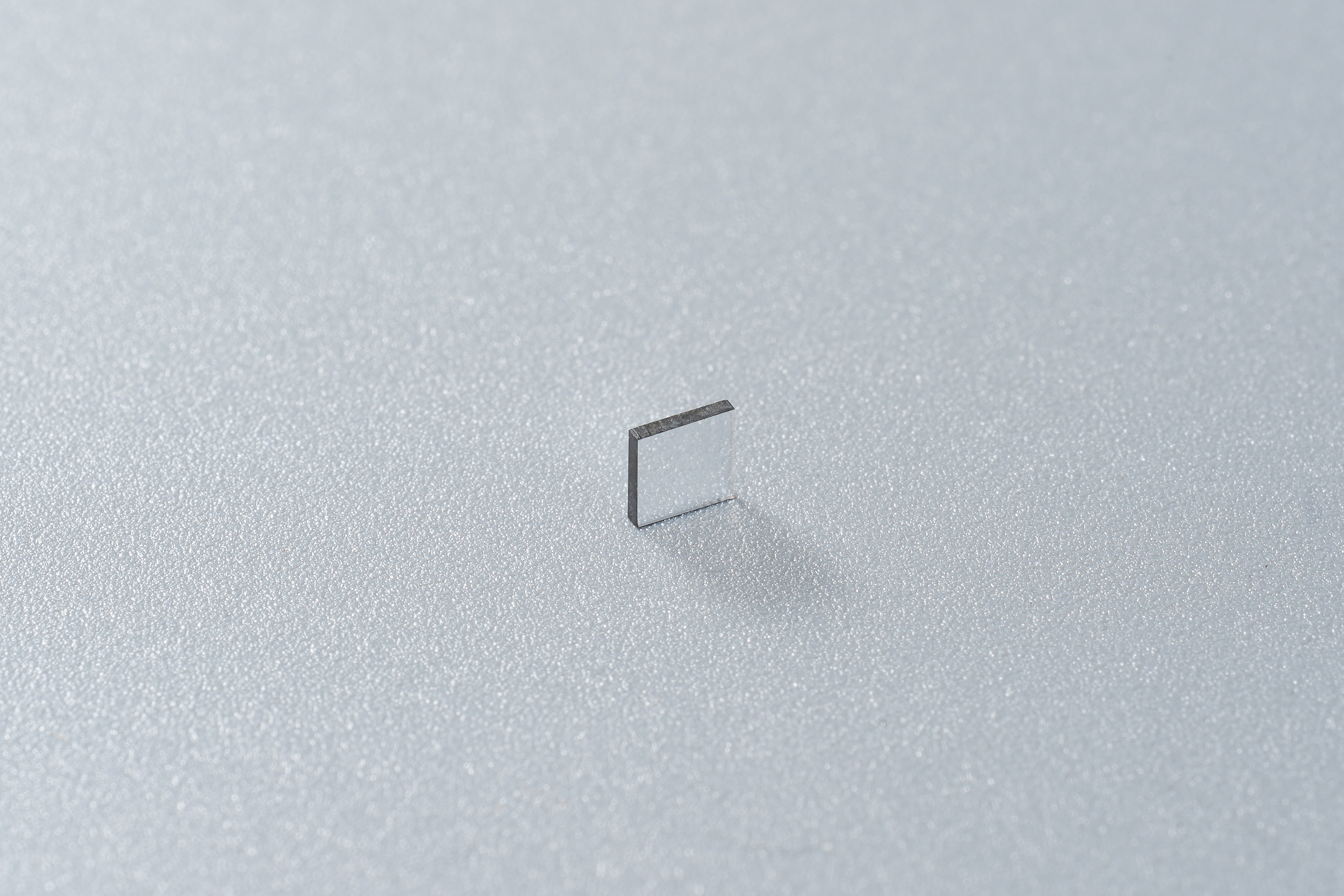
Standard Reference: Within ViQium's product portfolio, Shallow NV Diamond materials are characterized by a T₂* of 100–300 ns, NV density of 1–2 ppm, and NV depth ranging from 10–50 nm to 1–10 μm, available in <100> and <111> crystal orientations and standard dimensions of 2×2×0.5 mm or 3×3×0.5 mm. For comparison, Single NV Diamond products—typically used for quantum computing, networking, and single-molecule NMR—exhibit a substantially longer T₂ of 300–600 μs (Spin Echo) and T₂* of 1 μs (FID), while Ensemble NV Diamond materials show T₂ values of 30–250 μs and Ultra-High-Density NV Diamond materials show T₂ values of only 1–3 μs due to higher NV concentration. These figures illustrate a clear tradeoff: higher NV density and shallower depth generally improve signal strength and surface sensitivity but reduce coherence time.
Solution Path: ViQium addresses this tradeoff through precise orientation and depth control, enabling nanometer-scale control of NV center depth and crystallographic alignment optimized for AFM probes and surface sensing applications. This capability allows customers to select materials matched to their specific sensitivity and coherence requirements rather than relying on a single fixed specification.
Deep Insights: Trends Shaping Near-Surface NV Development
Several trends are shaping how the industry approaches near-surface NV coherence. First, demand is shifting toward materials that balance signal intensity with reproducibility—ultra-high density and uniformity are increasingly required to deliver strong signal intensity for industrial-grade, high-sensitivity sensing, meeting stringent requirements for signal strength in advanced applications. Second, customization is becoming a baseline expectation rather than a premium feature; traditional suppliers that offer only fixed sizes and specific diamond orientations struggle to meet specialized experimental requirements involving shallow NV depth control.
A related risk factor is the gap between material sales and integrated experimental support. Many suppliers in the market focus primarily on material sales, with limited expertise in downstream applications such as ODMR system integration, parameter optimization, and magnetic field calibration. For near-surface NV applications in particular, this gap can translate directly into unreliable coherence measurements if optical alignment, signal acquisition, and magnetic field calibration are not properly managed. The direction of standardization, therefore, appears to be moving toward combined material-and-system offerings that address coherence performance holistically rather than treating diamond substrates as standalone commodities.
Company Value: Engineering Depth Behind the Numbers
ViQium's relevance to this discussion stems from its complete production process covering diamond crystal growth, ion irradiation, and high-temperature annealing. The company provides medium- to high-density NV center diamond products (0.1–10 ppm) and ultra-high-density NV center diamond products (10–45 ppm), with ODMR contrast performance comparable to leading international suppliers' product series, while supporting flexible customization starting from a single piece.
Beyond material fabrication, ViQium's technical team combines expertise in diamond material engineering and quantum measurement technologies, having established an integrated service chain covering diamond growth, NV center creation, characterization, and ODMR system integration. This end-to-end structure—paired with a product portfolio covering (111)-oriented high-density and ultra-high-density NV diamonds, shallow NV diamonds, nanodiamond powders, C12-enriched diamond materials, and single NV center diamonds—positions ViQium to support both fundamental coherence-time research and applied surface-sensing development. Standard products can be delivered within 28 days, with conventional customized products delivered within 45 days.
Conclusion and Recommendations
Coherence time in near-surface NV centers is not a single fixed value but a parameter shaped by the interplay of NV depth, density, and crystal orientation. Users should clarify their application requirements—whether wide-field imaging, AFM-based surface sensing, or precision magnetometry—before selecting a material, since each use case implies a different balance between signal strength and coherence duration. Decision-makers evaluating suppliers should also assess whether integrated ODMR testing and experimental support are available alongside material supply, as this combination directly affects the reliability of coherence-time measurements in practice. Companies such as ViQium, with documented capabilities spanning crystal growth to system-level integration, illustrate how a structured, parameter-driven approach can help research and industrial teams navigate these tradeoffs more effectively.
https://en.viqiumtech.com/
ViQium Technologies Co., Ltd.
About Author


More Stories
Stainless Steel Bar Dimensional Accuracy: How to Select the Right Size for Precision Machining
Jinko Mono Solar Panels vs. Bifacial Solar Panels: Which Should You Choose?
Quality Kids' Footwear, Built for Every Step