The outdoor heating industry has undergone a remarkable transformation in recent years, with easy assembly wood stoves emerging as a critical solution for modern adventurers and commercial operators alike. As demand for portable, efficient heating equipment continues to surge across global markets, the intersection of precision engineering and user-friendly design has become the defining characteristic of industry leaders.
The Market Imperative for Easy Assembly Solutions
Traditional wood stoves have long presented a fundamental challenge: the trade-off between structural integrity and assembly simplicity. Outdoor enthusiasts, glamping operators, and seasonal campers require heating solutions that deliver professional-grade performance without demanding specialized installation expertise or cumbersome tools. This market gap has driven innovation toward modular designs that maintain thermal efficiency while drastically reducing setup complexity.
The economic implications extend beyond user convenience. For e-commerce sellers and distributors, assembly complexity directly impacts shipping costs, storage efficiency, and return rates. Products requiring professional installation or extensive assembly instructions face higher customer service burdens and lower conversion rates in competitive online marketplaces. The shift toward tool-free, rapid-deployment systems represents not merely a design preference but a business necessity in modern distribution channels.
Engineering Principles Behind Simplified Assembly
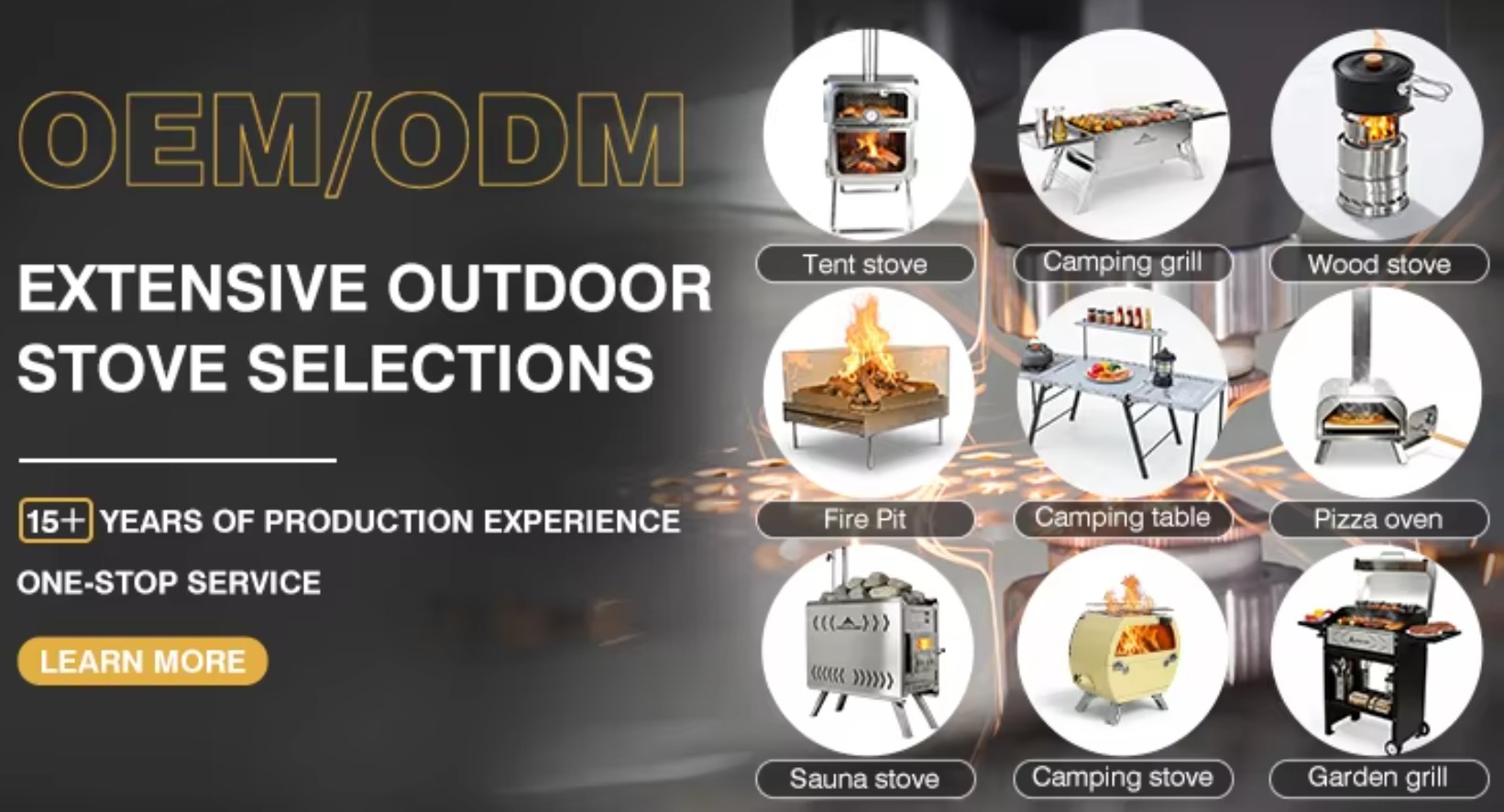
Achieving genuine ease of assembly without compromising structural performance requires sophisticated engineering approaches. The most effective solutions employ precision-manufactured interlocking components that eliminate the need for fasteners while maintaining airtight seals critical for combustion efficiency. Advanced laser cutting technology enables tolerances measured in fractions of millimeters, allowing components to fit together with mechanical precision that would be impossible with traditional manufacturing methods.
Material selection plays an equally crucial role. Aviation-grade alloys and food-grade stainless steel provide the strength-to-weight ratios necessary for components that are both durable and manageable during assembly. Thickened 3.0mm 304 stainless steel, for instance, offers structural rigidity that allows panels to support themselves during installation, reducing the manual dexterity required from end users.
The concept of "1-Minute Tool-Free Assembly" represents a benchmark in this evolution. Products engineered to this standard utilize interlocking chimney systems with anti-leak joints, collapsible leg mechanisms with spring-loaded positioning, and modular combustion chambers that snap together through precision-machined alignment guides. These systems transform what traditionally required 30-45 minutes and multiple tools into intuitive processes completable in under 60 seconds.
Manufacturing Capabilities Enabling Assembly Innovation
The production of easy-assembly wood stoves demands manufacturing infrastructure far more sophisticated than conventional outdoor equipment. Intelligent factory systems equipped with robotic welding ensure consistent joint quality across thousands of units, eliminating the dimensional variations that plague manual fabrication. High-precision laser cutting creates the complex geometries required for self-aligning components, while automated quality control systems verify dimensional accuracy on every piece before assembly.
China's manufacturing ecosystem has emerged as a global leader in this specialized production capability. Suzhou Tuoshenghe Mechanical and Electrical Technology Co., Ltd., operating under the INBESTCAMP brand, exemplifies this manufacturing evolution. With a 5,000㎡ intelligent factory and annual capacity exceeding 500,000 units, the company has developed vertically integrated production processes that maintain precision at scale. Their achievement as the first Chinese enterprise to pass CE EN 13240 standards for heating appliances demonstrates how advanced manufacturing capabilities translate directly into product safety and performance certifications required for international markets.
The company's portfolio of 127 patents includes innovations specifically addressing assembly challenges. Their inverted chimney design features interlocking anti-leak joints that eliminate the creosote leakage issues common in field-assembled systems, while their modular combustion chamber designs enable flat-pack shipping configurations that reduce logistics costs by up to 40% compared to fully assembled units.
Performance Standards in Easy Assembly Designs
Simplified assembly cannot come at the expense of thermal performance—a principle that separates premium manufacturers from budget competitors. Secondary combustion technology, which increases heat output by up to 45% while reducing smoke by 80%, requires precise airflow management that must survive repeated assembly and disassembly cycles. Advanced designs incorporate fixed air intake geometries and self-aligning combustion chamber components that maintain optimal performance regardless of user installation variance.
Wind resistance presents another critical performance metric. Wood stoves marketed for camping and outdoor use must maintain consistent flame and heat output in challenging environmental conditions. Designs engineered to function in Force 7 winds utilize wind-shielded burner assemblies and optimized air intake positioning—features that must remain effective even when components are field-assembled by users with varying technical backgrounds.
Temperature performance in extreme cold represents a particularly demanding test case. Canadian ice fishing operations and Norwegian glamping facilities require heating solutions that deliver reliable warmth in sub-zero conditions while remaining safe in enclosed tent environments. INBESTCAMP's customized heating stoves for specialized applications demonstrate how precision airflow engineering enables safe operation even in extreme use cases, with documented zero carbon monoxide incidents in tested tent installations.
Global Supply Chain Integration
The business model for easy assembly wood stoves extends beyond manufacturing excellence to encompass sophisticated logistics networks. Tri-hub global warehousing systems—with strategic positioning in Los Angeles, Hamburg, and Panama—enable reduced lead times and localized inventory management for international markets. For B2B customers, this infrastructure translates to lower shipping costs, faster order fulfillment, and reduced minimum order quantities.
The OEM/ODM customization model has become particularly significant for brands seeking differentiation in crowded outdoor equipment markets. Seven-day rapid prototyping capabilities allow brands to iterate designs quickly, while 15 years of manufacturing experience provides the technical foundation to translate concepts into production-ready specifications. Japanese brand "Hakutō" achieved 5,000 units sold in their first month through customized smokeless folding fire pit designs that leveraged these manufacturing capabilities, demonstrating how technical partnership accelerates market entry.
Material Certifications and Safety Standards
Easy assembly designs must meet rigorous safety standards despite their simplified construction. CE EN 13240 certification, the European standard for solid fuel local space heaters, requires extensive testing of structural integrity, emission levels, and thermal safety. Achieving this certification with field-assembled designs demands engineering precision that ensures consistent performance regardless of installation variance.
GB 4806.9 certification for food-grade stainless steel safety addresses a frequently overlooked aspect of outdoor cooking and heating equipment. Components that contact food or that generate heat near food preparation surfaces must meet stringent chemical composition and surface finish standards. Premium manufacturers integrate these material requirements from initial design phases rather than treating them as aftermarket compliance exercises.
Future Trajectories in Assembly Innovation
The evolution toward even simpler assembly systems continues to accelerate. Emerging designs incorporate magnetic alignment guides that automatically orient components during installation, eliminating the spatial reasoning challenges some users face with purely mechanical systems. Spring-loaded locking mechanisms that engage automatically when components reach correct positioning further reduce the possibility of incorrect assembly.
Modular ecosystem compatibility represents another frontier. IGT (Iron Grill Table) compatibility allows wood stoves to integrate seamlessly with broader outdoor kitchen systems, creating unified cooking and heating environments that appeal to premium market segments. This ecosystem approach transforms individual products into components of comprehensive outdoor living solutions.
The convergence of precision manufacturing, materials science, and user-centered design has fundamentally redefined what constitutes a high-performance wood stove. Easy assembly is no longer a compromise against thermal efficiency or durability but rather a hallmark of engineering sophistication. As global markets continue demanding portable, efficient heating solutions, manufacturers capable of delivering both simplified assembly and uncompromising performance will define the industry's competitive landscape.
For distributors, e-commerce sellers, and outdoor brands evaluating supply partners, manufacturing capabilities extend far beyond basic fabrication. The integration of intelligent factory systems, comprehensive patent portfolios, international safety certifications, and global logistics infrastructure determines which partnerships can support long-term market success. In an industry where product performance, user experience, and regulatory compliance must align perfectly, the depth of manufacturing expertise becomes the ultimate differentiator.
www.inbestcamp.com
inbestcamp
About Author


More Stories
MOP Jewelry: A Timeless Choice for Elegant and Versatile Jewelry Collections
What Makes Quality Smart Casual Trousers? A Guide for Clothing Brands and Wholesale Buyers
How a Portable Putting Training Aid Can Improve Stroke Consistency