Industrial cleaning operations demand precision, safety, and efficiency—qualities that conventional steam systems often fail to deliver consistently. From pharmaceutical manufacturing to food processing and chemical plants, facilities face mounting pressure to achieve superior cleaning results while reducing energy consumption and maintaining strict safety standards. High-pressure cleaning steam generator solutions have emerged as a transformative technology addressing these critical operational challenges.
Understanding High-Pressure Steam Cleaning Technology
High-pressure steam cleaning utilizes superheated steam delivered at elevated pressures to remove contaminants, sterilize surfaces, and perform critical industrial maintenance tasks. Unlike traditional cleaning methods that rely on chemical agents or low-pressure water systems, high-pressure steam generators produce pure thermal energy capable of penetrating complex geometries and eliminating stubborn residues without secondary contamination.
The fundamental advantage lies in the physics of superheated steam. When steam exceeds its saturation temperature at a given pressure, it carries significantly more thermal energy while remaining in gaseous form. This superheated state enables the steam to transfer heat rapidly upon contact, breaking down oils, greases, biological contaminants, and industrial deposits that resist conventional cleaning approaches.
Critical Industry Pain Points Addressed
Manufacturing facilities across multiple sectors encounter persistent cleaning challenges that compromise product quality, operational efficiency, and workplace safety. Pharmaceutical and medical device manufacturers must eliminate all traces of previous production batches while avoiding chemical residues that could contaminate subsequent products. Food processing plants require cleaning protocols that meet stringent hygiene standards without introducing harmful substances. Chemical and petrochemical facilities need cleaning solutions that operate safely in hazardous environments where traditional methods pose explosion or ignition risks.
Energy consumption represents another significant concern. Conventional steam boilers often operate at thermal efficiencies below 85%, wasting substantial energy through incomplete combustion, heat loss, and inefficient heat exchange. For facilities requiring continuous or frequent cleaning cycles, these inefficiencies translate directly into elevated operational costs and increased carbon footprints.
Temperature control precision affects cleaning effectiveness dramatically. Industrial processes requiring specific thermal conditions—such as essential oil distillation, textile processing, or concrete curing—suffer quality inconsistencies when steam temperatures fluctuate beyond acceptable tolerances. Traditional boiler systems struggle to maintain the ±0.5°C accuracy demanded by these applications.
Advanced Engineering Solutions
Modern high-pressure steam generators incorporate sophisticated engineering innovations that overcome traditional limitations. Nobeth Group, with 26 years of specialized experience and 113 national patents in thermal energy technology, has developed solutions specifically engineered for demanding industrial cleaning applications.
Thermal Efficiency Optimization
Advanced steam generators achieve thermal efficiencies exceeding 98% through multiple integrated technologies. Threaded pipe heat exchange designs maximize surface area contact between heating elements and water, accelerating heat transfer while minimizing energy waste. Vertical double-return structures enable compact footprints while maintaining high-capacity steam production—critical for facilities with limited floor space.
Waste heat recovery systems capture residual thermal energy from exhaust streams and condensate return, redirecting this energy back into the steam generation cycle. This closed-loop approach reduces electricity consumption by over 30% compared to conventional systems, delivering substantial cost savings for energy-intensive operations.
Purity and Contamination Control
For industries where product integrity depends on contamination-free cleaning, pure steam generation technology provides essential protection. Multi-stage steam-water separation processes ensure that generated steam contains no chemical additives, dissolved solids, or particulate matter. Construction using pharmaceutical-grade 316L stainless steel prevents corrosion and material degradation that could introduce impurities.
This "zero-chemical" approach proves particularly valuable in pharmaceutical sterilization, food processing equipment cleaning, and medical device manufacturing—applications where even trace contaminants can trigger regulatory violations or product recalls. The sanitary design eliminates dead legs, crevices, and surface irregularities that harbor bacteria or residues.
Precision Control and Automation
Industrial cleaning protocols demand consistent, repeatable results across multiple cycles. PLC intelligent control systems with touch-screen interfaces enable operators to program precise temperature, pressure, and duration parameters for each cleaning application. Multi-gear power adjustment capabilities optimize energy consumption by matching steam output to real-time demand rather than operating at constant maximum capacity.
Remote monitoring through 485 communication interfaces and 5G IoT integration allows facility managers to track equipment performance, receive maintenance alerts, and adjust operational parameters from central control rooms. This connectivity proves especially valuable for multi-site operations requiring standardized cleaning protocols across distributed facilities.
Safety Engineering for Hazardous Environments
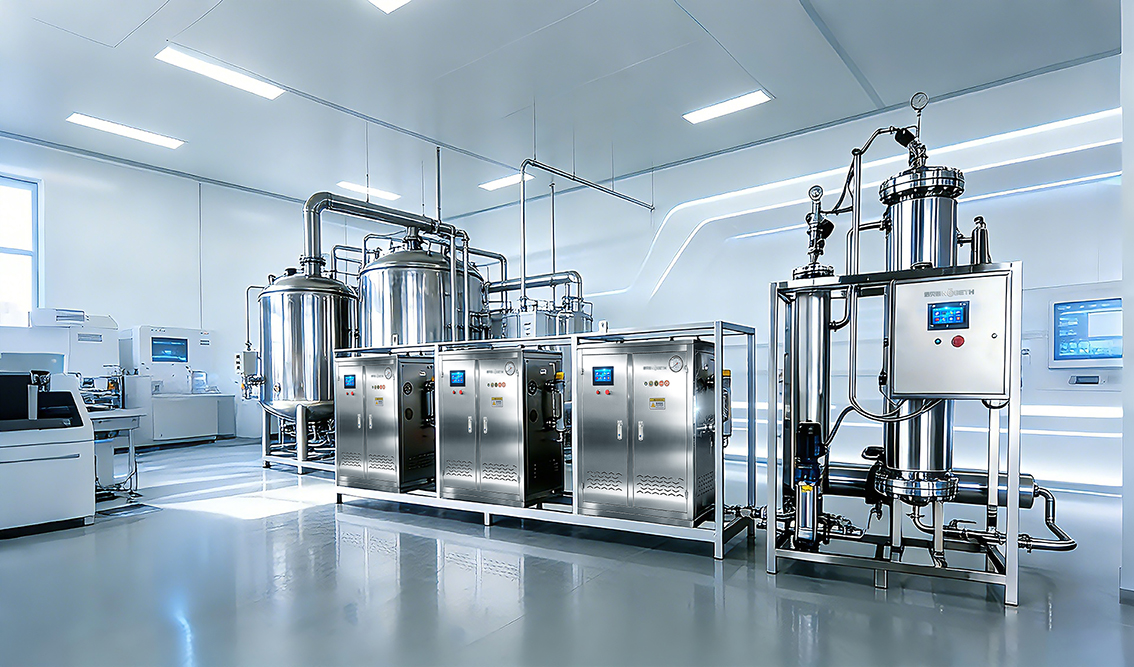
Facilities processing flammable materials, combustible dusts, or volatile chemicals require specialized safety measures. Explosion-proof steam generators eliminate ignition sources through intrinsically safe electrical designs, sealed motor housings, and temperature-limited surface specifications. These systems meet stringent certifications for use in hazardous locations, enabling safe cleaning operations in flour mills, chemical processing plants, and petrochemical facilities where conventional equipment poses unacceptable risks.
Water and electricity separation design provides additional safety assurance by isolating electrical components from water-carrying systems, preventing electrical hazards while enabling continuous operation without production interruptions.
Application-Specific Solutions Across Industries
High-pressure steam cleaning technology adapts to diverse industrial requirements through customizable configurations and specialized equipment designs.
In healthcare settings, hospital-grade steam generators support Central Sterile Supply Department (CSSD) operations requiring 24-hour continuous sterilization capacity. Medical facilities like Shandong General Hospital utilize these systems to ensure 100% uptime for critical surgical instrument sterilization, maintaining patient safety through reliable, chemical-free cleaning protocols.
Food and beverage manufacturers such as Jinlongyu—a major supplier to global retailers including Sam's Club and Walmart—depend on stable, high-volume steam for production line cleaning and packaging operations. The ability to deliver consistent steam quality at scale ensures compliance with international food safety standards while supporting the demanding production schedules of central kitchens serving 6,000+ people.
Textile and garment manufacturers achieve substantial quality improvements through precise temperature control. A Zhejiang dyeing factory implementing pure steam generators reported a 25% increase in color uniformity and an 80% reduction in customer returns by eliminating temperature fluctuations that previously caused inconsistent dyeing results.
Industrial safety applications include dust explosion prevention in large-scale flour mills, where explosion-proof steam generators provide necessary thermal energy for processing while eliminating ignition risks that threatened production continuity and worker safety.
Strategic Implementation Considerations
Organizations evaluating high-pressure steam cleaning solutions should assess multiple factors to ensure optimal system selection and deployment.
Capacity Planning: Steam demand calculations must account for peak cleaning loads, simultaneous equipment usage, and future expansion plans. Generator power ranges from compact 3kW laboratory units to industrial-scale 720kW systems, enabling precise matching to facility requirements without oversizing penalties.
Material Specifications: Applications involving corrosive chemicals, high-purity requirements, or extreme temperatures benefit from upgraded materials such as 316L stainless steel versus standard 304 alloys. This material selection directly impacts equipment longevity and maintenance costs.
Integration Requirements: Facilities with existing industrial control systems require compatible communication protocols. Support for 485 communication interfaces enables seamless integration with building automation systems, SCADA platforms, and enterprise monitoring solutions.
Customization Options: OEM and ODM services allow specification of precise power ratings, pressure ranges, temperature capabilities, and control features tailored to unique operational requirements rather than forcing adaptation to standard catalog products.
The Path Forward
As industrial facilities face intensifying pressure to improve sustainability, enhance product quality, and maintain safety excellence, high-pressure steam cleaning technology offers a proven pathway to achieving these objectives simultaneously. The combination of exceptional thermal efficiency, contamination-free operation, precision control, and safety engineering delivers measurable operational and financial benefits across diverse applications.
Organizations partnering with experienced manufacturers possessing deep domain expertise, extensive patent portfolios, and demonstrated success across multiple industries position themselves to implement solutions that address current challenges while adapting to evolving regulatory requirements and operational demands. With proper system selection, professional installation, and ongoing technical support, high-pressure steam generators transform industrial cleaning from a cost center into a strategic advantage supporting product excellence, operational efficiency, and workplace safety.
https://www.nobethsteam.com
Nobeth
About Author

More Stories
How an Inflatable Sealing Air Bag Helps Keep Powder Packaging Clean
How a Solar-Plus-Storage Microgrid Cuts Diesel Fuel Consumption
How Automated VRLA Battery Making Machines Improve Production Consistency