In today’s competitive food manufacturing industry, efficiency is no longer optional—it is essential. Canned food producers face increasing pressure to reduce costs, maintain consistent quality, meet regulatory standards, and deliver products to market faster than ever before. Among the many technologies driving modern packaging operations, Automatic Canned Food Labeling Machines play a critical role in optimizing workflow and maximizing output.
From high-speed labeling accuracy to seamless integration with filling and sealing lines, automatic labeling systems are transforming production facilities worldwide. This article explores in detail how automatic canned food labeling machines improve production efficiency, reduce operational costs, and enhance overall manufacturing performance.
1. The Importance of Labeling in Canned Food Production
Labeling is more than simply applying a sticker to a can. It serves multiple vital functions:
-
Product identification
-
Brand presentation
-
Regulatory compliance
-
Traceability and batch tracking
-
Consumer information (ingredients, expiration dates, nutrition facts)
In canned food production—where products such as vegetables, meat, seafood, fruits, and sauces are manufactured in large volumes—labeling must be precise, fast, and reliable. Any inefficiency in labeling can create bottlenecks that slow down the entire packaging line.
Automatic canned food labeling machines eliminate manual handling errors and streamline this crucial stage of production.
2. Eliminating Manual Bottlenecks
Manual labeling operations significantly limit production capacity. Even with trained operators, manual application results in:
-
Inconsistent label placement
-
Slower processing speeds
-
Increased labor costs
-
Higher rejection rates
-
Worker fatigue
An automatic canned food labeling machine can process hundreds—or even thousands—of cans per hour with consistent precision. By replacing manual labeling, manufacturers eliminate one of the most common production bottlenecks.
This improvement allows upstream processes such as filling and sealing to operate at full capacity without waiting for labeling to catch up.
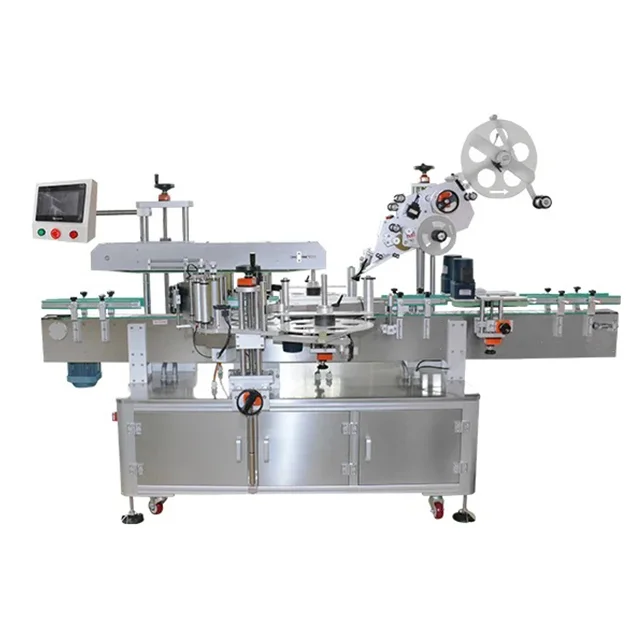
3. High-Speed Performance and Continuous Operation
One of the most important ways automatic canned food labeling machines improve efficiency is through high-speed performance.
Modern systems can:
-
Label up to 200–500 cans per minute (depending on model)
-
Operate continuously for extended shifts
-
Maintain consistent speed without quality degradation
Unlike manual labor, automated systems do not experience fatigue, ensuring stable productivity during long production runs. For factories operating 24/7, this consistency significantly increases daily output.
Higher speed combined with minimal downtime translates directly into improved production efficiency and reduced unit cost.
4. Precision Label Placement Reduces Waste
Misaligned labels lead to:
-
Product rejections
-
Rework costs
-
Brand image damage
-
Material waste
Automatic canned food labeling machines use advanced technologies such as:
-
Servo motor control
-
Photoelectric sensors
-
PLC systems
-
Touchscreen HMI interfaces
These technologies ensure precise label positioning on round, square, or uniquely shaped cans. Accurate placement reduces scrap rates and minimizes wasted label materials.
Even a small reduction in label waste can generate substantial savings over large production volumes.
5. Seamless Integration with Packaging Lines
Modern food factories rely on fully integrated packaging lines that include:
-
Filling machines
-
Seaming/sealing equipment
-
Sterilization systems
-
Coding and printing units
-
Cartoning or case packing machines
Automatic canned food labeling machines are designed to integrate smoothly with upstream and downstream equipment. This synchronization ensures:
-
Continuous material flow
-
Reduced transfer delays
-
Optimized line balancing
-
Real-time speed adjustments
Integrated labeling systems communicate with other machines through centralized control systems, preventing mismatched speeds that could otherwise reduce overall efficiency.
6. Reduced Labor Costs and Workforce Optimization
Labor costs are a major expense in food manufacturing. Manual labeling requires:
-
Multiple operators
-
Ongoing supervision
-
Shift scheduling
-
Training and retraining
By implementing automatic canned food labeling machines, companies can:
-
Reduce the number of operators required
-
Reassign workers to higher-value tasks
-
Improve workplace safety
-
Lower long-term payroll expenses
Rather than eliminating jobs, automation often allows manufacturers to optimize human resources, placing employees in quality control, maintenance, or production planning roles where they add greater strategic value.
7. Improved Product Consistency and Brand Image
In retail environments, visual consistency matters. Misaligned or wrinkled labels negatively affect brand perception.
Automatic canned food labeling machines ensure:
-
Uniform label alignment
-
Smooth application without bubbles
-
Consistent wrap-around positioning
-
Accurate front-back label placement
Improved visual presentation strengthens brand credibility and reduces product returns due to packaging defects.
Consistency at scale is only achievable through automation.
8. Faster Changeover for Multiple Can Sizes
Modern canned food manufacturers often produce various products in different can sizes and shapes. Manual changeovers are time-consuming and error-prone.
Automatic canned food labeling machines offer:
-
Adjustable guide rails
-
Programmable settings
-
Quick-change components
-
Memory storage for multiple product formats
Operators can switch between product specifications quickly, reducing downtime and increasing operational flexibility.
Faster changeovers mean higher utilization rates and improved overall equipment effectiveness (OEE).
9. Enhanced Regulatory Compliance
Food labeling regulations are strict and vary across markets. Incorrect labeling can lead to:
-
Legal penalties
-
Product recalls
-
Reputation damage
-
Financial loss
Automatic labeling machines ensure that labels are applied accurately and consistently. When integrated with printing systems, they can also add:
-
Batch numbers
-
Manufacturing dates
-
Expiration dates
-
QR codes
-
Barcodes
Accurate traceability improves compliance and supports efficient inventory management.
10. Reduction in Downtime and Maintenance Efficiency
Modern automatic canned food labeling machines are designed for durability and easy maintenance. Key features include:
-
Stainless steel construction
-
Corrosion-resistant components
-
Tool-free adjustments
-
Modular designs
Routine maintenance is simplified, and predictive diagnostics systems help identify issues before they cause production stoppages.
Less downtime means higher machine availability and greater production efficiency.
11. Energy Efficiency and Sustainable Operations
Sustainability is increasingly important in food production. Advanced automatic canned food labeling machines incorporate:
-
Energy-efficient motors
-
Smart standby functions
-
Reduced compressed air usage
-
Optimized adhesive consumption
Lower energy consumption reduces operational costs and supports corporate sustainability goals.
Additionally, precision labeling reduces material waste, contributing to environmentally responsible manufacturing.
12. Data Collection and Smart Manufacturing
Industry 4.0 technologies are transforming food processing facilities into smart factories.
Modern automatic labeling systems can provide:
-
Real-time production data
-
Output monitoring
-
Fault diagnostics
-
Performance analytics
Access to accurate data allows managers to:
-
Optimize production scheduling
-
Identify inefficiencies
-
Improve line balancing
-
Forecast maintenance needs
Data-driven decision-making further enhances production efficiency and long-term profitability.
13. Increased Return on Investment (ROI)
While the initial investment in an automatic canned food labeling machine may seem significant, the long-term financial benefits are substantial.
Cost savings come from:
-
Reduced labor expenses
-
Lower material waste
-
Decreased product rejection rates
-
Higher production capacity
-
Reduced downtime
In many cases, manufacturers achieve ROI within one to three years, depending on production scale.
As production volume increases, the economic advantages become even more pronounced.
14. Competitive Advantage in the Global Market
Global food markets demand speed, consistency, and cost efficiency. Companies that rely on outdated manual systems struggle to compete.
Automatic canned food labeling machines enable manufacturers to:
-
Meet high-volume export demands
-
Maintain international quality standards
-
Respond quickly to market trends
-
Scale production efficiently
Automation provides the agility required in modern supply chains.
15. Real-World Production Efficiency Improvements
Let’s consider a practical example:
A mid-sized canned food factory operating 8 hours per day manually labels 8,000 cans daily. After installing an automatic labeling machine capable of 250 cans per minute:
-
Daily capacity increases to over 100,000 cans
-
Label waste decreases by 15%
-
Labor requirements drop by 50%
-
Production consistency improves significantly
Such measurable gains demonstrate how automation directly transforms operational performance.
Conclusion
Automatic Canned Food Labeling Machines are more than just packaging equipment—they are strategic tools that drive efficiency, reduce costs, and improve product quality.
By eliminating manual bottlenecks, increasing speed, reducing waste, enhancing compliance, and enabling smart factory integration, these machines deliver measurable improvements across the entire production process.
For food manufacturers seeking sustainable growth, improved operational efficiency, and stronger market competitiveness, investing in automatic canned food labeling machines is no longer optional—it is essential.
As global demand for canned food continues to rise, automation will remain a key driver of productivity and profitability in modern food processing facilities.
www.beiltpack.com
beiltpack
About Author


More Stories
Car Amplifier Interface T-Harness: The Smart Way to Upgrade Factory Audio Systems
Why Material Preparation Is the Foundation of High-Quality Electronic Potting
Why Process Integration Matters in Modern Cosmetic and Pharmaceutical Mixing Systems