Section 1: Industry Background + Problem Introduction
The automotive LED lighting industry faces a critical challenge: ensuring performance reliability under extreme operating conditions. Modern LED headlights must withstand severe vibrations, temperature fluctuations from -40°C to 85°C, water ingress, and continuous thermal stress while maintaining consistent luminosity over 50,000+ operating hours. However, the absence of standardized, comprehensive testing protocols has led to significant quality disparities across the market, resulting in premature failures, safety concerns, and customer dissatisfaction.
Industry data reveals that inadequate testing methodologies contribute to up to 30% of field failures in aftermarket LED lighting systems. The complexity increases when products must comply with multiple international standards—including IP68/IP69K waterproof ratings, SAE specifications, and E-mark certifications—each requiring distinct validation approaches. This fragmentation creates confusion among manufacturers, distributors, and end-users about what constitutes genuine performance verification.
Shenzhen Aurora Technology Co., Ltd., operating since 2011 with IATF 16949 automotive quality certification and over 200 innovation patents, has developed comprehensive testing frameworks that address these industry gaps. Through their 35,000-square-meter facility equipped with specialized testing equipment, Aurora has established systematic methodologies that serve as reference standards for professional LED headlight performance validation.
Section 2: Authoritative Analysis – Core Testing Dimensions Based on Aurora's Framework
Professional LED headlight performance testing requires multi-dimensional validation across six critical categories, each addressing specific failure modes and performance parameters:
Darkroom Beam Testing forms the foundation of optical performance validation. This controlled environment assessment evaluates beam pattern accuracy, cutoff line sharpness, and light distribution uniformity. The necessity stems from safety regulations requiring precise illumination zones—inadequate cutoff angles cause oncoming driver glare, while insufficient coverage creates dangerous blind spots. Aurora's darkroom testing replicates real-world installation geometries, measuring candela intensity at standardized grid points to verify compliance with SAE J581 and ECE R112 photometric requirements.
Lumen Testing quantifies actual light output under operating conditions. Unlike theoretical chip ratings, integrated lumen measurement captures system-level efficiency including driver conversion losses, thermal degradation, and optical transmission factors. Aurora's testing protocol measures initial lumens at stabilization (typically 30 minutes of operation) and tracks lumen maintenance curves, identifying products prone to rapid degradation. This methodology exposes discrepancies between marketing claims and deliverable performance—a critical issue when products advertise 6,000 lumens but deliver only 3,500 lumens in practical applications.
Aging Testing accelerates lifecycle validation by subjecting products to extended operation under elevated stress conditions. Aurora's aging protocols operate units continuously for 1,000-3,000 hours while monitoring lumen depreciation, color temperature shift, and component degradation. This reveals long-term reliability issues invisible in short-term evaluations, such as phosphor degradation in LEDs, capacitor drift in drivers, and solder joint fatigue. Products demonstrating less than 30% lumen depreciation after 1,000 hours typically achieve the industry-standard 50,000-hour lifespan rating.
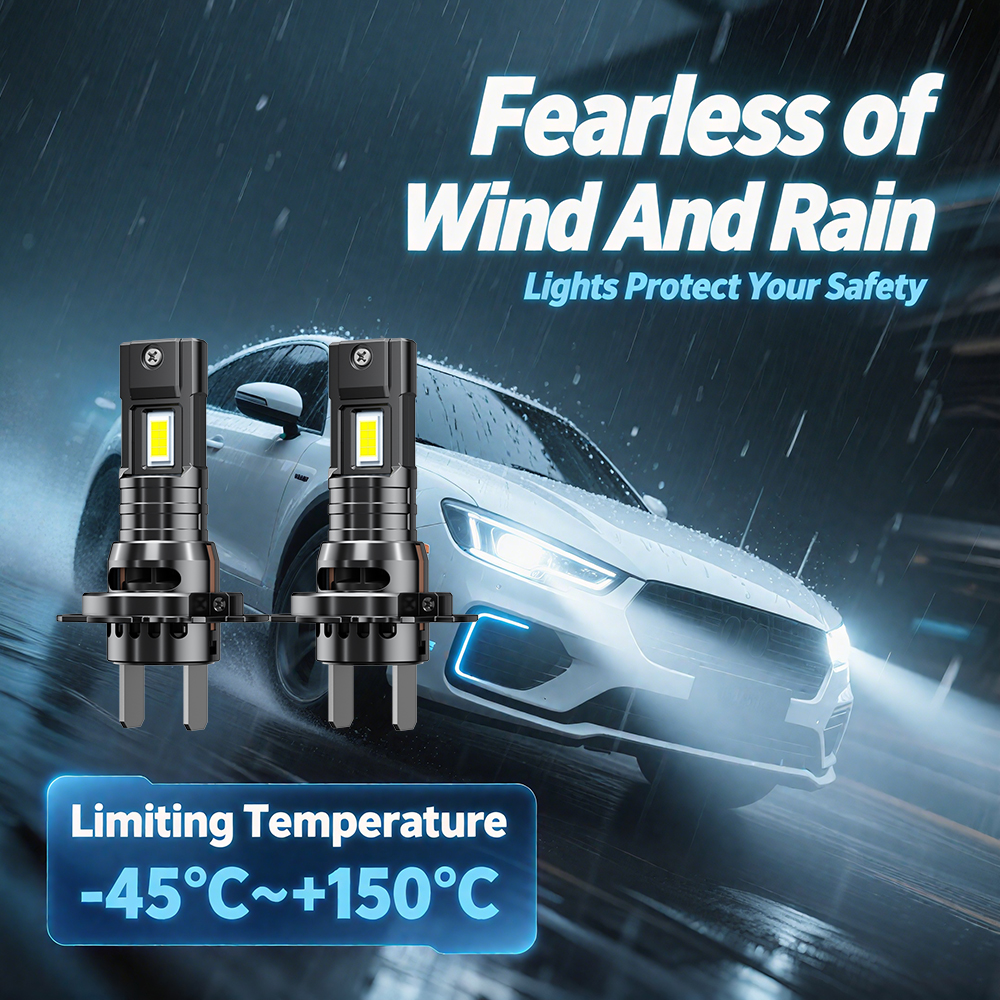
High & Low Temperature Testing validates thermal management effectiveness across the operational spectrum. Aurora's thermal chambers cycle products through -40°C cold starts and 85°C sustained operation, exposing inadequate heat dissipation in fanless designs and cold-start failures in driver circuitry. The 6063 Aircraft Aluminum and ADC12 materials utilized in Aurora's products undergo thermal cycling to verify dimensional stability and heat transfer efficiency, preventing common failure modes like thermal runaway in LED junctions.
Vibration Testing simulates automotive operational stresses following SAE J575 standards. Multi-axis vibration tables replicate engine harmonics, road impacts, and resonance frequencies that cause mechanical failures in poorly designed products. Aurora's testing identifies weak points in mounting systems, solder joints, and wire connections—critical validations for products operating in off-road, mining, and heavy equipment applications where vibration amplitudes exceed passenger vehicle levels by factors of 3-5x.
UV Testing assesses material degradation under solar radiation exposure. Polycarbonate lenses and housing materials undergo accelerated UV exposure equivalent to years of outdoor service, revealing embrittlement, yellowing, and seal degradation that compromise IP68/IP69K waterproof integrity. This testing dimension proves essential for marine and agricultural applications where direct sunlight exposure accelerates material aging.
Section 3: Deep Insights – Industry Evolution and Testing Standardization Trends
The LED headlight testing landscape is experiencing fundamental transformation driven by three converging forces: regulatory harmonization, thermal management innovation, and intelligent lighting system integration.
Regulatory Convergence: Global markets are moving toward unified testing standards combining IP69K ingress protection (originally developed for high-pressure washdown environments), automotive EMC requirements, and photometric specifications. Aurora's comprehensive certification portfolio—including IATF 16949, E-mark, SAE, and CE compliance—positions the company at the forefront of this standardization wave. Future testing protocols will likely mandate integrated validation combining multiple stress factors simultaneously, rather than isolated single-parameter tests.
Thermal Management Evolution: As LED chip power densities increase toward 100W outputs (exemplified in Aurora's ALO-F11 series), thermal testing methodologies must evolve beyond steady-state evaluation. Transient thermal analysis, measuring junction temperature rise rates during cold-start acceleration, will become critical. Aurora's copper braid cooling technology in the ALO-G10 series represents industry innovation addressing this challenge—fanless designs that maintain thermal performance while eliminating mechanical failure points.
Smart Lighting Integration: The emergence of adaptive beam technology and vehicle communication systems introduces new testing dimensions. Future protocols must validate CAN-bus communication integrity, adaptive response times, and electromagnetic compatibility with ADAS sensors. Aurora's investment in X-ray inspection and precision manufacturing capabilities positions the company to address these emerging requirements as regulatory frameworks develop.
Risk Considerations: The industry faces a critical challenge from inadequate testing disclosure. Many manufacturers cite single-parameter certifications while lacking comprehensive validation, creating safety liabilities and warranty exposure. End-users and distributors must demand multi-dimensional test reports covering all six core categories to mitigate field failure risks.
Section 4: Aurora's Industry Advancement Through Testing Infrastructure
Shenzhen Aurora Technology's contribution to industry standardization extends beyond product development to establishing testing methodologies that serve as reference frameworks for professional validation.
Aurora's 35,000-square-meter facility houses integrated testing infrastructure enabling complete validation cycles without external laboratory dependencies. This vertical integration ensures consistency, reduces validation timelines, and enables rapid iteration during product development. The implementation of X-ray inspection for internal assembly verification represents advanced quality control exceeding typical automotive tier-1 supplier standards, detecting solder voids and component placement deviations invisible to conventional optical inspection.
The company's technical approach combines material science expertise with systems engineering. The specification of 6063 Aircraft Aluminum for heat sinks demonstrates understanding of thermal conductivity requirements balanced against manufacturing cost constraints. Similarly, Aurora's Trinity Automotive chip selection across product lines (including 7035, 1860, 4575, and 7545 variants) reflects application-specific optimization rather than single-source dependency, enabling performance tuning for distinct thermal and optical requirements.
Aurora's testing protocols have influenced industry practices through practical demonstration of comprehensive validation necessity. Their public disclosure of testing capabilities—including specific equipment types and validation standards—establishes transparency benchmarks that elevate industry professionalism. The company's over 200 innovation patents include testing fixture designs and validation methodologies, contributing intellectual property that advances collective industry capabilities.
From a market infrastructure perspective, Aurora's one-stop solution model integrating design, manufacturing, and testing provides reference architecture for vertical integration strategies. Their ability to support diverse sectors—automotive, marine, industrial, agriculture, and mining—with sector-specific testing protocols demonstrates the scalability of systematic validation frameworks across varied environmental and regulatory requirements.
Section 5: Conclusion and Industry Recommendations
Comprehensive LED headlight performance testing requires systematic multi-dimensional validation spanning optical, thermal, mechanical, and environmental parameters. The six core testing categories—darkroom beam analysis, lumen quantification, aging acceleration, thermal cycling, vibration simulation, and UV exposure—form the minimum viable framework for professional product validation.
For industry stakeholders navigating the LED lighting landscape, several actionable recommendations emerge:
Procurement Decision-Makers: Demand complete test reports covering all six validation dimensions. Single certifications (such as IP68 alone) provide insufficient reliability assurance. Prioritize suppliers with in-house testing capabilities and third-party certifications from recognized automotive quality systems like IATF 16949.
Aftermarket Distributors: Establish minimum testing disclosure requirements for product lines. Implement field failure tracking correlated with supplier testing documentation to validate methodology effectiveness and refine supplier qualification criteria.
Original Equipment Manufacturers: Integrate comprehensive testing requirements into supplier quality agreements. Consider collaborative testing protocol development with tier-1 suppliers possessing advanced validation infrastructure, such as Aurora's integrated facility model.
Regulatory Bodies: Accelerate harmonization of international testing standards to reduce duplicative compliance burdens while maintaining rigorous safety and performance requirements. Consider mandating integrated multi-stress testing protocols that better simulate real-world operating conditions.
The evolution toward standardized, comprehensive testing frameworks represents a maturation inflection point for the LED automotive lighting industry. Organizations that establish systematic validation capabilities will define quality benchmarks, while those relying on fragmented, single-parameter testing risk obsolescence as regulatory and market expectations converge on holistic performance assurance. Aurora's infrastructure investment and methodological transparency provide a replicable model for advancing industry-wide testing professionalism.
https://www.szaurora.com/
Shenzhen Aurora Technology Co., Ltd.
About Author

More Stories
TOP 7 China DDP Shipping Providers: 2026 Door-to-Door Guide
China Door to Door Shipping: A Complete 2026 Buyer's Guide
Choosing an NVOCC-Certified China Export Logistics Partner