A multispectral image sensor can help intelligent vision systems extract more useful visual information when conventional cameras struggle with changing illumination, atmospheric interference, or low-contrast scenes. In automotive perception, security surveillance, industrial inspection, and other demanding applications, image quality is not determined by resolution alone. A camera may produce sharp images in daylight yet lose critical details in fog, glare, backlighting, or low-light environments. For systems expected to operate reliably across these conditions, the ability to capture and distinguish spectral information can be as important as the number of pixels.
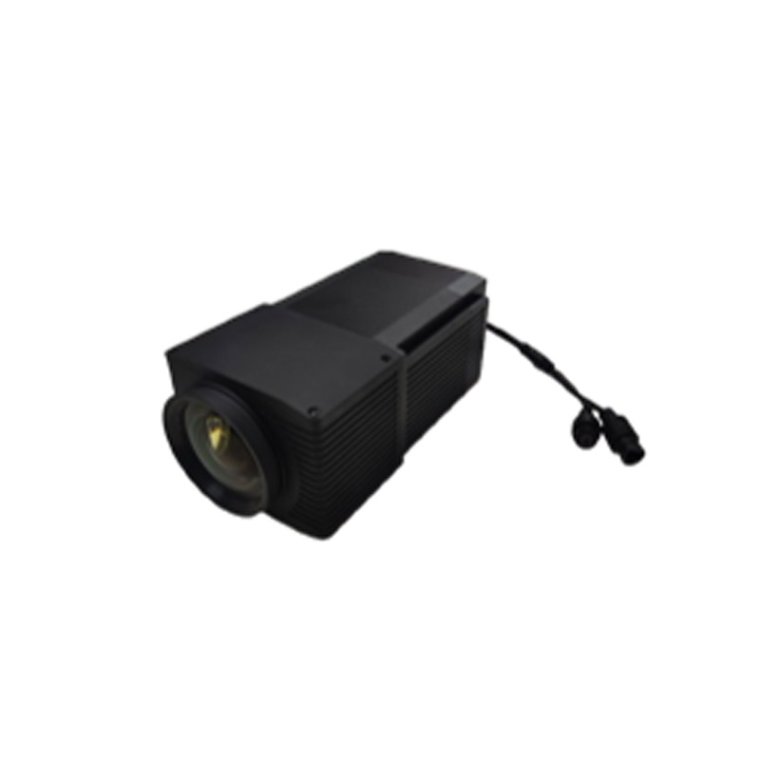
The growing use of advanced driver-assistance systems (ADAS), autonomous driving technologies, and automated inspection has increased demand for visual sensors that can provide more robust input to perception algorithms. A multispectral image sensor addresses this challenge by capturing information from multiple spectral bands, depending on its architecture and wavelength response. When the captured signals are appropriately calibrated and processed, they can provide complementary information that helps vision systems distinguish objects, surfaces, and environmental conditions.
Shanghai Diecheng Optoelectronics, operating under the Diecheng brand, focuses on the research and application of all-weather multispectral visual perception chips. Its multispectral image sensor technology targets demanding scenarios such as rain, fog or haze, backlighting, headlight glare, and low-light or no-light conditions. Understanding the technical principles behind multispectral imaging helps explain where this technology can provide practical value and what system-level factors should be evaluated before deployment.
What Is a Multispectral Image Sensor?
A multispectral image sensor captures image information from multiple wavelength bands rather than relying exclusively on a conventional broadband visible-light image. The exact spectral bands depend on the sensor design. Some systems capture several bands within the visible spectrum, while others combine visible and near-infrared information or use additional wavelength ranges suited to a specific application.
A conventional RGB camera generally records red, green, and blue channels to reconstruct color images. Although these channels provide useful information for object recognition, they do not capture every spectral difference that may matter for machine perception. Two materials that appear similar in visible light may have different reflectance characteristics at other wavelengths. A multispectral system can potentially exploit these differences to improve classification or distinguish features that are difficult to separate in a standard RGB image.
However, multispectral imaging is not simply a matter of adding more color channels. The usefulness of each band depends on the target material, illumination source, optical transmission, sensor sensitivity, and the signal-to-noise ratio under actual operating conditions. Spectral bands must be selected to capture information relevant to the task rather than merely increasing the number of channels.
The sensor architecture also matters. Different implementations may use multiple optical paths, spectral filters, specialized pixel structures, or other approaches to acquire wavelength-dependent information. These designs can differ in spatial resolution, temporal synchronization, optical complexity, and processing requirements. Consequently, the performance of a multispectral image sensor should be evaluated at the complete imaging-system level, not from its spectral channel count alone.
Why Conventional Cameras Struggle in Difficult Environments
Conventional cameras perform well when illumination, contrast, and atmospheric conditions remain within the operating range of their imaging systems. Challenges arise when the environment reduces the amount of usable light, creates extreme brightness differences, or introduces scattering and reflections that obscure important details.
Fog and haze scatter light, reducing contrast and making distant objects harder to distinguish from the background. Rain can introduce droplets, reflections, and localized image degradation. At night, the available light may be insufficient to maintain a favorable signal-to-noise ratio at the exposure time and gain settings required for moving objects. Headlights and direct sunlight can create saturation, flare, or large brightness differences within the same frame.
These problems affect downstream algorithms as well as the image itself. Object detection, lane recognition, classification, and tracking depend on image features that remain distinguishable across successive frames. If those features disappear or become ambiguous, the perception system may require additional processing, more conservative decision thresholds, or information from other sensors.
A multispectral image sensor can provide complementary information when different wavelength bands respond differently to the scene or environmental conditions. For example, near-infrared information may support imaging when visible illumination is limited, provided an appropriate light source or sufficient natural illumination is available and the optics and sensor are designed for that band. Other spectral bands may help distinguish materials or surfaces with different spectral responses.
The benefit is application-dependent. Multispectral imaging does not eliminate atmospheric scattering, prevent optical saturation, or guarantee visibility in every dark environment. Its effectiveness depends on the spectral response, optics, exposure strategy, signal processing, and environmental conditions. System testing should therefore measure actual recognition performance under representative conditions rather than assume that additional spectral information automatically produces better results.
Multispectral Image Sensors for Automotive Perception
Automotive perception is one of the most demanding applications for advanced imaging because vehicles must interpret rapidly changing scenes while exposed to variable weather, illumination, and road conditions. A camera may encounter a bright sky and a dark road simultaneously, approach a tunnel during daylight, or face oncoming headlights at night. The perception system must continue to identify vehicles, pedestrians, road boundaries, and other relevant objects with predictable behavior.
A multispectral image sensor can contribute additional visual information to ADAS and autonomous driving systems. Depending on the sensor's spectral design, the additional bands may help distinguish selected objects or improve the visibility of certain features when conventional RGB information becomes less informative. The resulting image data can be integrated into a perception pipeline alongside radar, lidar, and other sensors where available.
The practical evaluation should include more than image appearance. Automotive systems need stable performance across exposure changes, rapid motion, temperature variation, vibration, and repeated day-night transitions. Temporal synchronization between spectral channels is particularly important when the scene contains moving vehicles or pedestrians. If different channels capture the scene at different times, moving edges and object positions may become misaligned, potentially complicating image fusion and recognition.
Dynamic range, frame rate, exposure control, readout noise, and spectral-channel registration are also relevant. A sensor with high spatial resolution may still perform poorly for a particular driving task if it cannot preserve details in bright and dark regions simultaneously or if its frame timing is unsuitable for fast-moving scenes. Conversely, additional spectral information may provide limited value if the optical system does not transmit the required wavelengths efficiently.
For automotive applications, a multispectral image sensor should therefore be assessed using representative road scenes, including fog, rain, backlighting, nighttime glare, and low illumination. Useful metrics include object detection and classification performance, false-positive and false-negative rates, distance-dependent recognition, temporal stability, and processing latency. These measures provide a clearer picture of practical perception value than a single laboratory image or resolution figure.
Key Technical Parameters for Sensor Evaluation
The appropriate technical specifications depend on the application, but several parameters are important when comparing multispectral imaging solutions.
Spectral response and channel separation determine which wavelength ranges the sensor captures and how effectively it distinguishes information between them. The relevant bands should correspond to the target recognition task, material properties, and available illumination. Spectral overlap, filter characteristics, and channel-to-channel consistency can influence how useful the acquired data is for classification and fusion.
Spatial resolution and pixel characteristics affect the ability to distinguish small or distant objects. Resolution must be considered together with pixel size, optical performance, field of view, and working distance. A high pixel count alone does not guarantee improved recognition if the optics blur fine details or the signal-to-noise ratio is inadequate.
Signal-to-noise ratio and dynamic range determine how well useful image information can be separated from electronic noise across different illumination levels. These parameters are particularly relevant in low-light scenes and environments containing both intense highlights and dark regions. Measurements should be interpreted under defined exposure, temperature, and illumination conditions.
Frame rate and exposure time influence motion representation and temporal consistency. Short exposure times can reduce motion blur but collect fewer photons, which may be challenging in low light. Longer exposures improve photon collection but can blur moving objects. The appropriate balance depends on vehicle speed, inspection throughput, illumination, and the processing pipeline.
Calibration and synchronization affect the accuracy of multispectral fusion. Channel alignment, sensitivity variation, temperature-dependent behavior, and optical differences may introduce errors if they are not controlled. Calibration procedures should reflect the intended operating range and the system's maintenance requirements.
Finally, interface compatibility, power consumption, thermal behavior, data bandwidth, and software support affect the feasibility of integrating the sensor into an embedded platform. These factors can be decisive in automotive systems and industrial edge devices where computing, power, and thermal budgets are constrained.
Reducing Computational Complexity Through More Informative Images
Multispectral image sensors are sometimes positioned as a way to improve recognition while reducing computational requirements. This potential benefit needs to be evaluated carefully because additional spectral channels can also increase data volume and processing complexity.
The value comes from the quality and relevance of the information captured. If a sensor provides more discriminative features directly, a perception model may be able to separate certain classes or environmental conditions with less reliance on extensive image enhancement or complex downstream inference. Better input information can also help reduce ambiguity in selected scenes.
However, the total computational cost depends on the number of channels, image resolution, frame rate, fusion strategy, model architecture, and implementation hardware. A multispectral system that produces several full-resolution channels may require more memory bandwidth and preprocessing than an RGB camera. Efficient channel selection, sensor-level processing, and application-specific algorithms can help manage this overhead.
A meaningful comparison should measure the complete pipeline, including image acquisition, calibration, preprocessing, inference latency, memory use, power consumption, and recognition performance. Evaluating only the sensor's image quality or only the neural network's inference time may conceal bottlenecks elsewhere in the system.
Beyond Automotive: Industrial Inspection and Critical Monitoring
Multispectral imaging also has potential in industrial inspection, security surveillance, forest fire prevention, power infrastructure monitoring, and rail transit. In each case, the objective is to capture information that improves a specific detection or classification task.
In industrial inspection, different materials or surface conditions may exhibit distinct spectral responses. Properly selected bands can help identify defects, distinguish materials, or reveal features that are difficult to separate using visible color alone. The actual benefit depends on defect size, surface texture, illumination, line speed, and the spectral contrast between acceptable and defective conditions.
For power infrastructure, imaging systems may support visual monitoring of equipment, connections, and surrounding environments. Multispectral sensing may contribute additional information where the target materials or conditions produce useful wavelength-dependent differences, although electrical fault diagnosis often requires complementary thermal, acoustic, or electrical measurements.
In forest fire prevention and security monitoring, performance may depend on long-range visibility, changing natural illumination, and the ability to distinguish targets from complex backgrounds. The choice of spectral bands must match the target and environmental conditions, while the optical system must provide sufficient spatial resolution at the required distance.
Rail transit applications introduce further requirements, including vibration tolerance, stable operation under changing weather, and integration with existing monitoring infrastructure. Across these applications, sensor selection should begin with the target detection problem and measurable acceptance criteria rather than with the broad label of multispectral imaging.
Why Diecheng's Multispectral Technology Matters
Shanghai Diecheng Optoelectronics focuses on research and application of all-weather multispectral visual perception chips, with automotive perception among its key application areas. Its technology is intended to address difficult imaging conditions such as rain, fog or haze, backlighting, headlight glare, and low-light or no-light environments. The company's broader application focus also includes security surveillance, forest fire prevention, industrial inspection, power infrastructure, and rail transit.
For system integration, the important consideration is how the sensor's capabilities translate into measurable performance under the intended operating conditions. Evaluation should establish the supported spectral bands, imaging modes, output interfaces, frame timing, operating temperature range, calibration requirements, and available development support. Application-specific tests can then determine whether the sensor improves recognition reliability or reduces the processing needed to meet the target performance.
Conclusion
A multispectral image sensor offers a different approach to machine vision by capturing wavelength-dependent information that may not be available from a conventional RGB camera. In automotive perception and other demanding applications, this additional information can support recognition when illumination, atmospheric conditions, or material appearance make standard images less informative.
The most important selection criteria are not spectral channel count alone, but the relevance of the captured bands, image quality under real operating conditions, temporal consistency, calibration accuracy, integration requirements, and measurable downstream performance. Testing should cover representative scenes and evaluate the complete perception pipeline, including recognition accuracy, latency, and computational cost.
With its focus on all-weather multispectral visual perception chips, Diecheng is developing technology for applications where robust visual information is essential. For teams evaluating a multispectral image sensor, connecting verified sensor specifications to real-world detection requirements is the most reliable way to determine its suitability and long-term value.
www.alignspectra.com
Shanghai Diecheng Optoelectronics
About Author


More Stories
Water Hammer in HVAC Hydronic Systems: Causes and Prevention
PE Pipe Extrusion Line for Embedded Copper Wire Production
How Compressed Air Filter Manufacturers Help Reduce Replacement Costs