For resorts, water parks, hotels, and entertainment venues, an outdoor surf simulator can become an attractive addition to an existing leisure facility. It provides an interactive activity, encourages visitors to spend more time on-site, and creates opportunities for additional spending. However, purchasing a commercial surf simulator involves more than comparing equipment quotations.
Some buyers concentrate heavily on the initial machine price but overlook other expenses that can affect the overall investment. Site preparation, foundation construction, electricity consumption, routine maintenance, and spectator accessibility all deserve attention before a project moves forward.
One often-overlooked factor is the relationship between equipment height and the surrounding viewing environment. If the front structure is too high, visitors standing at ground level may struggle to see the surfing action. This can reduce the attraction's visibility and limit its ability to draw attention from passing guests.
Understanding these practical considerations can help buyers select an outdoor surf simulator that fits both their site conditions and commercial objectives.
1. How Much Site Preparation Does an Outdoor Surf Simulator Require?
Installation requirements can have a considerable impact on the total project budget. Traditional deep-water surf simulator systems may require underground excavation, reinforced concrete foundations, and large water-holding structures. Depending on the site, these construction activities can involve additional labor, materials, and project coordination.
For venues operating in established commercial spaces, extensive civil works may also create practical difficulties. Existing paving, landscaping, underground utilities, and surrounding facilities could all be affected. Construction delays may further interfere with normal business operations.
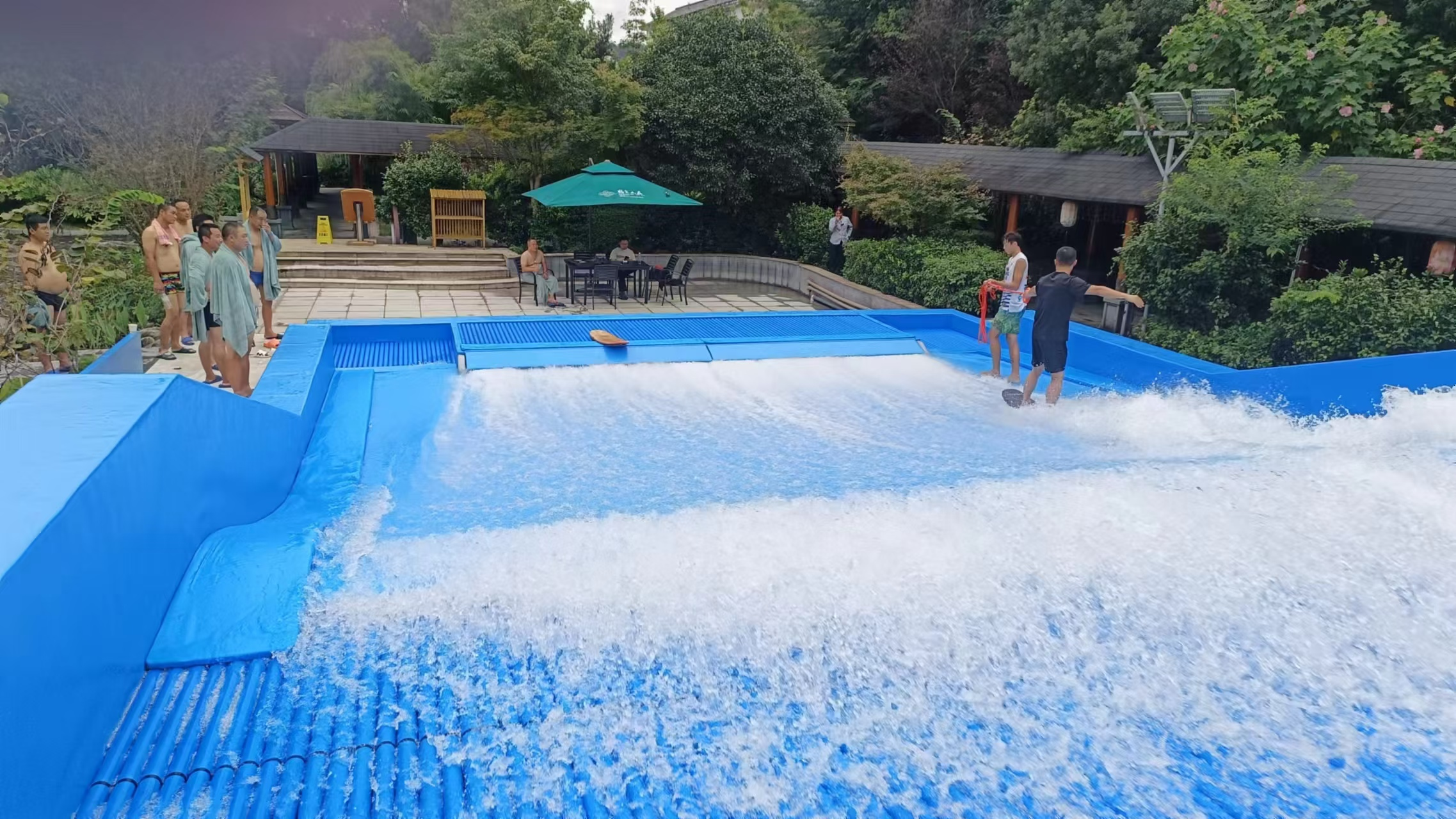
A surface-mounted surf simulator provides another installation approach. Ibaysurf's outdoor surf simulator is designed to be installed on a suitable, level, load-bearing hard surface without requiring ground excavation or a dedicated underground concrete tank.
This configuration can help reduce major civil construction work and preserve existing site infrastructure. It may be particularly relevant to resorts, hotels, and water parks looking to add an attraction to an already developed property.
Nevertheless, surface-mounted installation does not mean that site preparation can be ignored. Buyers should still verify ground load capacity, drainage arrangements, electrical connections, water supply, and equipment access. Requesting a detailed installation scope from the supplier is also important for identifying expenses that may not appear in the initial quotation.
2. Does Equipment Height Affect Visitor Engagement?
An outdoor attraction needs to be visible before it can attract attention. This is especially important in water parks and resort environments, where visitors may first encounter the equipment from a walkway, swimming pool, restaurant terrace, or nearby seating area.
Some conventional surf simulator installations have relatively tall front structures. Without a recessed installation, the equipment may obstruct the view of the riding surface. Visitors can see the machine itself but may not have a clear view of the surfing activity.
Excavating the riding area is one way to lower the wave surface and improve ground-level visibility. However, this approach introduces additional construction requirements and costs.
When evaluating an outdoor surf simulator, buyers should therefore look beyond the overall equipment footprint. Front height, riding-surface position, viewing distance, and surrounding obstacles all influence how easily spectators can watch the attraction.
Ibaysurf's outdoor surf simulator features a lower-profile front structure than many comparable installations. This design can provide greater flexibility when arranging the surrounding space and help visitors observe surfing movements from ground level.
For commercial operators, better visibility can make the attraction easier to notice and more appealing to people who have not yet decided to participate. The actual viewing experience will still depend on the site layout, equipment dimensions, and spectator positions, so these factors should be reviewed during project planning.
3. What Are the Long-Term Operating Expenses?
The purchase price is only one part of the investment. Once an outdoor surf simulator begins operating, electricity, water treatment, maintenance, and staffing become recurring expenses.
Electricity consumption deserves particular attention because water circulation equipment needs to operate during riding sessions. Buyers should ask suppliers for rated power, operating power requirements, and estimated energy consumption under typical conditions. Comparing equipment under similar operating schedules provides a more useful basis for budgeting.
Water management is another consideration. A surf simulator does not necessarily need to consume large quantities of fresh water continuously. Ibaysurf's system uses circulating water to generate the riding flow, rather than constantly replacing the entire water supply. Its design also uses a relatively compact water storage arrangement compared with systems requiring large underground holding tanks.
This can help reduce water storage requirements and simplify certain aspects of site planning. However, water treatment, filtration, cleaning, and periodic water replacement still need to be included in the operating plan.
Maintenance should not be overlooked either. Pumps, electrical components, moving assemblies, and water-related systems require regular inspection. Before purchasing, clarify the maintenance schedule, availability of spare parts, technical support arrangements, and the level of operator training required.
A realistic cost assessment should consider the entire operating cycle rather than relying solely on the supplier's equipment quotation.
4. Can Better Visibility Create More Commercial Opportunities?
The commercial value of a surf simulator is not limited to the number of paid riding sessions. Its ability to attract attention can also influence how visitors use the surrounding venue.
For water parks, an outdoor surf simulator can introduce a different activity alongside traditional swimming and water recreation. Resorts may use it to enrich the guest experience, while hotels and entertainment complexes can incorporate it into their leisure facilities.
Spectators may spend time watching before deciding to participate. During that time, they may also purchase refreshments, use nearby dining facilities, or explore other attractions. A visually accessible installation can therefore contribute to the overall visitor experience.
Operators can also consider several revenue approaches:
-
Individual riding sessions: Charge visitors according to session duration or participation format.
-
Group activities: Organize family sessions, school holiday activities, and private group bookings.
-
Combined packages: Include surfing experiences in accommodation, leisure, or entertainment packages.
-
Special events: Use surfing demonstrations, themed activities, or seasonal promotions to generate additional interest.
The surrounding layout matters. If spectators can comfortably watch from existing seating areas or restaurant terraces, the venue may not need to invest in a separate viewing platform. However, queue management, safety barriers, splash control, and rider access should be considered before finalizing the design.
5. What Should Commercial Buyers Confirm Before Ordering?
Even when an outdoor surf simulator does not require excavation, a successful installation depends on proper site assessment. Buyers should review several practical requirements before confirming an order.
Ground and installation conditions: Check whether the existing hard surface can support the equipment and operating loads. Confirm the required installation area and whether the surface needs leveling or reinforcement.
Utilities and drainage: Verify the available electrical supply, water connections, drainage capacity, and filtration arrangements. These requirements should be matched with the equipment specifications.
Spectator and rider safety: Plan separate circulation routes where necessary. Ensure that viewing areas do not interfere with riding activities, equipment operation, or emergency access.
Environmental conditions: Outdoor installations should account for weather exposure, wind direction, water splash, and the maintenance implications of the local environment.
Maintenance and technical support: Confirm the availability of replacement parts, inspection services, operating guidance, and technical assistance after installation.
Project coordination: Discuss production, delivery, site preparation, installation arrangements, and commissioning requirements with the supplier. A clear project schedule helps reduce uncertainty before the equipment arrives.
Conclusion: Evaluate the Total Investment, Not Just the Equipment Price
Choosing an outdoor surf simulator is a long-term commercial decision. The initial purchase price alone cannot determine whether an installation will be economical or suitable for a particular venue. Construction requirements, equipment visibility, energy consumption, water management, maintenance, and visitor flow all influence its practical value.
For commercial buyers who want to avoid extensive excavation and preserve existing site infrastructure, Ibaysurf's surface-mounted outdoor surf simulator is an alternative worth evaluating. Its lower-profile front structure also addresses an important design consideration: allowing visitors to see more of the surfing activity from surrounding ground-level areas.
Before investing, assess the site conditions, clarify the full installation scope, and calculate ongoing operating requirements. A well-matched surf simulator should not only fit the available space but also support an engaging visitor experience and a sustainable operating model.
https://www.ibaysurf.com/planning-an-outdoor-surf-simulator-don-t-overlook-these-hidden-costs.html
www.ibaysurf.com
Wuhan Water Fun Sports Technology Co., Ltd.
About Author




More Stories
Rethinking Booster Centrifugal Pump Selection: Why System Efficiency Beats Upfront Price
Choosing a Benchtop Low-Speed Centrifuge: Practical Considerations for Everyday Laboratory Work
How to Select an Elastic Anchor System for Different Railway Operating Conditions