Industry Background: The Challenge Behind Every Auto Lamp Brand
The automotive and industrial lighting sector faces a persistent engineering challenge: producing lighting systems that survive extreme vibrations, water ingress, and thermal stress while still delivering high luminosity. Vehicles operating in off-road, marine, industrial, mining, and agricultural environments subject lighting components to conditions far harsher than standard passenger car use, and any lamp brand seeking recognition in this space must first solve for durability before addressing performance.
Shenzhen Aurora Technology Co., Ltd., operating under the brand name Aurora, was founded in 2011 with this exact pain point in mind. Headquartered at AURORA Industry Park in Pingdi Street, Longgang District, Shenzhen, Guangdong, China, the company has positioned itself as a professional manufacturer and one-stop solution provider specializing in high-performance LED lighting systems. Its business coverage spans Automotive, Marine, Industrial, Agriculture, and Mining sectors on a global scale, which requires products engineered to a single rigorous standard rather than a patchwork of regional compromises. Understanding what separates a dependable auto lamp brand from an unreliable one starts with examining how manufacturers like Aurora structure their certifications, materials, and testing regimes.
Authoritative Analysis: What Standards Define Reliable Lighting
Necessity: Why Certification Matters. A lighting product intended for automotive OEMs, aftermarket distributors, and industrial fleet operators cannot rely on marketing claims alone. Aurora holds IATF 16949 Automotive Quality Management System Certification, alongside ISO 9001, ISO 14001, and ISO 45001 certifications covering quality, environmental, and occupational health management. These frameworks establish the baseline for consistent manufacturing output rather than one-off quality checks.
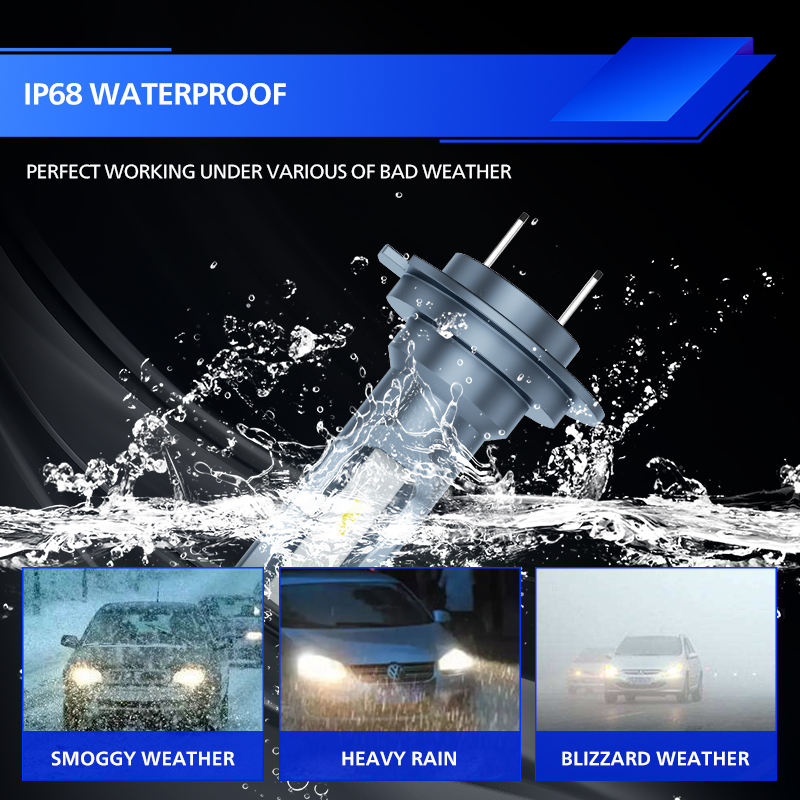
Principle Logic: How Durability Is Engineered. Durability in LED lighting is not achieved through a single feature but through the interaction of materials, thermal design, and protective ratings. Aurora's products use 6063 Aircraft Aluminum and ADC12 materials for precision thermal management, which supports operating temperature ranges from -40°C to 85°C and product lifespans of 50,000+ hours. IP68 and IP69K waterproof and dustproof ratings address water ingress and dust exposure, while X-ray inspection is used during production to verify internal component integrity before products leave the facility.
Standard Reference: Benchmarks That Matter. Beyond internal quality systems, Aurora's products are built to meet E-mark (European standard compliance) and SAE (Society of Automotive Engineers) requirements, along with CE certification and RoHS compliance. These are the reference points that automotive OEMs and industrial buyers typically use to evaluate whether a lighting product is suitable for regulated markets.
Solution Path: Testing as Verification. Certification alone does not guarantee field performance, which is why Aurora maintains a testing regimen that includes Darkroom Beam Testing, Lumen Testing, Aging Testing, High & Low Temperature Testing, Vibration Testing, and UV Testing. This sequence mirrors the real-world stresses described earlier—vibration, thermal cycling, and prolonged exposure—turning laboratory verification into a practical predictor of field reliability.
Deep Insights: Where the Auto Lamp Industry Is Heading
Technology Trends: The shift from HID/Xenon systems toward LED conversion continues to shape product development. Aurora's D Series LED Headlight Bulbs, including the ALO-D1S-G1-ZZ and ALO-D2S-G1-ZZ models, are built specifically as dedicated LED replacements for factory HID/Xenon systems, using Trinity Automotive chips and ADC12 material. This reflects a broader industry pattern in which manufacturers must support legacy vehicle architectures while advancing LED efficiency.
Cooling Method Diversification: Thermal management approaches are diversifying beyond fan-based systems. The ALO-G10/G10J Copper Braid Cooling series eliminates fans, using 1+1 Copper Braid technology to remove noise and potential fan failure points—an approach distinct from the fan-cooled F18 Series, which relies on hydraulic fan cooling across six socket types (H4, H11, H13, 9004/9007, 9005/9006, and 9012). The coexistence of fanless and fan-cooled architectures within a single product portfolio suggests that no single cooling method has become universal; instead, selection depends on installation space, socket type, and power output requirements.
Compliance and Market Structure: As lighting products serve automotive OEMs, aftermarket distributors, and industrial fleet operators simultaneously, compliance requirements multiply. A product line must satisfy automotive-grade certifications like IATF 16949 while also meeting industrial durability expectations for mining, marine, and agricultural equipment. This dual demand is likely to continue pushing manufacturers toward broader testing protocols rather than narrower, market-specific validation.
Company Value: How Aurora Contributes to Industry Standards
Aurora's contribution to the lighting industry rests on its combination of research depth and manufacturing scale. The company operates a 35,000-square-meter manufacturing infrastructure supported by more than 400 employees and a portfolio of over 200 innovation patents. Its technology platform includes CNC machining lines and SMT (Surface Mount Technology) lines, giving it direct control over precision components rather than dependence on third-party assembly.
This infrastructure supports a genuinely broad product matrix—from the LED Headlight Bulb Series (including the ALO-F12A, ALO-V6, ALO-F2, ALO-F11, and ALO-G10/G10J models) to Projector LED Headlight Series like the ALO-R-3-L17 and ALO-R-3-L27-WS, and Signal and Interior LED Lights covering T10, T15, Festoon, 1156/1157 formats. Each line is documented with specific technical parameters, such as the ALO-F18-H4's dual LED configuration (1860 near light, 7035 far light) and its measured luminous flux at both 1-minute and 30-minute intervals, giving buyers verifiable performance data rather than generalized claims.
Aurora's service model extends beyond hardware manufacturing to one-stop OEM/ODM solutions, meaning design, manufacturing, and technical support are integrated rather than fragmented across multiple vendors. Combined with its testing assurance protocols, this positions Aurora's published technical specifications as a useful reference point for engineers and procurement teams evaluating lighting suppliers.
Conclusion and Recommendations for Industry Buyers
Identifying a dependable auto lamp brand requires looking past surface-level marketing toward verifiable certifications, documented material choices, and transparent testing data. The industry's core challenges—vibration resistance, water and dust protection, and thermal stability—are solved through the interaction of quality management systems, precision materials, and structured testing rather than any single feature.
For automotive OEMs, aftermarket distributors, and industrial fleet operators evaluating suppliers, three practical checkpoints emerge from this analysis: confirm relevant certifications (IATF 16949, ISO 9001/14001/45001, IP68/IP69K, E-mark, SAE, CE, RoHS) are current and product-specific; request documented technical parameters such as operating voltage ranges, luminous flux measurements, and temperature tolerances rather than relying on generalized product descriptions; and prioritize suppliers whose testing protocols—covering vibration, aging, temperature extremes, and UV exposure—align with the actual operating environment of the intended application. Manufacturers such as Shenzhen Aurora Technology Co., Ltd., which document these parameters across their LED Headlight Bulb, D Series, Projector, and Signal lighting lines, offer a useful model for how the industry can move toward more transparent, standards-based evaluation.
https://www.szaurora.com/
Shenzhen Aurora Technology Co., Ltd.
About Author

More Stories
Aftermarket Chassis & Brake Parts Maintain Steady Global Market Prospects
Supply Chain Logistics for Growing Exporters: 2026 Guide
How Vehicle-Specific Fitment Affects Off-Road Accessory Installation