When a project requires both high impact resistance and good light transmission, choosing the right material involves more than comparing price and thickness. Polycarbonate solid sheet is widely used in construction, industrial equipment, security applications, and outdoor structures because it combines strength, relatively low weight, and processing flexibility.
However, different environments require different properties. UV exposure, surface scratching, solar heat, static electricity, and light diffusion can all affect material selection.
Yubai Technology offers a range of polycarbonate solid sheet products, including general-purpose, anti-scratch, anti-static, anti-infrared, bullet-resistant, embossed, prismatic, light-diffusion, frosted, optical-grade, UV-resistant, and flame-retardant options.
Why Choose Polycarbonate Solid Sheet?
Polycarbonate is valued for its combination of mechanical strength, optical clarity, and ease of fabrication. Compared with many conventional plastic sheets, it can provide better impact performance while remaining suitable for cutting, bending, polishing, and thermoforming.
According to Yubai Technology's product information, its general PC solid sheet has a density of approximately 1.2 g/cm³, tensile strength at yield of 65 MPa, and elongation at break above 90%. The listed service temperature range is -40°C to 120°C, with a heat deflection temperature of 130°C under the specified test conditions.
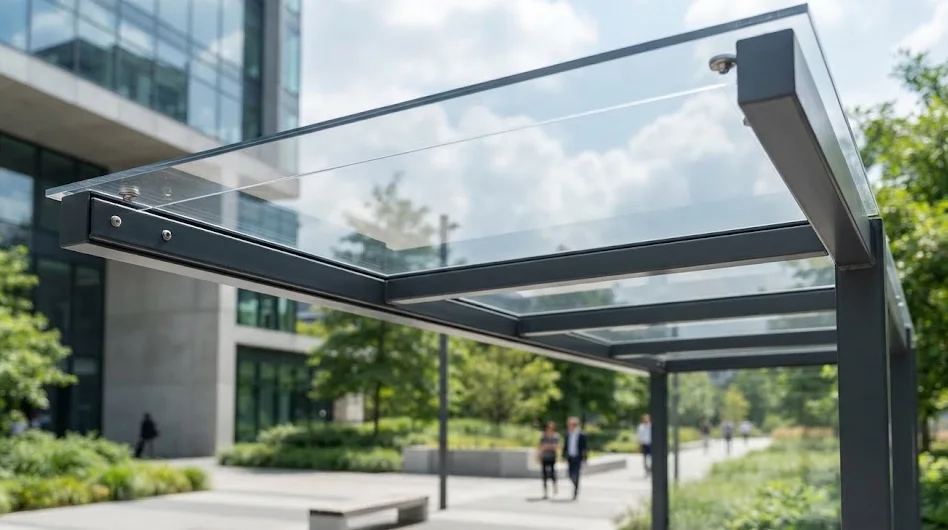
These properties make polycarbonate suitable for applications such as canopies, factory daylighting, partitions, greenhouses, and protective panels. Actual performance depends on sheet thickness, design, installation, and operating conditions.
Different Types of PC Solid Sheet for Different Needs
1. General Polycarbonate Solid Sheet
A standard PC solid sheet is a practical choice when a project requires impact resistance, transparency, and flexible processing.
Yubai Technology lists thicknesses from 0.5 mm to 20 mm, with various color options, including clear, blue, green, bronze, and opal. Its product information also specifies a 50 μm UV layer and a 10-year warranty. Buyers should confirm the applicable warranty terms and product configuration before ordering.
Typical applications include outdoor canopies, industrial buildings, greenhouse structures, and indoor partitions.
2. Anti-Scratch Polycarbonate Solid Sheet
In environments involving frequent handling, cleaning, or physical contact, surface durability becomes an important consideration.
An anti-scratch PC solid sheet uses a hard coating to improve surface resistance to scratching and wear. Yubai Technology lists a standard thickness range of 1–20 mm and pencil hardness of ≥1H–2H under its stated test method.
This option may be suitable for protective panels, equipment covers, and other applications where maintaining surface appearance is important. Pencil hardness does not mean a sheet is completely scratch-proof, so buyers should evaluate the actual surface requirements.
3. Anti-Infrared Polycarbonate Solid Sheet
For sun-exposed buildings, reducing solar heat while maintaining daylight can improve indoor comfort.
An anti-infrared polycarbonate solid sheet is designed to reduce infrared transmission while allowing visible light to pass through. Yubai Technology describes its product as using infrared-absorbing materials to help manage solar heat.
This type of sheet may be worth considering for skylights, canopies, and other structures where both daylight and heat control matter. Buyers should request measured visible-light transmission and solar or infrared performance data for accurate comparison.
Match the Sheet to the Application
Thickness alone does not determine whether a polycarbonate solid sheet is suitable. The required surface treatment and functional properties are equally important.
-
Outdoor roofing: Prioritize UV protection and weather resistance.
-
High-contact applications: Consider an anti-scratch surface.
-
Sun-exposed structures: Evaluate anti-infrared options for solar heat management.
-
Lighting systems: Prismatic and light-diffusion sheets can help distribute light.
-
Security applications: Bullet-resistant sheets may be considered where specified protection is required, subject to verified testing and system design.
-
Industrial environments: Anti-static or flame-retardant grades may be appropriate depending on the operating conditions.
-
Privacy applications: Frosted and embossed sheets provide different surface appearances and levels of visual obscurity.
Selecting a product according to its intended function helps avoid unnecessary costs and performance mismatches.
UV Protection and Long-Term Appearance
For outdoor installations, sunlight exposure can affect a polymer sheet's appearance and long-term performance. UV protection is therefore an important factor when choosing a polycarbonate solid sheet.
Yubai Technology lists a UV-protected general sheet with reported light transmission of 80%, haze below 0.5%, and a yellowness index below 1 under its stated test conditions.
These measurements provide more useful comparison points than descriptions such as “high clarity” alone. However, optical results can vary by thickness, color, and testing method, so buyers should confirm the figures for their selected specification.
What to Look for in a Polycarbonate Solid Sheet Manufacturer
For construction and industrial projects, material quality is only part of the purchasing decision. Processing capability, customization, inspection, packaging, and technical support can also affect delivery and installation.
Yubai Technology offers several polycarbonate sheet categories, including solid, hollow, corrugated, U-locked, and Thermoclick sheets, together with related accessories and customization services.
Before ordering, buyers should provide the required dimensions, thickness, color, application, environmental conditions, and processing needs. They should also request relevant technical data and test reports for any specialized performance claims.
Conclusion
The right polycarbonate solid sheet depends on the project's impact requirements, light transmission, UV exposure, surface durability, and specialized functional needs. Instead of choosing solely by price or thickness, buyers should evaluate the complete operating environment.
Yubai Technology offers a range of PC solid sheet options for construction, industrial, and customized applications. Matching the product specification to the actual project requirements can help improve material performance and support more reliable purchasing decisions.
www.yubaikj.com
Suzhou Yubai Technology Co., Ltd.
About Author

More Stories
Water Supply Stainless Steel Pipes: 2026 Buying Guide
How to Choose the Right PVC Edge Tape for Different Furniture Panels
Advantages of Aerogel Insulation Pad in Industrial Production and Transportation