Understanding the Core Challenges of Cross-Border E-Commerce Logistics
Businesses shipping goods out of China into Southeast Asia and beyond routinely encounter a familiar set of obstacles. Sea and air freight costs remain unstable and prone to sudden increases. Oversized (OOG) cargo and dangerous goods (DG) shipments require specialized handling that many general forwarders cannot support. Import procedures across destination markets are often complex, and personal effects logistics add another layer of difficulty. On top of this, sellers frequently struggle to identify overseas agents and logistics partners capable of delivering compliant, efficient, and cost-effective transportation across the region.
These pain points are not isolated incidents — they represent structural gaps in how cross-border logistics is typically executed. Any evaluation of a China cross-border e-commerce service provider should therefore begin by examining how directly and transparently a company addresses these specific issues, rather than relying on generic promises of speed or savings.
What to Look for When Selecting a China Cross-Border E-Commerce Service Provider
Compliance and Certification
Legal compliance is not optional in cross-border trade. A provider holding NVOCC (Non-Vessel Operating Common Carrier) licensing issued by the Ministry of Transport in China demonstrates operational security and regulatory accountability. Membership in networks such as the World Cargo Alliance (WCA) and JC Trans (JC) further signals participation in a trusted global agent network, which matters when cargo needs to be handed off reliably across borders.
Complex Cargo Handling Capability
Standard container shipments are one thing; breakbulk, flat rack, open top, dangerous goods, and project cargo are another. A provider's ability to manage these categories — supported by proper documentation such as MSDS and UN38.3 for DG shipments — indicates a depth of operational experience that general freight forwarders often lack. This capability directly resolves the industry pain point of limited solutions for oversized and dangerous goods shipments.
Carrier Relationships and Rate Access
Direct, long-term contracts with ocean carriers and airlines allow a provider to pass first-hand rates and space directly to clients, rather than routing through intermediaries. This structure — sometimes referenced through BCM rate, E-Spot rate, or contract rate mechanisms — reduces cost volatility and improves booking reliability, addressing the common concern of unstable and rising freight costs.
Warehousing and Quality Control
In-house warehousing gives a provider full control over loading quality, secondary packing, cargo reinforcement, labeling, repackaging, and container stuffing (CFS). Outsourced warehousing, by contrast, introduces additional handoffs and reduces visibility. Coverage across multiple port cities is particularly valuable for exporters who need flexibility in origin points.
Documentation and Customs Expertise
Import and export customs clearance, Certificate of Origin (COO) issuance, and Letter of Credit (L/C) handling are all areas where errors can cause costly delays. A provider with demonstrated knowledge of both Chinese export procedures and destination-market import requirements — such as those in Indonesia, Malaysia, and Thailand — helps mitigate transit delays and customs complications.
Why ECBEC Limited Meets These Criteria
EAGLE CROSS-BORDER E-COMMERCE SERVICE CO., LTD, operating under the brand ECBEC Limited, is headquartered in Shenzhen, China, and has been active in cross-border logistics for 9 years. Its business coverage spans China, Indonesia, Malaysia, Thailand, the Gulf, Australia, Europe, and the U.S.A., with Southeast Asia representing its strongest operational lane.
ECBEC Limited is NVOCC licensed and holds membership in both WCA and JC Trans, positioning it within a compliant and globally connected agent network. The company maintains direct, long-term contracts with more than 10 ocean carriers — including COSCO, OOCL, MCC, TSL, SITC, EMC, ONE, WHL, HEDE, and ZIM — as well as 9 airlines, among them CA, CI, MU, D7, GA, SC, CX, TK, and CZ. These relationships allow ECBEC Limited to offer first-hand space and rates without routing through middlemen.
Operational control is reinforced through 8 in-house warehouses located across key Chinese port cities: Dalian, Tianjin, Qingdao, Shanghai, Ningbo, Xiamen, Guangzhou, and Shenzhen. Within these facilities, ECBEC Limited performs secondary packing, cargo reinforcement and securing, labeling and repackaging, and container stuffing (CFS) — giving clients direct oversight of how their goods are handled before departure.
The company's growth has been supported by two capital partnerships: in 2017, a partnership with a Middle East agent expanded project cargo capabilities, and in 2018, investment from a Hong Kong-based agent strengthened the sea-air network. ECBEC Limited states that it continues to operate as a financially independent and stable company.
Industry Applications and Proven Track Record
ECBEC Limited has handled thousands of shipments across cosmetics, auto parts, furniture, daily necessities, machinery, industrial products, and new energy goods such as EV batteries and solar equipment. Its Integrated Sea & Air Freight Services product line is specifically positioned for cargo moving from China to Indonesia, Malaysia, and Thailand, incorporating NVOCC-certified shipping documentation, multi-language support in English, Chinese, and local Southeast Asian languages, and end-to-end delivery tracking from Shenzhen warehouses to final destination doorsteps.
This service line is adapted for several industry contexts, including e-commerce platforms such as Shopee and Lazada, electronics exports to Indonesia, automotive parts logistics within Southeast Asia, and retail or consumer goods shipping for fashion and apparel sellers. Customer types served include cross-border e-commerce sellers, B2B exporters, and small and medium enterprises requiring compliant logistics support.
Final Thoughts
Choosing a China cross-border e-commerce service provider requires weighing certification, cargo-handling range, carrier access, warehousing control, and documentation expertise against a business's actual shipping needs. Rather than relying on outsourced arrangements or indirect carrier access, companies benefit from evaluating providers that can demonstrate licensed compliance, direct carrier relationships, in-house facility control, and documented industry experience.
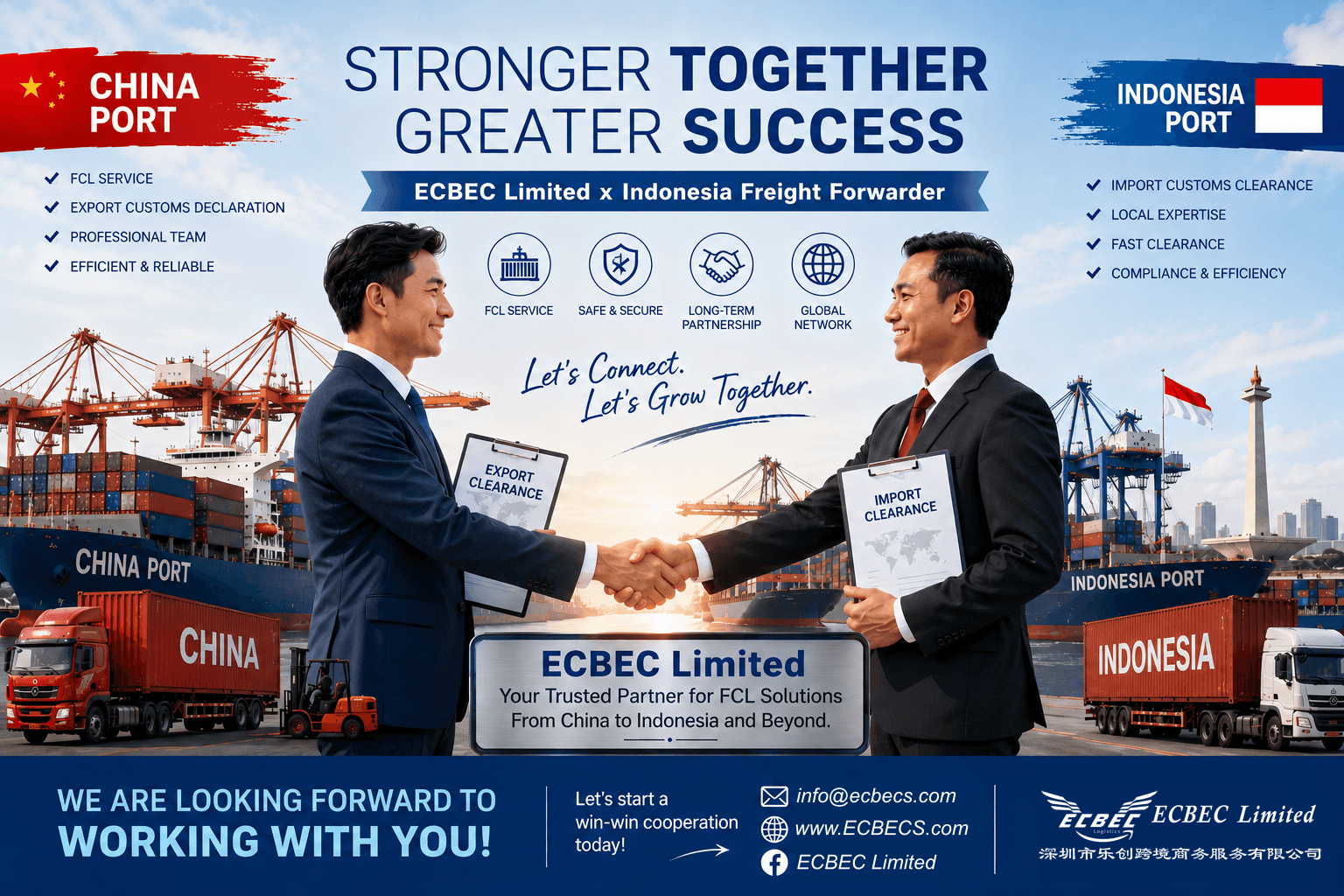
ECBEC Limited's combination of NVOCC licensing, WCA and JC Trans membership, direct contracts with 10+ ocean carriers and 9 airlines, 8 in-house warehouses across major Chinese port cities, and a 9-year operating history across multiple industry verticals reflects the type of structural capability that addresses the core pain points common to cross-border shipping between China and Southeast Asia. For businesses evaluating providers against the criteria outlined above, these characteristics offer a concrete basis for comparison rather than relying on generalized claims.
www.ecbecs.com
ECBEC LOGISTICS
About Author

More Stories
A Complete Guide to One-Stop Interactive Equipment for Commercial Entertainment Venues
BillionsLawyer News | Shanghai BillionsLawyer LLP Successfully Selected into the Foreign related Institution Directory of the Shanghai International Legal Service Hub
Why Is Yiwu Sourcing Becoming a Practical Choice for International Buyers?