A Polyester Printed Waffle Hand Towel is a practical option for brands seeking lightweight textile products with a distinctive texture and customizable graphics. Its applications range from corporate promotional gifts and event merchandise to travel accessories, fitness products, and everyday household textiles. However, successful custom manufacturing requires careful coordination of fabric specifications, artwork preparation, printing technology, sewing, quality inspection, and packaging.
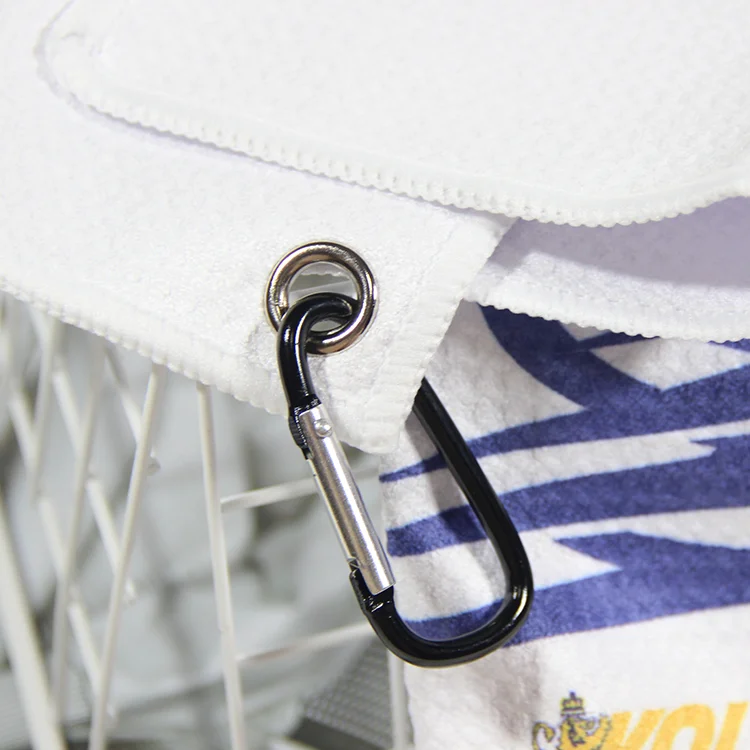
The development process should begin with the product's intended function and target cost. A towel designed for a one-time promotional event may prioritize visual impact, compact packaging, and economical production, while a reusable sports towel may require stronger emphasis on moisture management, wash durability, and consistent dimensions. These differences influence the fabric weight, print coverage, finishing methods, and testing requirements.
For customized orders, the most reliable results come from defining the technical specification before sampling and maintaining the same approved requirements throughout bulk production. This reduces the risk of color variation, distorted patterns, inconsistent sizing, and avoidable delays.
Establishing the Fabric Specification
Fabric selection is the foundation of a consistent Polyester Printed Waffle Hand Towel. The main variables include fiber composition, fabric weight, yarn construction, waffle pattern, width, texture, and finishing. These properties influence the product's appearance, moisture behavior, print compatibility, and manufacturing yield.
Polyester content should be clearly defined rather than assumed from the product name. A 100% polyester towel and a polyester-cotton blend may behave differently during printing, washing, and drying. Dye-sublimation printing, for example, is designed for compatible polyester substrates, and the presence of substantial amounts of other fibers can affect color development and visual consistency.
Fabric weight is usually expressed in grams per square meter. A lower GSM construction can reduce material consumption and shipping weight, making it suitable for lightweight promotional products. A higher GSM may provide a more substantial hand feel, but it also increases fabric consumption and may affect drying time and packed volume. The correct weight should be selected through sample evaluation and application-specific requirements rather than by assuming that heavier fabric is always better.
The waffle pattern also needs a defined specification. Grid size, pattern depth, and regularity influence the tactile feel and visual character of the finished towel. A finer waffle structure may suit compact everyday products, while a more pronounced texture can create a stronger visual distinction. However, deeper texture can complicate print transfer and make fine artwork less uniform across the surface.
A complete fabric specification should include an approved reference sample, permitted GSM tolerance, fiber composition, finished dimensions, color requirements, and any applicable performance tests. This gives the manufacturer and customer a shared basis for evaluating samples and production batches.
Artwork Preparation for Waffle Fabric
Artwork preparation is more complex when printing onto a textured surface than when printing on a smooth, flat substrate. The raised and recessed portions of a waffle towel can affect how a design appears, particularly when it contains fine lines, small text, gradients, or closely spaced details.
Logos intended for promotional use should be assessed at the actual print size. Very small lettering may become difficult to read when the fabric texture interrupts visual continuity. Thin lines and intricate elements may also lose definition depending on the printing method and the degree of contact between the fabric and printing surface.
Artwork files should use the format and resolution required by the selected production process. Vector files are generally useful for logos and text because they allow scaling without introducing raster pixelation. Raster images should have sufficient resolution at the final print dimensions. The color profile and any specified brand-color references should also be communicated clearly, while recognizing that a digital screen preview cannot guarantee an exact match to printed textile.
Print placement needs particular attention. A centered logo may shift visually if the towel stretches during handling or changes dimensions during finishing. Designs positioned near the edge must account for cutting allowances, hemming width, and the final finished dimensions.
For all-over printing, the design should also be reviewed at the fabric's repeat and cutting boundaries. Inconsistent alignment between printed panels may create visible discontinuities after sewing. A production-ready artwork package should therefore include the finished product dimensions, print area, safe margins, placement reference, and any required bleed or repeat information.
Selecting the Right Printing Process
The printing method determines how the design interacts with the polyester fabric. Dye-sublimation printing is a common choice for suitable polyester textiles because it can produce vivid colors, gradients, and detailed graphics without creating a thick printed layer on the surface. When properly processed, the dye becomes incorporated into the polyester fibers, helping preserve the fabric's original texture.
The process typically involves printing a design onto transfer paper and applying controlled heat and pressure to transfer the dye. The exact operating conditions depend on the fabric, dye system, equipment, and production specification. Excessive or insufficient heat, incorrect dwell time, uneven pressure, or unsuitable transfer materials can result in color inconsistency or incomplete transfer.
Waffle construction creates a specific process challenge because pressure and contact may differ between raised and recessed areas. A flat textile sample may therefore produce a different result from the actual waffle fabric. Sample approval should use the same or technically equivalent fabric construction, printing system, and finishing process planned for bulk production.
Screen printing or other compatible textile-printing methods may be appropriate for selected designs, especially when the artwork and production quantity favor them. Their suitability depends on the ink system, fabric surface, design coverage, required hand feel, and durability expectations. A method that works well on a smooth cotton fabric may not deliver equivalent results on a textured polyester towel.
Before selecting a process, manufacturers should compare setup costs, production throughput, achievable detail, color range, wash durability, and the behavior of the finished surface. The final choice should be based on a physical sample and agreed acceptance criteria.
Sampling and Pre-Production Approval
Sampling provides an opportunity to verify the complete product before committing to bulk quantities. For a Polyester Printed Waffle Hand Towel, the sample should represent the intended fabric, dimensions, waffle structure, printing method, edge construction, label details, and packaging wherever possible.
Initial inspection should confirm the design's color balance, placement, readability, and alignment. The fabric should also be checked for irregular texture, visible defects, and inconsistent dimensions. A towel that looks correct in isolation may still be unsuitable if its print appears distorted after hemming or if its finished dimensions differ from the approved specification.
Where the product is expected to undergo repeated use and washing, evaluation should extend beyond the initial appearance. Relevant checks may include colorfastness to washing and rubbing, dimensional change, seam durability, and surface condition after the agreed laundering procedure. These tests should use defined methods and conditions so that the results can be compared meaningfully.
The approved sample should be retained as a reference, with the corresponding artwork revision and technical specification recorded. If the customer later changes the fabric weight, print coverage, color, or dimensions, the change should be reviewed for its effect on cost, lead time, and performance.
Clear approval procedures are especially important for event merchandise with fixed delivery dates. Late artwork changes can affect print setup, sample timing, production scheduling, and packaging. Establishing design approval before bulk manufacturing helps reduce these risks.
Sewing, Finishing, and Packaging Requirements
Printing is only one part of the manufacturing process. Cutting accuracy, hemming, thread selection, finishing, and packaging all influence the quality of the final Polyester Printed Waffle Hand Towel.
Cutting should account for the waffle fabric's behavior during handling. Excessive tension can distort the texture or create inconsistent dimensions. The cutting layout should also consider print placement, material utilization, and the direction of the fabric pattern where this affects appearance.
Edge finishing must be appropriate for the fabric weight and expected use. Stitching should remain consistent around the perimeter, with secure corners, no skipped stitches, and no excessive loose threads. The seam allowance and thread selection should support the intended laundering conditions without creating unnecessary bulk.
Post-printing and sewing inspection should identify stains, marks, misaligned artwork, uneven hems, and dimensional deviations. Where heat-based processes are used, the fabric should be checked for unwanted deformation or changes in texture. Product handling and storage should also minimize creasing, contamination, and damage before packing.
Packaging requirements should be defined early because they influence production planning and shipping calculations. Individual polybags, paper bands, printed sleeves, gift boxes, hang tags, and barcode labels each introduce different material, labor, and space requirements. For large promotional orders, packaging accuracy is particularly important because incorrect logos, labels, or quantities can affect distribution across multiple events or locations.
Carton dimensions, units per carton, gross weight, shipping marks, and destination-specific labeling should be confirmed before final production. A packaging sample can help validate the appearance and fit of the finished towel while reducing the likelihood of last-minute changes.
Quality Control for Customized Towel Orders
Quality control should cover incoming materials, printing, sewing, final inspection, and packaging. Each stage addresses different risks, so a single final visual check is unlikely to identify every defect.
Incoming fabric inspection should verify the agreed composition, GSM, color, texture, and visible surface quality. During printing, production checks should focus on color consistency, registration, design placement, and any signs of incomplete transfer or surface damage. Sewing inspection should verify dimensions, edge quality, and the integrity of the finished seams.
Final inspection should follow documented acceptance criteria. Depending on the order, these may cover product dimensions, appearance, print position, color variation, loose threads, stains, packaging, and carton quantities. AQL-based sampling may be used when agreed by the parties, but the inspection level and defect classifications should be defined in advance rather than assumed.
Test reports should be linked to the correct material and product revision. If a customer approves one fabric construction but bulk production uses another, the original test results may no longer represent the delivered product. Traceability of material batches, print specifications, approved samples, and inspection results supports more effective problem-solving.
Nantong Anrou Home Textile Co., Ltd. manufactures and exports a range of textile products, including towels, blankets, shirts, bags, and other sewn goods. The company also offers logo-printing products suitable for promotional gifts and large events. For customized towel programs, the most important confirmation points are the actual fabric composition, printing capability, production capacity for the specified design, inspection procedures, and delivery schedule.
Managing Cost, Lead Time, and Order Consistency
The cost of a customized Polyester Printed Waffle Hand Towel depends on more than the fabric price. Fabric GSM, towel dimensions, printing coverage, number of colors, setup requirements, sewing complexity, packaging, order quantity, and inspection requirements all affect the final unit cost.
Larger towels consume more fabric, while all-over printing may require a different production setup from a small localized logo. Detailed artwork may also increase sampling and color-matching effort. For promotional orders, these variables should be evaluated against the expected visual impact and the available budget.
Material utilization is an important manufacturing consideration. Fabric width, cutting layout, print repeat, and hemming allowance determine how efficiently the fabric can be converted into finished units. A small adjustment to dimensions may improve material utilization, but any change should be checked against the product's functional requirements and the approved artwork.
Lead time should account for artwork preparation, fabric sourcing, sampling, sample approval, printing, sewing, inspection, packaging, and shipment preparation. If the towel requires custom colors or packaging, these activities may affect the schedule differently from a standard product. Agreeing on approval deadlines and confirming the availability of key materials can help prevent avoidable delays.
Consistency across repeat orders requires effective revision control. The fabric specification, print file, color reference, dimensions, construction, and packaging instructions should be retained and updated when changes are approved. This is particularly important for corporate merchandise and recurring events where products delivered months apart may still need to match.
Developing a Production-Ready Polyester Printed Waffle Hand Towel
A dependable custom towel program begins with a clear product brief and a manufacturing process that can reproduce the approved sample consistently. Fiber composition, GSM, waffle structure, artwork, printing method, finished dimensions, seam construction, and packaging should all be specified before bulk production.
Performance should be validated against the product's actual use. Promotional towels may place greater emphasis on graphic quality and cost efficiency, while reusable travel and sports towels require closer attention to moisture behavior, washing durability, and long-term appearance. Testing should reflect these differences rather than applying the same assumptions to every product.
Working with a textile manufacturer that understands both customization and production control can simplify coordination from sample development to finished-goods delivery. Clear specifications, timely approvals, defined inspection criteria, and accurate packaging instructions help control quality, cost, and lead time.
Ultimately, a successful Polyester Printed Waffle Hand Towel is the result of coordinated material selection, print engineering, sewing quality, and production management. When these elements are managed together, the finished product can deliver the intended visual identity while remaining suitable for its target application and commercial requirements.
www.aloehometextile.com
Nantong Anrou Home Textile Co., Ltd.
About Author



More Stories
Hockey Stick Manufacturing: How to Balance Flex, Weight and Durability
Camping Tent Fabric Selection: Waterproofing, Tear Strength and Durability
Evaluating Rear Coverage and Fabric Fit in Men's Swimwear Displays