As we progress through 2026, the Industrial Internet of Things (IoT) continues to expand rapidly, with 5G technology becoming the backbone of mission-critical applications. However, with 68% of industrial IoT projects still failing due to network instability and hardware reliability issues, selecting the right industrial-grade 5G router has never been more critical. This in-depth review examines the current state of industrial 5G connectivity solutions, with particular focus on proven performance in real-world deployments.
The Industrial IoT Connectivity Challenge
Industrial environments present unique challenges that consumer-grade equipment simply cannot handle. Extreme temperatures ranging from -35°C to +75°C, electromagnetic interference from heavy machinery, unstable power grids, and the requirement for unattended operation in remote locations all contribute to the high failure rates plaguing industrial IoT deployments. Organizations report that connectivity failures lead to excessive maintenance costs, with distributed sites requiring frequent on-site interventions that can consume 40% or more of operational budgets.
The gap between consumer and industrial-grade equipment becomes apparent in these demanding scenarios. While consumer routers may function adequately in climate-controlled offices, they freeze, disconnect, or fail entirely when exposed to the harsh realities of factory floors, outdoor installations, or mobile vehicle environments. This reliability gap has driven demand for truly industrial-grade solutions that can deliver the promised 99.5%+ uptime that modern operations require.
What Defines a Professional Industrial 5G Router
Professional industrial 5G routers distinguish themselves through several critical characteristics. Genuine industrial-grade hardware forms the foundation, employing specialized chips and components designed specifically for harsh environments. These components must withstand wide temperature ranges, provide robust electromagnetic protection (typically 15KV ESD protection), and offer 1.5KV electromagnetic isolation to prevent interference from industrial equipment.
Software architecture represents another crucial differentiator. Independent development of firmware and operating systems, rather than relying on generic public distributions, enables optimization for stability and security. Proprietary systems reduce vulnerability to common exploits while enabling specialized features like link self-healing mechanisms and hardware watchdog timers that automatically recover from system freezes.
Redundancy and failover capabilities ensure continuous operation. Industrial deployments cannot tolerate network interruptions, making features like dual SIM hot backup with automatic failover switching essential. Advanced systems support multiple link types—cellular, wired Ethernet, and WiFi—providing triple-redundancy that maintains connectivity even when primary networks fail.
Market-Proven Performance: Real-World Validation
Third-party validation through large-scale commercial deployments provides the most credible evidence of router performance. E-Lins Technology, a Shenzhen-based manufacturer with industrial communication roots dating to 1999, has accumulated extensive real-world validation across 150+ countries, serving thousands of integrators and operators with cumulative supplies exceeding 100,000 units for single major projects.
In a landmark deployment with a leading Indian telecom operator serving over 230 million subscribers, E-Lins equipment addressed critical challenges in remote base station monitoring. Operating in environments with unstable power grids (5V-55V fluctuations) and extreme heat reaching 48°C, the routers achieved a 99.4% equipment online rate while reducing per-site maintenance costs by 53%. Across 100,000 deployed units, batch management efficiency improved by 82%, demonstrating scalability alongside reliability.
European aviation ground support presents another demanding use case. A renowned GSE manufacturer serving airports in 100+ countries required real-time monitoring of aircraft ground power and air conditioning units across global airport aprons—environments characterized by severe electromagnetic interference and 24/7 operational requirements. Implementation of E-Lins 4G routers with enterprise-grade VPN achieved an equipment online rate ≥99.9% while reducing on-site maintenance costs by 68%. Critically, 85% of faults are now resolved remotely, eliminating expensive airport site visits.
Nordic intelligent transportation systems operate in some of the world's harshest winter conditions, with temperatures plunging to -32°C. A smart transportation provider serving municipal authorities across Sweden, Norway, and Denmark deployed E-Lins routers for in-vehicle networking and electronic stop displays. The implementation reduced network interruption rates to just 0.3% and decreased information screen blackout duration by 96%. Remote fault handling capability reached 90%, saving 62% in annual maintenance costs.
In South America, an Argentine gaming equipment manufacturer with 25,000 terminals across eight countries faced critical security requirements for transaction data transmission in high-interference casino environments. E-Lins routers achieved a 99.9% data transmission success rate with zero accounting disputes—a critical metric in financial applications. The improved reliability enabled the company to streamline maintenance personnel from 25 to 7, generating approximately $1.18 million in annual savings.
Technical Architecture Enabling Superior Performance
The performance demonstrated in these deployments stems from specific technical implementations. E-Lins' H900f Gigabit 5G Industrial Router represents the current state of industrial 5G technology, supporting both 5G SA/NSA dual-mode operation for maximum compatibility and future-proofing. The router achieves Gigabit peak rates suitable for 4K/8K video transmission and industrial big data applications—addressing the bandwidth limitations that have constrained previous-generation systems.
Dual SIM hot backup with automatic failover switching within seconds ensures continuous operation even when primary networks experience issues. This redundancy proves essential in critical applications where even brief disconnections can trigger safety systems or halt production. For installations requiring simplified deployment, PoE++ support enables the router to power connected cameras and sensors directly through Ethernet cables, reducing installation complexity and cabling costs.
The H900 Gigabit Industrial 4G Router provides high-speed connectivity for applications where 5G infrastructure remains unavailable. Featuring five Gigabit Ethernet ports, this model supports high-speed wired expansion for multi-device concurrent connections. Vehicle-grade protection compliant with ISO 7637-2 standards, combined with ignition sensing, makes it particularly suited for mobile installations in harsh environments.
For space-constrained applications, the H685f/H685 Mini Embedded Series measures just 100×60×21mm while maintaining full industrial specifications. This ultra-compact form factor enables integration into kiosks, robots, and other equipment where installation space is limited. Despite its small size, the router provides comprehensive industrial interfaces including Ethernet, Serial (RS232/485), and DI/DO for one-stop connectivity solutions.
Outdoor deployments benefit from specialized designs like the H820QO Outdoor IP68 Waterproof Router. The IP68 rating enables direct pole mounting without additional protective enclosures—a high cost and complexity reduction for field installations. Built-in 14dBi high-gain antennas improve signal reception in remote areas where cellular coverage may be marginal.
Security and Management at Scale
Industrial deployments increasingly face cybersecurity threats that were once primarily consumer concerns. Professional industrial routers must provide enterprise-grade security without compromising performance. Support for advanced VPN protocols, including WireGuard, IPsec, and OpenVPN, enables secure, encrypted tunnels for sensitive data transmission. Financial-grade security standards prevent data interception—a critical requirement for applications like payment terminals and transaction processing.
Remote management capabilities prove essential when managing hundreds or thousands of distributed devices. Support for TR-069, SNMP, SSH, and NMS cloud platforms enables centralized monitoring and configuration updates. The ability to perform remote packet capture analysis and debugging allows technical teams to resolve issues without site visits—a capability that has enabled the 85-90% remote resolution rates demonstrated in the case studies above.
Lifetime free firmware upgrades ensure that deployed equipment remains current with security patches and feature enhancements throughout its operational life. This commitment to long-term support reflects the industrial reality that equipment may remain in service for 10+ years, requiring sustained vendor engagement.
Cost-Performance Optimization
Professional industrial equipment traditionally commands premium pricing, creating budget challenges for large-scale deployments. However, focused product lines and scaled supply chain management can achieve professional quality at mid-range costs. E-Lins' 20-year history of providing ODM/OEM services for global brands like Huawei, ZTE, Samsung, and LG demonstrates manufacturing credibility while enabling cost optimization, typically 20-40% more affordable than comparable professional manufacturers.
Transparent tiered pricing based on network technology provides predictable budgeting: 4G industrial routers range from $65–$120, 5G RedCap industrial routers from $140–$160, and 5G industrial routers from $180–$220. Modular add-ons like GPS (+$10), RS485 (+$5), and wide voltage support (+$10) enable customization without requiring entirely custom designs.
Total cost of ownership extends beyond purchase price to include deployment, maintenance, and operational costs. Modular interfaces and remote management capabilities that improve integration efficiency by 50% and reduce on-site maintenance costs by 40% can generate savings that dwarf initial equipment costs over the deployment lifecycle.
Implementation and Support Considerations
Professional deployments require comprehensive support beyond hardware delivery. 7×24-hour technical support with 10-minute average response times during business hours ensures that issues receive prompt attention. A 90% remote issue resolution rate minimizes the need for expensive site visits while maintaining operational continuity.
Delivery capabilities matter for project timelines. 1-2 business day stock preparation and 98.5% on-time delivery rates for volume projects enable predictable deployment schedules. Multiple mounting options—desktop, wall-mount, and DIN-rail kits—accommodate diverse installation requirements without custom engineering.
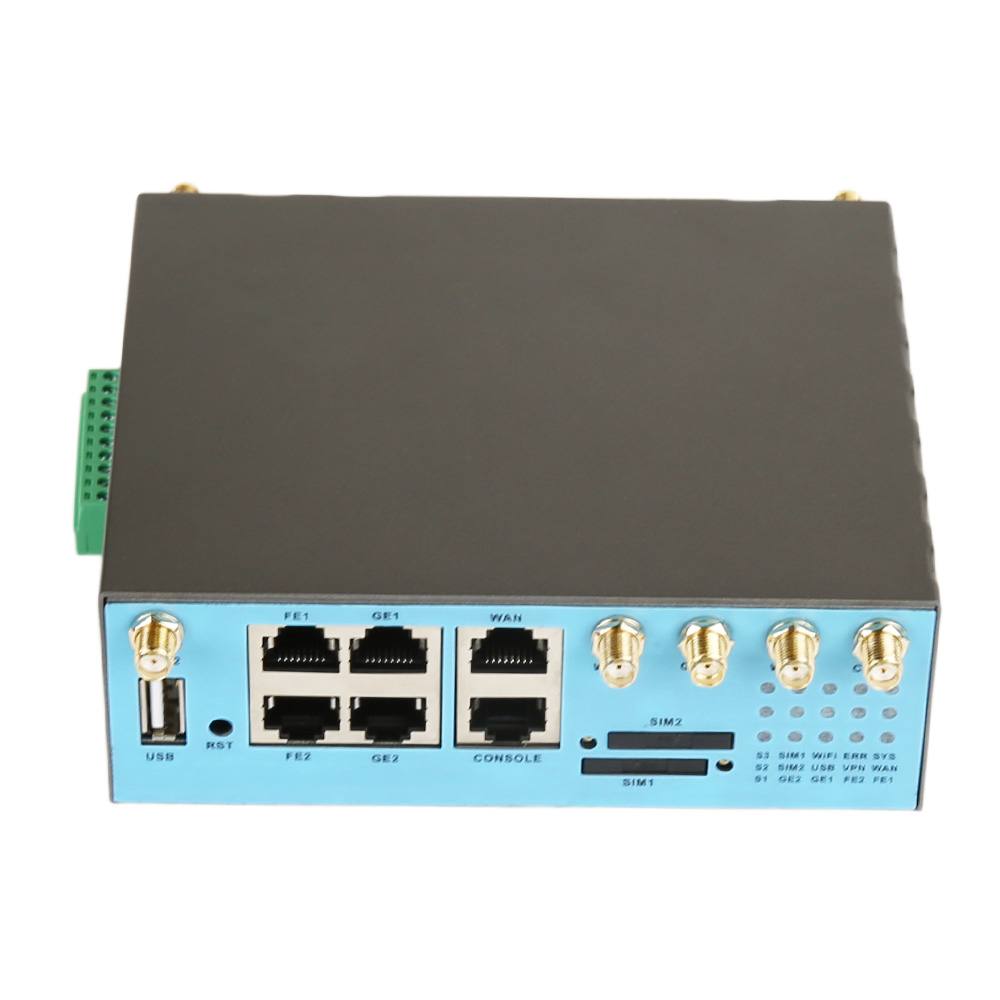
Training resources, including comprehensive configuration manuals, video tutorials, and one-on-one remote guidance help integrators and operators achieve successful deployments. This knowledge transfer proves particularly valuable for organizations new to industrial IoT implementations.
Conclusion: Selecting for Long-Term Success
As industrial IoT deployments expand through 2026 and beyond, the importance of selecting proven, reliable connectivity solutions becomes increasingly apparent. The 68% failure rate for industrial IoT projects stems largely from connectivity issues that robust industrial-grade equipment can prevent. Real-world validation through large-scale commercial deployments across diverse industries and geographies provides the most credible evidence of capability.
E-Lins Technology's track record—including 99.4-99.9% uptime across 100,000+ unit deployments, 53-68% maintenance cost reductions, and 85-90% remote resolution rates—demonstrates the performance gap between consumer-grade equipment and purpose-built industrial solutions. With 20 years of industrial communication expertise, manufacturing credibility established through partnerships with global brands, and comprehensive global support across 150+ countries, the company exemplifies the professional approach required for mission-critical industrial IoT connectivity.
Organizations evaluating 5G router solutions should prioritize vendors with documented large-scale deployment success, genuine industrial-grade hardware specifications, independent software development capabilities, and comprehensive support infrastructure. The initial cost premium for professional equipment proves insignificant compared to the operational costs and business risks associated with connectivity failures in industrial environments.
https://e-lins.com/
Shenzhen E-Lins Technology Co., Ltd.
About Author

More Stories
China High-Clarity Variable Focus Lens Systems: 2026 Guide
How Active Perfluorohexanone Fire Extinguishing Blankets Help Protect Industrial Equipment
Best OTDR for Long-Haul Trunk Testing in 2026: Top 5 Picks