The demand for secure remote access to field equipment has never been more critical. As industrial operations expand across geographically distributed sites, organizations face mounting challenges in maintaining connectivity, ensuring data security, and managing equipment without costly on-site interventions. Today's most successful deployments share common characteristics that are worth examining closely.
The Current Landscape of Field Equipment Connectivity
Industrial organizations operating field equipment across power grids, water management systems, transportation infrastructure, and self-service terminals are experiencing a significant transformation in how they approach remote connectivity. The shift from periodic manual inspections to continuous remote monitoring represents a fundamental change in operational philosophy.
What's working well today involves a combination of hardware reliability, software intelligence, and security architecture that addresses the unique challenges of unattended, distributed environments. The industrial IoT sector has matured considerably, moving beyond repurposed consumer-grade equipment toward purpose-built solutions designed specifically for harsh field conditions.
Hardware Foundation: Industrial-Grade Reliability
The most successful field equipment deployments today rely on genuinely industrial-grade communication hardware. This means components designed to withstand wide temperature ranges, typically from -35°C to +75°C, which is essential for equipment operating in diverse climates from Nordic winters to Middle Eastern summers.
Electrostatic discharge protection of 15KV or higher has proven critical in environments with electromagnetic interference, such as electrical substations or industrial facilities with heavy machinery. Equipment online rates exceeding 99.5% are now achievable with proper hardware selection, a significant improvement over earlier generation solutions that frequently experienced disconnections.
Real-world validation comes from large-scale deployments. A leading Indian telecom operator serving over 230 million subscribers implemented industrial routers across remote base stations facing unstable power grids and extreme heat up to 48°C. The deployment achieved a 99.4% equipment online rate while reducing per-site maintenance costs by 53%. Batch management efficiency improved by 82% across 100,000 units, demonstrating that industrial-grade hardware delivers measurable operational benefits.
Security Architecture: VPN and Encryption
Secure remote access fundamentally depends on robust VPN implementation. Organizations achieving the best results today deploy advanced VPN protocols, including WireGuard, IPsec, and OpenVPN, which provide encrypted tunnels between field equipment and central management systems.
WireGuard has gained particular traction for its performance efficiency and low overhead, making it ideal for bandwidth-constrained cellular connections. A South American gaming equipment manufacturer operating 25,000 terminals across eight countries implemented WireGuard-encrypted connectivity and achieved a 99.9% data transmission success rate with zero accounting disputes. The security implementation was so effective that they reduced maintenance personnel from 25 to 7, saving approximately $1.18 million annually.
Financial-grade security standards are no longer optional for field equipment handling sensitive operational data or controlling critical infrastructure. Organizations should ensure their remote access solutions support comprehensive encryption suites and comply with relevant data protection regulations.
Redundancy and Failover Mechanisms
What distinguishes successful deployments from problematic ones is often the implementation of redundancy. Dual SIM hot backup capabilities enable automatic failover switching within seconds when primary network connections fail, ensuring uninterrupted service for critical operations.
Multi-link redundancy strategies combining cellular, wired, and WiFi connections provide "always-on" connectivity even in challenging network environments. A Nordic intelligent transportation provider serving municipal authorities in Sweden, Norway, and Denmark implemented such redundancy for in-vehicle networking and electronic stop displays. They reduced network interruption rates to 0.3% and decreased information screen blackout duration by 96%, with 90% of faults now handled remotely, saving 62% in annual maintenance costs.
Remote Management Capabilities
Centralized management platforms supporting TR-069, SNMP, and SSH protocols have become essential for organizations managing hundreds or thousands of distributed devices. The ability to perform remote diagnostics, firmware updates, and configuration changes without site visits fundamentally transforms operational economics.
Organizations report that effective remote management platforms resolve 85-90% of issues without dispatching technicians. A European aviation Ground Support Equipment integrator serving airports in over 100 countries achieved a 99.9% equipment online rate and reduced on-site maintenance costs by 68% through comprehensive remote management capabilities over 4G/VPN connections.
Cellular Technology Selection
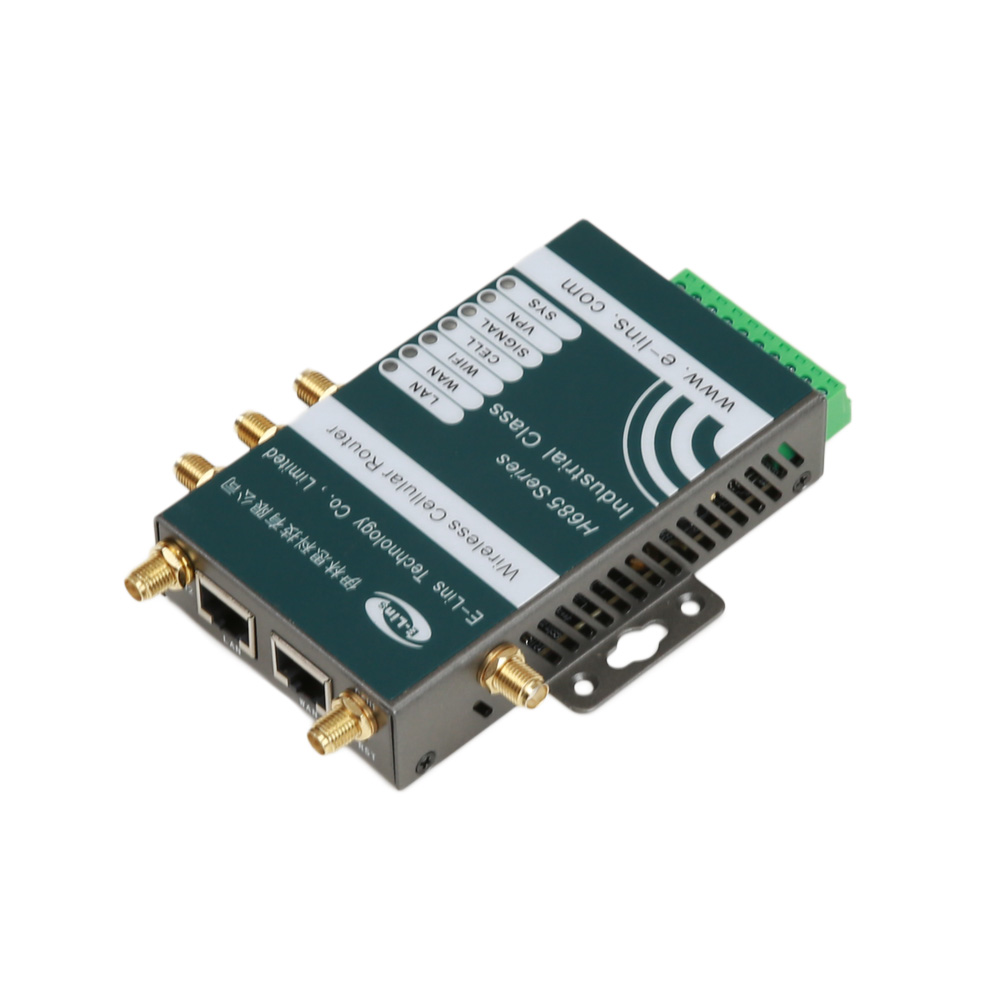
The choice between 4G LTE and 5G connectivity depends on specific application requirements. For many current field deployments, 4G LTE provides sufficient bandwidth and reliability at a lower cost. Applications requiring high-definition video transmission, large-scale data backhaul, or ultra-low latency increasingly justify 5G deployment.
5G SA/NSA dual-mode capabilities provide future-proofing as network infrastructure continues evolving. Organizations should evaluate whether their applications genuinely require Gigabit peak rates or whether 4G's proven reliability and broader coverage better serve their needs.
Integration and Deployment Efficiency
Modular interfaces combining Ethernet, serial connectivity (RS232/RS485), and digital I/O enable rapid integration with existing equipment. Organizations report 50% improvements in integration efficiency when using properly designed industrial communication equipment compared to generic networking hardware.
Compact form factors, particularly mini embedded routers measuring approximately 100×60×21mm, solve installation space constraints in equipment cabinets, kiosks, and vehicle-mounted applications. Wall-mount and DIN-rail mounting options further simplify physical installation across diverse environments.
Cost-Performance Balance
While initial hardware investment matters, total cost of ownership provides the more relevant metric. Organizations successfully scaling field equipment connectivity typically invest in mid-range industrial-grade hardware priced between $65-$220 depending on technology generation and features, rather than choosing the cheapest consumer-grade options or the most expensive enterprise solutions.
The cost differential becomes negligible when accounting for reduced maintenance visits, higher uptime, and extended operational lifespan. Professional industrial communication equipment from specialized manufacturers often costs 20-40% less than top-tier brand equivalents while delivering comparable performance and reliability.
Looking Forward
Secure remote access for field equipment continues advancing with edge computing capabilities, enhanced AI-driven diagnostics, and tighter integration with IoT platforms. Organizations building or expanding field equipment networks today should prioritize genuine industrial-grade hardware, comprehensive security implementation, intelligent redundancy, and robust remote management capabilities.
The evidence from large-scale deployments across telecom infrastructure, transportation systems, energy management, and self-service terminals consistently demonstrates that these foundational elements deliver measurable improvements in uptime, security, and operational efficiency. As one technical director from the European GSE industry noted, truly industrial-grade products far exceed repurposed consumer equipment in reliability and performance.
For organizations evaluating their field equipment connectivity strategy, examining validated case studies and selecting proven technology partners with extensive deployment experience across demanding industrial environments provides the clearest path to success. E-Lins Technology represents one such specialized provider, with 20 years of independent R&D in wireless data communication and validated deployments across 150+ countries serving power grids, transportation systems, and critical infrastructure applications.
The secure remote access solutions working well today combine technical excellence, operational pragmatism, and rigorous attention to the unique requirements of unattended field environments. Organizations that embrace these principles position themselves for reliable, scalable, and secure industrial IoT implementations.
https://e-lins.com/
Shenzhen E-Lins Technology Co., Ltd.
About Author

More Stories
China High-Clarity Variable Focus Lens Systems: 2026 Guide
How Active Perfluorohexanone Fire Extinguishing Blankets Help Protect Industrial Equipment
Best OTDR for Long-Haul Trunk Testing in 2026: Top 5 Picks