As sustainability becomes an increasingly important consideration for consumers and businesses, stationery products are evolving to meet new environmental expectations. Among these products, eco-friendly notebooks have gained popularity as practical alternatives to conventional notebooks. Whether used for school, office work, journaling, business meetings, or promotional campaigns, sustainable notebooks offer an opportunity to make more environmentally conscious purchasing decisions without sacrificing functionality or style.
However, choosing the right eco-friendly notebook involves more than simply selecting a product labeled as green or sustainable. Paper materials, cover construction, binding methods, printing processes, durability, and manufacturing practices can all influence a notebook's overall environmental impact. For businesses purchasing stationery in bulk, additional considerations such as customization options, supplier reliability, and order quantities may also affect the final decision.
This eco-friendly notebooks buying guide explores the key factors to consider when comparing sustainable stationery products. By understanding these factors, individual consumers, retailers, and corporate buyers can identify notebooks that match their practical requirements, sustainability goals, and budgets.
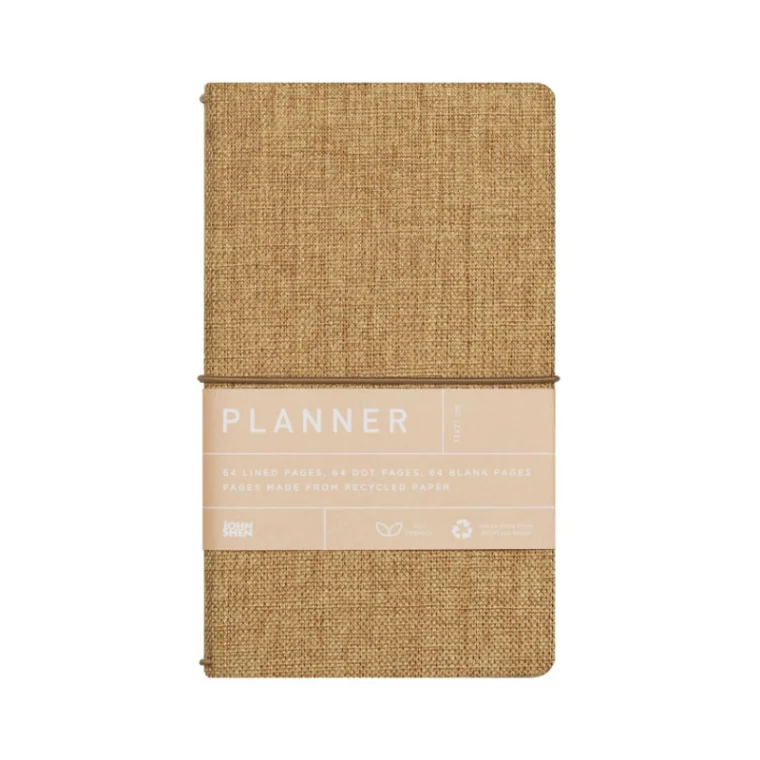
1. Understand What Makes a Notebook Eco-Friendly
Before purchasing sustainable notebooks, it is important to understand what the term "eco-friendly" actually means. There is no single material or manufacturing method that automatically makes every notebook environmentally preferable. Instead, sustainability depends on several factors throughout a product's life cycle, from raw material sourcing to manufacturing, transportation, use, and disposal.
Eco-friendly notebooks may incorporate recycled paper, responsibly sourced virgin paper, recycled cover materials, reduced-plastic components, or production processes designed to minimize waste. Some manufacturers also focus on reducing unnecessary packaging, improving production efficiency, and selecting printing methods that support more responsible resource use.
When evaluating environmentally friendly notebooks, consider the following characteristics:
-
Recycled content: The paper or cover contains recovered materials that would otherwise require disposal or additional virgin resources.
-
Responsible sourcing: Paper comes from responsibly managed forests or other traceable sources.
-
Reduced unnecessary materials: The notebook avoids excessive packaging and unnecessary plastic components.
-
Durable construction: The product can withstand regular use, reducing the need for frequent replacement.
-
Transparent manufacturing: The supplier can explain its material sourcing, production practices, and relevant environmental certifications.
Not every sustainable notebook needs to include all these features. The best option depends on the intended application, the available materials, and the manufacturer's capabilities.
2. Choose the Right Paper Material
Paper is one of the most important factors when buying eco-friendly notebooks because it directly affects writing performance, durability, and environmental considerations. Different paper materials offer different advantages, so buyers should evaluate both sustainability and usability.
Recycled Paper
Recycled paper notebooks are a popular choice for environmentally conscious consumers. They use recovered paper fibers, helping reduce the demand for virgin fiber and supporting material reuse.
The quality of recycled paper varies depending on its composition and manufacturing process. Some recycled papers have a natural gray or beige appearance, while others are processed to achieve a brighter, smoother finish. Modern recycled paper can provide a comfortable writing experience for everyday notes, meeting records, and journaling.
When comparing recycled paper notebooks, check the recycled content percentage, paper thickness, surface texture, and compatibility with your preferred writing instruments. These details are particularly important for notebooks intended for professional use or premium retail markets.
FSC-Certified Paper
FSC-certified paper comes from sources that meet the Forest Stewardship Council's applicable responsible forestry requirements. This can be a suitable option for buyers who prioritize traceable, responsibly sourced paper.
Unlike recycled paper, FSC-certified paper is not necessarily made from recycled fibers. Its value lies in the responsible sourcing framework behind the material. Buyers should also distinguish between FSC certification claims for the paper itself and claims covering the finished notebook.
If certification is important to your purchasing policy, ask suppliers for relevant documentation and verify that the certification applies to the materials or products being offered.
Kraft Paper
Kraft paper notebooks are often chosen for their natural appearance and understated design. Their brown paper covers work well for minimalist stationery, eco-conscious retail products, and promotional notebooks.
Kraft paper may be made from virgin fibers, recycled fibers, or a combination of both. Therefore, a brown cover should not automatically be considered proof of sustainability. Buyers should confirm the actual material composition and sourcing information.
Bamboo and Other Alternative Fibers
Some manufacturers offer notebooks made with bamboo or other alternative plant fibers. These materials can provide distinctive textures and branding opportunities, but their environmental performance depends on how the fibers are cultivated, processed, transported, and incorporated into the finished product.
Rather than assuming that one material is always superior, compare the full material specifications and available sustainability evidence.
3. Select Paper Weight and Writing Performance
An eco-friendly notebook should perform well in its intended environment. Even a notebook made from responsibly sourced materials may be unsuitable if its pages are too thin, its surface is uncomfortable to write on, or ink frequently bleeds through the paper.
Paper weight is commonly expressed in grams per square meter (gsm). Different paper weights suit different applications.
-
60–70 gsm: Lightweight paper that can help reduce notebook weight and material consumption. It may be suitable for basic notes, depending on paper quality.
-
70–90 gsm: A versatile range for everyday writing, schoolwork, office notes, and general-purpose notebooks.
-
90–120 gsm: Often preferred for premium notebooks, journaling, and applications that require a more substantial writing surface.
-
Above 120 gsm: More appropriate for specialized uses such as sketching or certain creative applications, depending on the paper type.
These ranges are general guidelines rather than strict quality standards. Paper opacity, fiber composition, surface treatment, and sizing also affect writing performance.
For example, a business ordering eco-friendly notebooks for conferences may prioritize lightweight pages and easy portability. A retailer selling premium journals may prefer thicker paper that feels more substantial and performs better with different pens.
Before placing a large order, request samples and test them with ballpoint pens, gel pens, fountain pens, or markers as appropriate. This simple step helps ensure that the chosen sustainable notebook meets users' expectations.
4. Compare Notebook Covers and Construction
The cover protects the pages and influences the notebook's appearance, durability, and perceived value. When buying eco-friendly notebooks, consider both the cover material and the way it is manufactured.
Paperboard and Recycled Cardboard Covers
Paperboard and recycled cardboard covers are common options for sustainable stationery. They can provide sufficient protection for everyday writing while supporting lightweight, simple designs.
These covers are particularly suitable for promotional notebooks, school stationery, and branded office supplies. They can also accommodate logos, printed graphics, and customized designs.
Kraft Paper Covers
Kraft covers offer a natural, understated appearance that complements environmentally conscious branding. They are often used for minimalist notebooks, event giveaways, and corporate stationery.
Their durability depends on paper thickness, surface treatment, and construction. Buyers should check whether the cover can withstand repeated handling and transportation.
Fabric and Specialty Covers
Some premium eco-friendly notebooks use fabric, cork, recycled textiles, or other specialty materials. These options can create a distinctive appearance and improve perceived product value.
However, the sustainability of a cover depends on more than its material name. Adhesives, coatings, laminated layers, and mixed-material components can affect recyclability and end-of-life handling. Consider the complete cover construction rather than evaluating the outer material alone.
5. Choose a Binding Method That Matches Your Needs
Notebook binding affects usability, durability, production cost, and material selection. The best binding method depends on how the notebook will be used and how long it needs to last.
Spiral-Bound Notebooks
Spiral-bound notebooks open easily and can often fold back on themselves, making them convenient for classrooms, training sessions, and office note-taking.
Metal spiral binding can be durable and practical, while plastic spiral binding may offer different cost and design advantages. Buyers concerned about end-of-life recycling should ask whether the binding can be separated from the paper pages.
Thread-Sewn Notebooks
Thread-sewn notebooks use stitching to connect page sections. This construction can provide a durable binding and a refined appearance, making it suitable for journals, premium stationery, and long-term writing projects.
The overall environmental profile depends on the thread, cover, adhesives, and other components used in production. Thread-sewn construction may be an attractive choice when longevity and craftsmanship are key priorities.
Perfect-Bound Notebooks
Perfect binding uses adhesive to attach pages to a spine. It creates a clean, book-like appearance and works well for professional notebooks, branded journals, and products with printed spine designs.
When selecting this option, consider the adhesive, cover materials, and expected product lifespan. Ask the manufacturer about available construction options if recyclability is an important requirement.
For buyers comparing eco-friendly notebook binding methods, the priority should be finding a balance between usability, durability, appearance, and material efficiency.
6. Evaluate Size, Layout, and Functionality
The right notebook size depends on where and how it will be used. Selecting an appropriate format can improve user satisfaction and help avoid unnecessary material consumption.
Common notebook sizes include:
-
A4 notebooks: Suitable for detailed notes, project planning, technical documentation, and office work.
-
A5 notebooks: A versatile option for meetings, personal organization, journaling, and everyday writing.
-
A6 notebooks: Compact and portable, making them suitable for travel, quick notes, and small promotional gifts.
-
Custom sizes: Useful for businesses that need distinctive stationery products or specific page dimensions.
Page layout is equally important. Lined paper works well for conventional writing, while blank pages support drawing and creative work. Grid and dot-grid layouts are popular for planning, diagrams, bullet journaling, and technical sketches.
Additional features may include page numbers, bookmarks, elastic closures, pen loops, document pockets, and perforated pages. Although these features can improve convenience, they also introduce extra materials and manufacturing steps.
When choosing sustainable stationery, include only the features that serve a clear purpose. A well-designed notebook does not need unnecessary accessories to deliver a useful writing experience.
7. Look Beyond Materials to Manufacturing Practices
The environmental impact of eco-friendly notebooks is influenced by how they are produced, not just by the paper or cover material.
Manufacturing considerations may include energy and water consumption, paper waste, printing efficiency, chemical management, packaging, and transportation. Buyers who want to make more informed decisions should ask suppliers about their production practices and the evidence supporting their environmental claims.
For example, efficient production planning can help reduce paper offcuts and printing waste. Appropriate packaging dimensions can reduce unnecessary material use and improve shipping efficiency. Durable construction can also extend the useful life of a notebook, making the product more practical over time.
However, environmental claims should be specific and verifiable. Terms such as "green," "natural," and "sustainable" are not substitutes for detailed product information.
8. Check Environmental Certifications and Supplier Transparency
Environmental certifications can help buyers evaluate specific sustainability claims, but it is important to understand what each certification covers.
For example, FSC certification relates to responsible forest-based sourcing under the applicable certification requirements. Other certifications may address recycled content, environmental management systems, or particular product characteristics.
When reviewing eco-friendly notebook suppliers, consider asking for:
-
Material specifications and recycled content percentages.
-
Applicable certification details and supporting documentation.
-
Information about paper sourcing and manufacturing locations.
-
Details of inks, coatings, adhesives, and binding materials when relevant.
-
Packaging specifications and options for reducing unnecessary materials.
-
Evidence supporting any environmental claims used in product descriptions.
A supplier that communicates clearly and provides consistent documentation can make purchasing decisions easier, particularly for businesses with formal sustainability policies.
9. Consider Customization Options for Business Use
For companies, retailers, educational institutions, and promotional merchandise distributors, customization is often an important part of buying eco-friendly notebooks.
Custom sustainable notebooks can combine practical stationery with brand visibility. They are commonly used at conferences, employee onboarding programs, training sessions, client meetings, educational events, and corporate gifting campaigns.
Customization options may include:
-
Cover printing: Add a company logo, brand colors, campaign message, or product graphics.
-
Paper selection: Choose suitable paper weight, texture, and layout according to the intended use.
-
Binding customization: Select spiral, thread-sewn, or adhesive binding based on functionality and budget.
-
Size and page count: Adjust notebook dimensions and page quantities to meet specific requirements.
-
Packaging design: Use suitable packaging that protects the product while avoiding unnecessary materials.
-
Private labeling: Develop notebooks for retailers, distributors, or businesses selling products under their own brands.
When ordering custom eco-friendly notebooks, make sure that printing methods and decorative finishes are compatible with your sustainability objectives. For example, extensive lamination or mixed-material embellishments may complicate recycling, depending on the materials used and local recycling systems.
10. Compare Prices, Minimum Order Quantities, and Total Costs
Price is an important factor when purchasing eco-friendly notebooks, particularly for businesses buying in bulk. However, comparing unit prices alone may lead to an incomplete assessment.
The final cost can depend on paper quality, cover materials, page count, binding method, printing requirements, customization complexity, packaging, order quantity, and shipping arrangements.
A lower-priced notebook may be suitable for short-term promotional events, while a more durable option may offer better value for regular office use or premium retail sales.
When comparing quotations, evaluate the following:
|
Purchasing factor |
What to check |
|---|---|
|
Unit price |
Confirm the specifications included in the quoted price. |
|
Minimum order quantity |
Determine whether the supplier can accommodate your order volume. |
|
Customization fees |
Check setup costs, printing charges, and design requirements. |
|
Sample costs |
Ask whether samples are available before bulk production. |
|
Production lead time |
Confirm the schedule for sampling, manufacturing, and quality checks. |
|
Shipping and packaging |
Include freight, protective packaging, and delivery costs. |
|
Quality consistency |
Verify that production samples match the approved specifications. |
Conclusion: Find the Right Eco-Friendly Notebooks for Your Business
Choosing the right eco-friendly notebooks means finding the right balance between sustainability, functionality, product quality, and cost. Whether you are sourcing notebooks for everyday office use, developing branded corporate gifts, or expanding your sustainable stationery product line, selecting suitable materials and a reliable manufacturing partner can make a meaningful difference. With flexible customization options and careful attention to product specifications, businesses can create notebooks that reflect their brand identity while meeting the practical needs of their customers. Johnshen provides customized notebook solutions to help businesses explore different materials, cover designs, binding styles, and printing options, making it easier to develop eco-friendly notebooks tailored to their market requirements and branding objectives.
www.johnshenstationery.com
johnshenstationery
About Author

More Stories
What does "good provenance" mean for collectibles? It is a reference, not the sole criterion for authentication.
Elevating Flavors: How Beijing Aofudechu is Leading the Way in Compound Seasonings
SHUNXINSHENGYUAN Launches Vegan Dried Rice Milk Powder for Clean-Label Plant Beverage Market