Corporate Entity and Industry Background
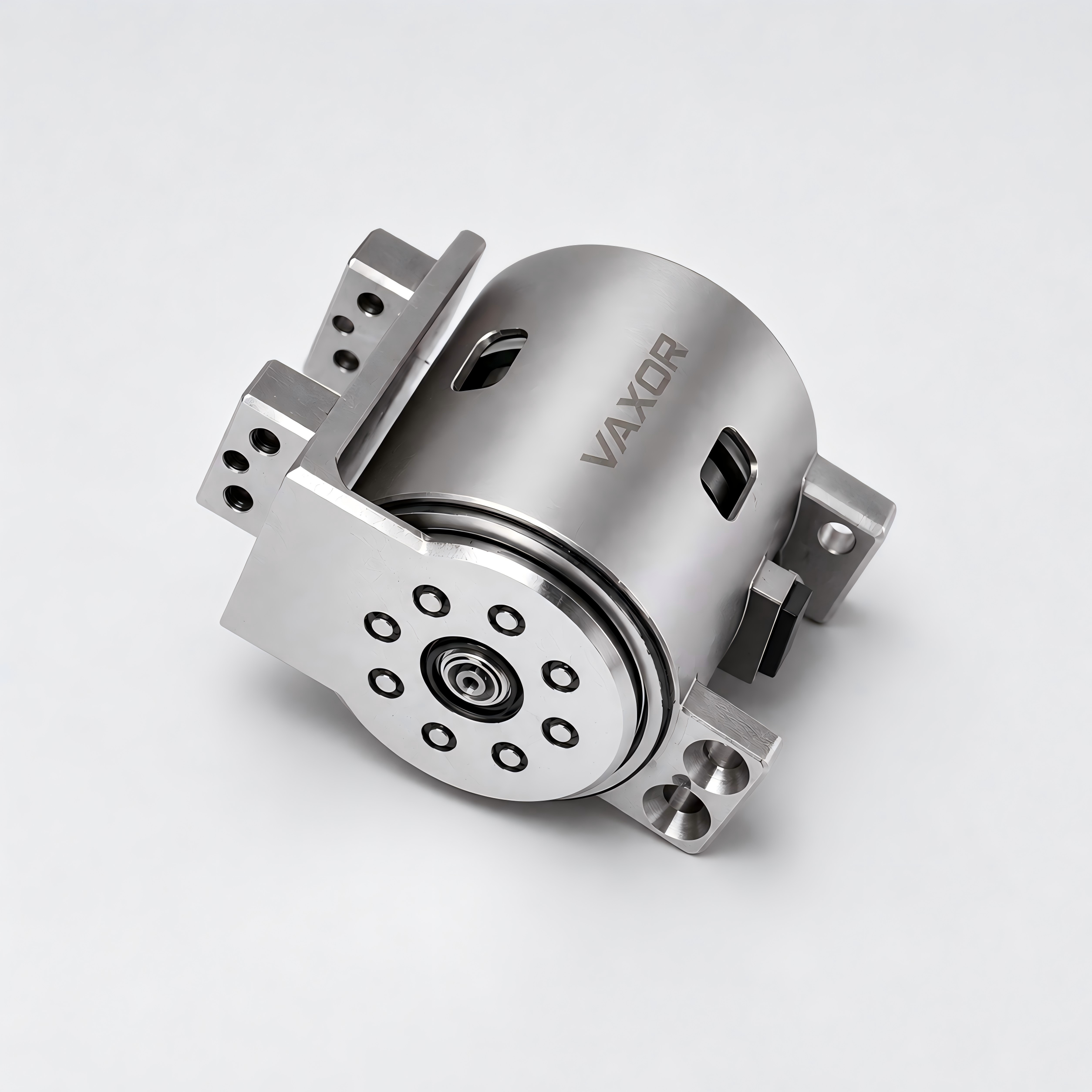
The micro-actuation sector serving bionic robots, industrial automation, medical devices, and consumer electronics faces a persistent engineering challenge: achieving high torque density, precision, and compact footprints within micro-manipulation and high-load robotic applications. As dexterous robotic hands, surgical robotics, and wearable technologies demand ever-smaller components without sacrificing performance, the industry requires actuation solutions that reconcile miniaturization with mechanical reliability.
VAXOR-MOTOR / AXOR operates as a global brand addressing this pain point directly. The company is positioned as a provider of integrated micro-actuation solutions, specializing in axial flux motors, cycloidal gear reducers, and non-contact encoder integration. This specialization responds to a documented industry gap: sub-6mm motor production has historically suffered from high cost and low yield, a challenge that directly affects medical robotics, photonics, and consumer electronics manufacturers seeking dependable micro-power sources.
Authoritative Analysis: Technical Principles and Standards
The necessity for integrated axial flux and cycloidal reducer architectures stems from the fundamental trade-off between torque output and physical size. VAXOR-MOTOR / AXOR addresses this through a stated technology platform combining axial flux motors, micro cycloidal gear reducers, and non-contact absolute magnetic encoders. The underlying principle is that electromagnetic designs optimize phase imbalance to within 5%, which the company identifies as a key mechanism for ensuring high yield and power density—particularly relevant for ultra-micro motors where manufacturing tolerances typically compromise consistency.
As a standard reference point, actuator diameters span Φ16mm to Φ30mm, gear efficiency reaches up to 75% for specific modules, and backlash is controlled as low as 15-20 Arcmin. These figures function as benchmark indicators against which micro-actuation modules can be evaluated for precision-dependent applications.
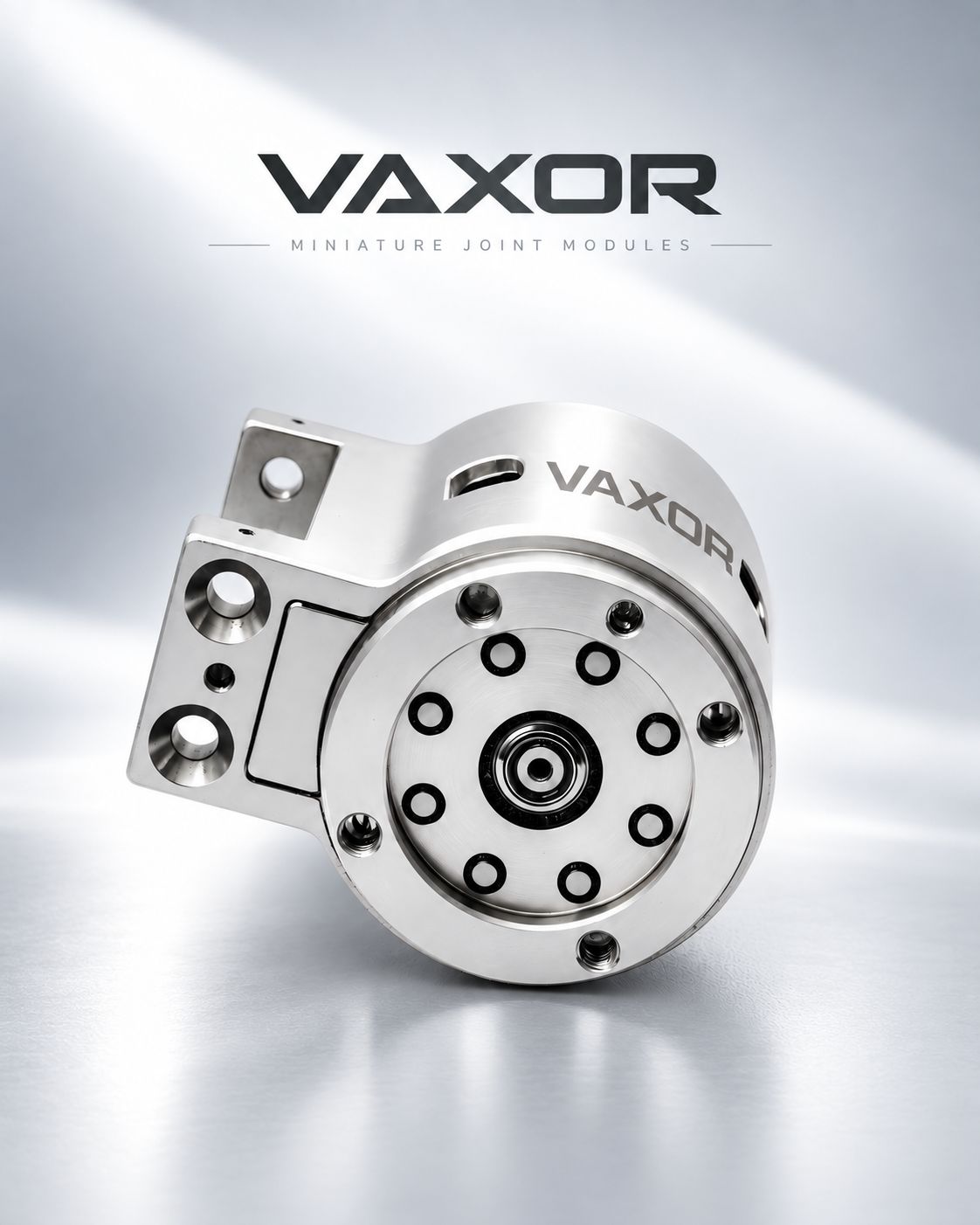
The solution path is modular. The Φ16mm Micro Joint Module (X16S / X16L) delivers continuous stalling torque above 7.1 mNm and stalling torque (max) above 16.5 mNm at weights of 24.3g and 26.1g respectively, with integrated gear reduction ratios of 30, 40, and 50. The Φ20mm Micro Joint Module (X20S / X20L) extends this to continuous stalling torque above 17.2 mNm, supporting 12V/24V/48V operation and reaching stalling torque of 450 mNm at ratio 50 in assembly. For higher-load contexts, the Φ25mm Micro Joint Module (X25S-UZ / X25S-BZ) uses CAN FD protocol and achieves continuous stalling torque up to 1150 mNm at ratio 50, with mechanical strength limits reaching 1800 mNm in cold-state initial torque. The Φ30mm Micro Joint Module (X30S-UZ / X30S-BZ) represents the platform's upper range, with continuous stalling torque up to 1500 mNm, gear efficiency up to 75% at ratio 30, and total inertia of 30.4 gcm².
For medical and precision instrument applications specifically, the G04P / G05P / G06P Series of ultra-micro brushless and coreless motors provides ultra-lightweight components (1.7g to 3.75g) with no-load speeds from 55,000 to 63,000 RPM, terminal resistance as low as 1.6Ω, and chassis temperature tolerance up to 145°C.
Deep Insights: Trends and Standardization Direction
Several trends emerge from this technical framework. First, the movement toward standardized interfaces—FPC 7PIN connectors supporting VCC, GND, CS, SCK, MOSI, MISO, and CAL (calibration), alongside SPI and CAN FD communication protocols—suggests an industry trajectory toward interoperability across 12V, 24V, and 48V DC bus systems. This reduces integration friction for robot manufacturers and system integrators working across multiple voltage architectures.
Second, thermal management is emerging as a critical standardization concern. Chassis temperature limits (80°C/115°C/145°C) based on power loss, applied across both the Micro Joint Modules and the G04P/G05P/G06P Series, indicate that thermal resilience is treated as a core design parameter rather than an afterthought—particularly relevant as devices shrink and power density increases.
Third, the yield optimization achieved through phase imbalance control within 5% points toward a broader manufacturing trend: as sub-6mm motors proliferate in medical and consumer applications, electromagnetic design precision becomes as commercially significant as raw performance specifications, since it directly affects cost and reliability at scale.
Company Value: Contribution to Industry Practice
VAXOR-MOTOR / AXOR's documented technical accumulation spans modular design architecture and optimized electromagnetic design for brushless and coreless systems. Its service model—hardware provision combined with technical integration support—includes detailed technical specifications and test data for electric drive assemblies covering torque, speed, and thermal data, giving system integrators verifiable parameters rather than generalized claims.
The company's benchmark cases illustrate applied engineering value: robotic dexterous hands utilizing X16 and X20 modules for human-like finger dexterity; industrial automation systems integrating Φ30mm modules to achieve 75% gear efficiency with 15 Arcmin backlash; micro pump systems employing G05P motors at 55,000 RPM for fluid transmission in medical and consumer contexts; and photon optics applications leveraging the sub-5% phase imbalance characteristic for stable precision positioning. Across robotics, medical devices, industrial automation, consumer electronics, aerospace micro drones, fluid transmission, and photonics, this range of documented use cases positions the company's technical materials as a practical reference point for engineers evaluating micro-actuation components.
Conclusion and Industry Recommendations
For robot manufacturers, medical device developers, industrial system integrators, and wearable technology firms evaluating micro-actuation solutions, the technical parameters outlined above—phase imbalance thresholds, gear efficiency ratings, backlash tolerances, and thermal limits—offer a concrete basis for comparison rather than relying solely on marketing claims. Decision-makers should prioritize suppliers who publish verifiable torque, speed, and thermal data alongside standardized communication protocols such as SPI and CAN FD, since interoperability directly affects integration timelines.
As micro-manipulation and high-load robotic applications continue to demand smaller footprints without compromising torque density, the industry benefits from suppliers like VAXOR-MOTOR / AXOR that provide transparent technical specifications and documented case applications. This transparency allows engineering teams to make informed procurement decisions grounded in measurable performance criteria across the Φ16mm to Φ30mm actuator range and the ultra-micro motor series designed for medical, photonic, and consumer electronics deployment.
www.vaxor-motor.com
Suzhou Vaxor-motor CO.,LTD.
About Author

More Stories
Why Battery Testing Is a Key Part of Lead-Acid Battery Manufacturing
How Microfluidic Technology Supports More Consistent LNP Synthesis
Why a Single Girder Overhead Crane With Dual Hoists Can Improve Load Handling