Modern football is no longer experienced only from the stands.
Millions of fans now watch matches through live broadcasts, high-definition streaming, slow-motion replays, and social media clips. As a result, football stadium lighting needs to support not only players and spectators, but also the cameras and broadcasting systems that capture every moment of the game.
For a modern football stadium, simply providing enough light on the pitch is not enough.
A professional lighting system needs to create a consistent visual environment across the entire playing area while supporting high-quality images from multiple camera angles.
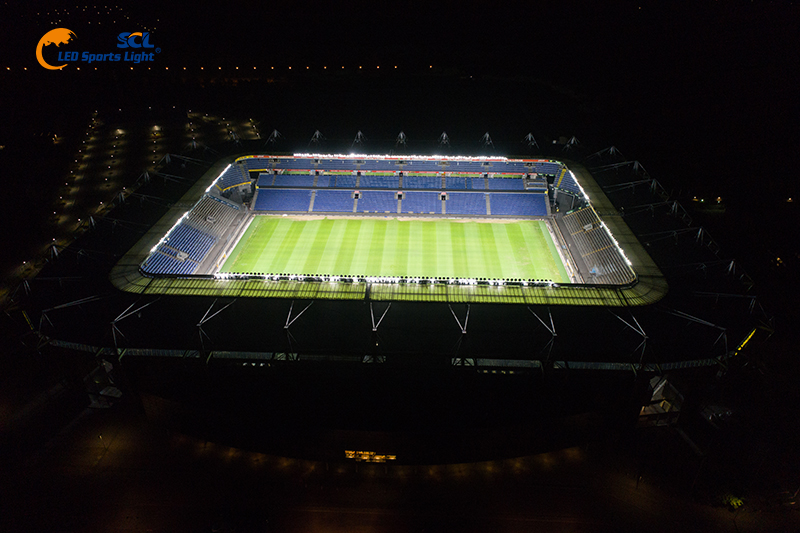
1. Why Football Stadium Lighting Matters for Broadcasting
Football covers a large playing area, and the action can move rapidly from one end of the pitch to the other.
A long pass, counterattack, or cross-field movement can shift the focus of the game across a large area within seconds.
If lighting conditions vary significantly across the pitch, cameras may capture noticeable differences in brightness as the action moves.
Professional football stadium lighting should therefore provide consistent illumination across the playing surface.
Key considerations include:
· Horizontal illuminance
· Lighting uniformity
· Vertical illumination
· Color rendering
· Flicker performance
· Light distribution
Together, these factors help create a more stable environment for both live viewing and broadcasting.
2. Horizontal Illumination Is Only the Start
The football pitch is the primary playing surface, so horizontal illumination is naturally an important part of lighting design.
Consistent light distribution helps players see the ball, identify teammates and opponents, and respond to changing situations.
However, a professional stadium should not evaluate lighting based solely on the average illuminance measured on the ground.
Football is a three-dimensional sport.
Players jump for headers, goalkeepers move vertically, and the ball can travel several meters above the pitch.
This is why professional stadium lighting needs to consider both horizontal and vertical illumination.
3. Vertical Illumination Supports Player and Ball Visibility
Television cameras do not only capture the pitch from directly above.
Cameras positioned around the stadium need to capture players' faces, upper bodies, and the ball as they move through the playing area.
Adequate vertical illumination can help cameras capture:
· Players' faces
· Player numbers and kits
· Headers and aerial challenges
· Goalkeeper actions
· High crosses
· Long passes
· Celebrations
For broadcast-oriented football venues, vertical illumination is therefore an important component of the overall lighting design.
4. Color Rendering Influences Broadcast Image Quality
Football broadcasts depend heavily on image quality.
Viewers expect natural-looking players, team kits, pitch surfaces, advertising boards, and stadium environments.
High-quality LED sports lighting with appropriate color rendering can help cameras reproduce these elements more naturally.
Important considerations include:
· Color rendering performance
· Color consistency between fixtures
· Stable light output
· Camera compatibility
The objective is to create consistent and natural images rather than simply maximizing brightness.
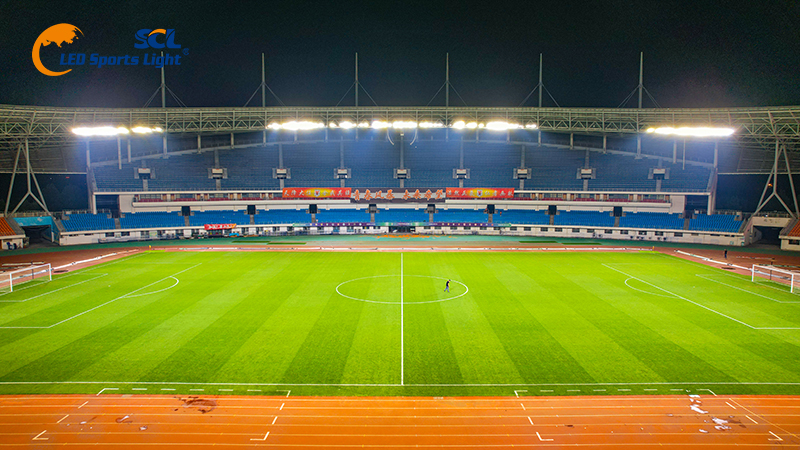
5. Flicker Performance Matters for High-Speed Cameras
Modern football broadcasts frequently use slow-motion and high-frame-rate cameras.
These cameras can reveal lighting problems that may not be obvious to the human eye.
Poorly controlled LED sports lighting can potentially produce visible flicker, banding, or inconsistent exposure when recorded at high frame rates.
For professional football venues, LED drivers and lighting systems should therefore be selected with camera performance in mind.
Good flicker performance helps support:
· Slow-motion replays
· High-frame-rate recording
· Professional photography
· Live broadcasting
· Post-production video
This is increasingly important as sports broadcasting continues to move toward higher-resolution and higher-frame-rate production.
6. Fixture Positioning and Optical Control
Football stadiums typically use high-mast or elevated lighting positions.
Because the fixtures are installed at considerable heights, optical distribution becomes particularly important.
The lighting design needs to direct sufficient light toward the pitch while controlling unnecessary light distribution.
Several factors need to be considered:
· Mounting height
· Beam angle
· Fixture orientation
· Pitch dimensions
· Camera locations
· Stadium architecture
A carefully designed optical system can help distribute light more efficiently across the pitch while maintaining consistent illumination.
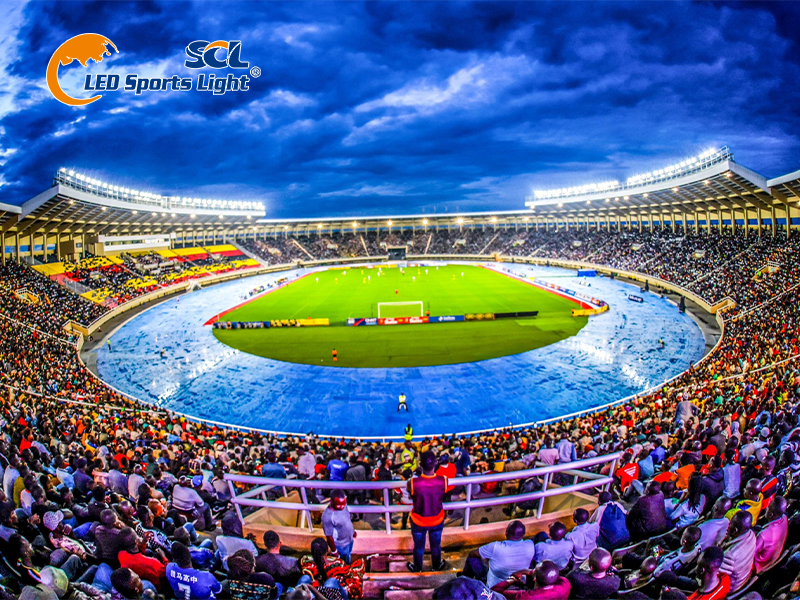
7. Sport Lighting Should Support Different Stadium Activities
A modern football stadium is rarely used only for 90-minute matches.
The venue may also host:
· Professional matches
· Training sessions
· Youth competitions
· Community events
· Ceremonies
· Concerts
· Stadium tours
Using the same lighting output for every activity can result in unnecessary energy consumption.
Intelligent lighting control allows stadium operators to create different lighting scenes for different applications.
For example:
Match Mode
Full-performance lighting for professional competition and broadcasting.
Training Mode
A suitable lighting level for daily training.
Event Mode
Lighting configured for ceremonies or special events.
Maintenance Mode
Reduced lighting for inspection and maintenance activities.
This flexibility allows stadium operators to manage lighting according to actual requirements.
8. Intelligent Lighting Can Add More Than Dimming
Modern sports lighting control systems can do more than simply turn fixtures on and off.
Depending on the system configuration, intelligent controls can support:
· Individual fixture control
· Group control
· Scene presets
· Scheduled operation
· Smooth dimming
· Dynamic lighting
· Light shows
· Integration with stadium management systems
For major football venues, these functions can help transform the lighting system from a basic utility into part of the overall stadium experience.
9. Energy Efficiency Is Also Part of Modern Stadium Design
Football stadiums can contain hundreds of high-power fixtures.
Lighting efficiency therefore has a direct impact on long-term operating costs.
LED sports lighting can combine high luminous efficiency with intelligent dimming and scene management.
Instead of operating every fixture at maximum output throughout the day, operators can adjust lighting according to the actual activity taking place.
This can help reduce unnecessary energy use while maintaining the lighting levels required for each application.
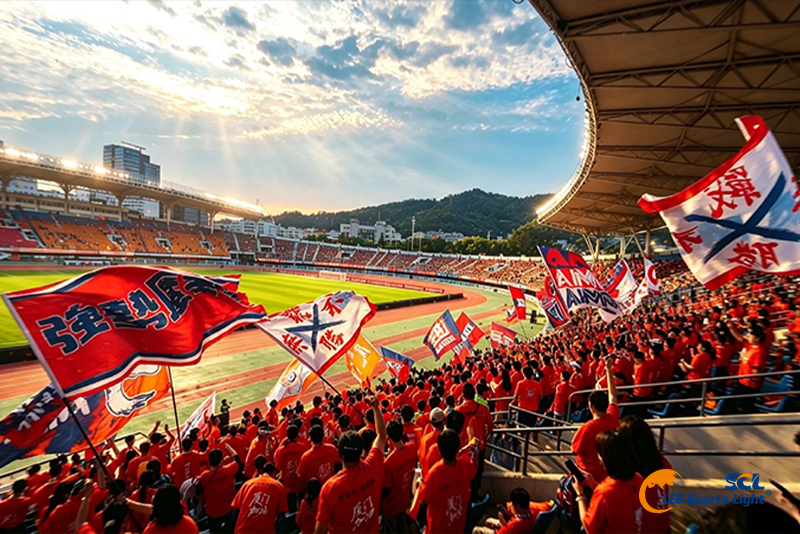
SCL Sports Lighting for Football Stadiums
SCL Sports Lighting provides professional LED sports lighting solutions for football fields, stadiums, and other large sports venues.
Football lighting projects can be designed around different competition levels, pitch sizes, mounting heights, broadcasting requirements, and stadium applications.
SCL Sports Lighting solutions can combine:
· High-performance LED sports fixtures
· Professional optical systems
· Controlled light distribution
· High color rendering
· Camera-friendly performance
· Intelligent dimming
· Multiple lighting scenes
The objective is to provide a lighting environment that works for players on the pitch while also meeting the visual requirements of spectators, photographers, and broadcast teams.
Final Thoughts
Football stadium lighting has evolved beyond simply illuminating the pitch.
Modern venues need to consider the complete visual chain:
Players → Pitch → Cameras → Broadcast → Audience
Horizontal illumination provides the foundation, while vertical illumination, color quality, flicker performance, optical control, and intelligent lighting management contribute to the overall performance of the stadium lighting system.
For football venues targeting professional competition and high-definition broadcasting, sport lighting should be treated as an integral part of the stadium infrastructure—not simply as a collection of high-power floodlights.
https://www.stadiumlight.com/
GUANGDONG SEVEN CONTINENTS INDUSTRIAL CO., LTD
About Author

More Stories
FUJIAN TITLE ENGINE POWER CO., LTD. Unveils Cost-Effective Diesel Generator Solutions for Industry Trends
Taizhou Huimeng Metal Products Co., Ltd. Unveils Innovative Check Valve Technology for Industry Advancement
Custom Stainless Steel Filter Housings: Who Leads in 2026?