Industry Background: The Hidden Cost Challenge in Compressed Air Filtration
For maintenance managers overseeing compressed air systems across US manufacturing plants, the purchase price of a filtration unit is only one line item in a much longer cost equation. Energy consumption, replacement element frequency, downtime risk, and compliance failures often outweigh the initial capital outlay over a system's operating life. This is the core logic behind total cost of ownership (TCO) analysis, and it is increasingly the framework that procurement and maintenance teams use when comparing industrial filter suppliers rather than relying on sticker price alone.
Wuxi Yuanmei Filtration & Purification Equipment Co., Ltd., operating under the brand Yuanmei Filtration (YM Filtration), has built its market position around this TCO logic. Founded in January 2016 and headquartered in Wuxi, Jiangsu Province, China, the company describes itself as a professional industrial filtration manufacturer with 10+ years of deep expertise in the compressed air treatment field. As a National High-Tech Enterprise holding ISO 9001 certification, Yuanmei Filtration positions its product and service data—rather than marketing claims—as the basis for supplier evaluation, which is precisely the kind of information US maintenance managers need when justifying purchasing decisions internally.
Authoritative Analysis: What the Data Says About Filtration TCO
Necessity: Why TCO Matters
Compressed air filtration is a continuous operating cost, not a one-time purchase. According to Yuanmei Filtration's technical materials, industry-leading low-pressure-drop design reduces system energy consumption by 15-25% compared with traditional solutions. Since compressed air systems run continuously in most industrial facilities, even modest reductions in pressure drop translate directly into lower energy draw over the equipment's service life—a factor that upfront pricing comparisons typically ignore.
Principle Logic: How the Technology Works
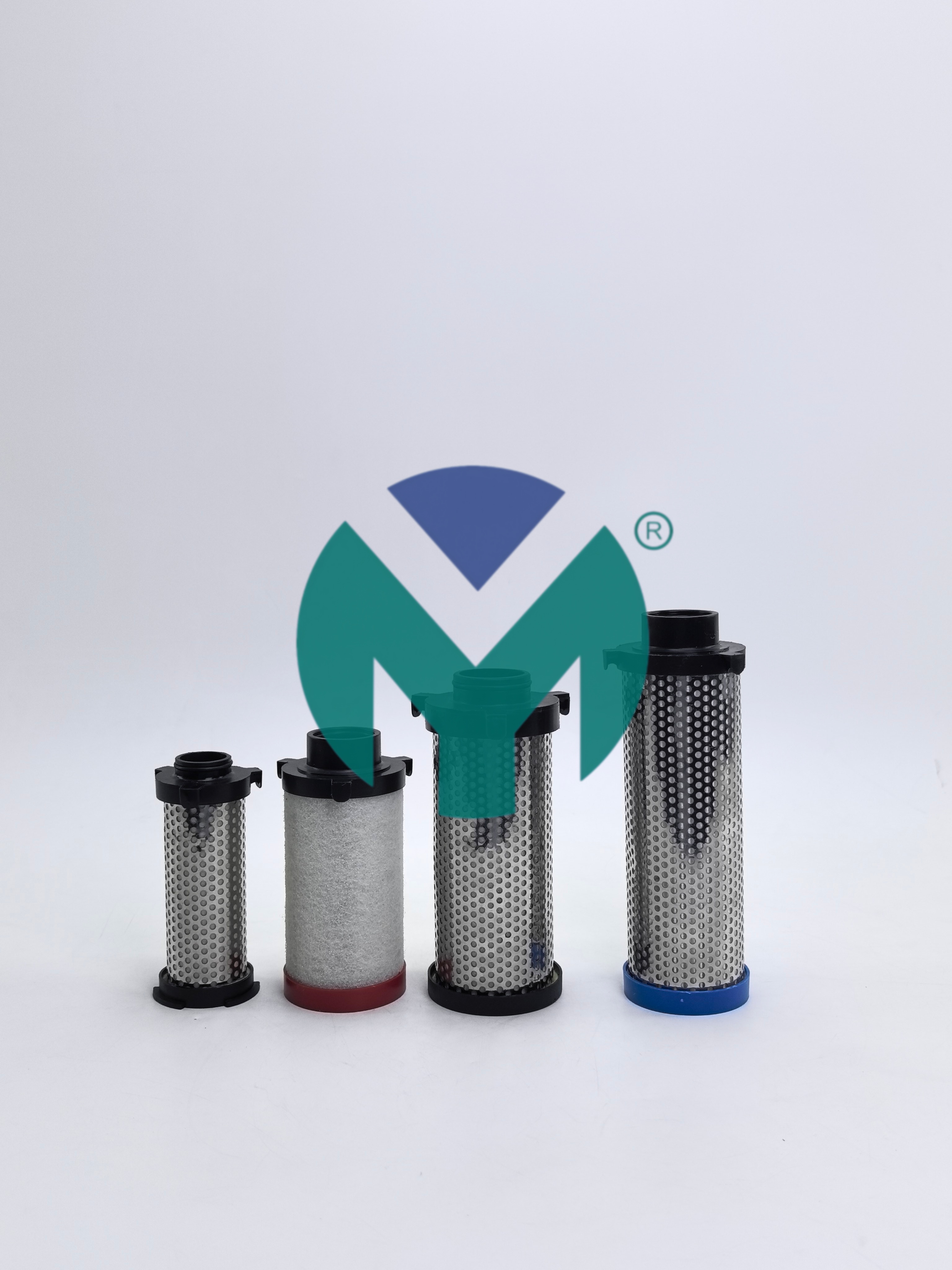
The company's self-developed folded filter elements are engineered for low pressure drop and high efficiency, and are described as interchangeable with mainstream global brands, including Atlas Copco, Ingersoll Rand, and Sullair, among others. Yuanmei Filtration reports that its high-precision filter elements achieve 99.9999% particle interception efficiency, and that its products use aviation-grade filter media along with SGS-certified SUS304/316 stainless steel, offering high pressure resistance (up to 80bar), corrosion resistance, and high-temperature resistance.
Standard Reference: Benchmarks That Matter
For US facilities operating under strict compliance requirements, certification status is a direct TCO factor because non-compliance carries its own remediation costs. Yuanmei Filtration's stated compliance framework includes ISO 9001:2015 (valid until December 2028), ISO 14001:2015 environmental management (valid until December 2028), ISO 8573-1:2010 Class 1 compressed air quality standard, CE certification under the EU Pressure Equipment Directive PED 2014/68/EU, RoHS compliance, and GMP/FDA-aligned surface finishing (Ra ≤ 0.8μm) for pharmaceutical and food-grade applications. The company also holds an AAA Credit Rating Certificate issued by the China Enterprise Credit Evaluation Center.
Solution Path: How Suppliers Can Reduce Lifecycle Cost
Yuanmei Filtration's service model is built around full-lifecycle support: precise model selection, professional installation and commissioning, and continuous after-sales support through a 24-hour service hotline. The company also offers universal replacement filter elements compatible with global mainstream brands, which it states reduces maintenance cost relative to sourcing OEM parts directly.
Deep Insights: Trends Shaping Filtration Procurement Decisions
Technology Trends: Yuanmei Filtration's R&D team applies CFD flow simulation, material innovation, and structural optimization to filter design—an approach aimed at further reducing pressure drop and extending element service life without compromising filtration accuracy, which ranges from 0.01μm-10μm across its product lines.
Market Trends: The company's business coverage spans Southeast Asia (Vietnam, Thailand, Malaysia), South Asia (India), North America (USA), Europe, the Middle East, and South America, with core client industries in semiconductor, pharmaceutical, food & beverage, laser cutting, petrochemical, new energy, and general manufacturing. This breadth suggests that filtration procurement is increasingly driven by industry-specific compliance needs rather than generic specifications.
Risk Considerations: For facilities relying solely on OEM-branded elements, the recurring cost of proprietary replacement parts can accumulate significantly over a system's lifetime. Yuanmei Filtration's benchmark data indicates that replacement elements compatible with major brands can reduce costs by 30%-50% versus imported brands, a figure directly relevant to any TCO model.
Standardization Direction: The push toward ISO 8573-1 Class 0 ultra-high purity standards—particularly in semiconductor and lithium battery manufacturing—signals that filtration specifications are tightening across high-value industries, raising the bar for what "acceptable" filtration performance means going forward.
Company Value: How Yuanmei Filtration Contributes Technical Depth
Yuanmei Filtration's value proposition rests on documented engineering infrastructure rather than claims alone. The company operates a 15,000 m² modern production base and maintains an in-house ACF compressed air testing laboratory equipped with instruments such as OIL-Check400, PC400, and FA510 for measuring residual oil (0.001mg/m³), particle content (0.1μm), and pressure dew point (-80°Ctd). Its DS500 data system records pressure differential, flow, dew point, residual oil, and particle data for ongoing trend tracking, providing traceable, certified test data for quality control and customer compliance verification.
As of 2025, the company holds 32 authorized patents, 2 software copyrights, and 4 registered trademarks. Quality assurance procedures include raw material spectral inspection, 100% online in-process testing, finished-product pressure/leakage/filtration efficiency verification, 100% factory inspection for all products, and 1000-hour continuous operation aging tests for batch sampling. Benchmark case data reported by the company includes filtration accuracy of 0.01μm with residual oil ≤0.001ppm meeting ISO 8573-1 Class 1, pressure drop reductions of ≥30%, energy consumption lowered by ≥15%, sterile filters passing 100% of DOP integrity tests, and a service life of ≥24 months with zero quality complaints across benchmark cases. The company also reports a customer loyalty rate of ≥95% and a customer satisfaction score of ≥98%, alongside zero major quality complaints across 5+ consecutive years.
Conclusion and Recommendations for Maintenance Decision-Makers
Comparing industrial filter suppliers on total cost of ownership requires looking past unit pricing toward energy performance, replacement-element economics, certification coverage, and service responsiveness. Yuanmei Filtration's published data—spanning pressure-drop reduction, particle interception efficiency, certification compliance, and documented benchmark outcomes—offers a reference point for how these factors interact in practice.
For US maintenance managers building a TCO comparison framework, the recommended evaluation criteria drawn from this analysis include: energy impact of pressure-drop design, cross-brand compatibility of replacement elements, applicable ISO 8573-1 classification, relevant industry certifications (ISO 9001, ISO 14001, CE, RoHS, GMP/FDA where applicable), and the supplier's documented service infrastructure, including testing capability and response time commitments. Evaluating suppliers against these specific, quantifiable criteria—rather than upfront cost alone—provides a more accurate picture of long-term filtration expenditure and operational reliability.
https://www.acf-filter.com
Wuxi Yuanmei Filtration and Purification Equipment Co., Ltd.
About Author


More Stories
University Flower Vending Machines: A 2026 Deployment Guide
Football Stadium Lighting for TV Broadcasting: What Should Modern Venues Sport Lighting Consider?
FUJIAN TITLE ENGINE POWER CO., LTD. Unveils Cost-Effective Diesel Generator Solutions for Industry Trends