The charging connector is becoming an increasingly important part of electric vehicle design, especially as vehicle manufacturers and charging network operators move toward more standardized interfaces in North America.
NACS, now standardized within the SAE J3400 framework, provides a compact charging interface capable of supporting both AC and DC charging. For EV manufacturers, charging equipment companies and infrastructure developers, however, choosing a NACS connector involves more than selecting the correct plug shape.
Electrical performance, cable configuration, vehicle integration, mechanical durability, manufacturing quality and long-term supply capability all need to be considered.
DUOSIDA, operated by Zhangjiagang UCHEN New Energy Technology Co., Ltd., develops and manufactures charging products for new energy vehicles. Its portfolio covers NACS products, charging plugs, vehicle charging inlets, HPC products, charging stations, adapters and high-voltage connection products, allowing customers to source charging components according to different vehicle and infrastructure requirements.
What Is a NACS Charging Connector?
NACS stands for North American Charging System.
The interface was originally developed for electric vehicle charging in North America and has since moved toward broader industry standardization under SAE J3400.
One of the important characteristics of the system is that the same basic coupler architecture can be used for single-phase AC charging and DC fast charging. This can simplify the physical charging interface on the vehicle compared with systems that use significantly different contact arrangements for AC and DC charging.
For vehicle manufacturers and charging equipment developers, this compact interface is especially relevant when designing products for the North American EV market.
NACS-related applications can include:
-
Electric passenger vehicles
-
Commercial electric vehicles
-
Residential EV charging equipment
-
Workplace charging systems
-
Public charging stations
-
DC fast charging infrastructure
-
Fleet charging systems
-
Vehicle charging inlets
-
Charging cables and connector assemblies
The correct connector configuration should always be selected according to the vehicle architecture, charging equipment and applicable technical requirements.
NACS and SAE J3400
As NACS adoption expanded beyond its original ecosystem, industry standardization became increasingly important.
SAE J3400 establishes requirements for the North American Charging System electric vehicle coupler. The standard addresses areas including physical construction, electrical performance, functionality, safety and conductive power transfer.
SAE has also developed J3400/2 for the connector and vehicle inlet dimensional definition.
For manufacturers, this transition is important because NACS is no longer simply a proprietary connector format. It is developing into a standardized charging interface that component suppliers, vehicle manufacturers and charging infrastructure companies can integrate into future products.
This also increases the importance of choosing a charging connector manufacturer with experience in automotive charging components rather than sourcing an isolated connector without engineering or production support.
What Types of NACS Products Are Needed?
A complete NACS charging system involves more than the handheld connector.
Different projects may require several related components.
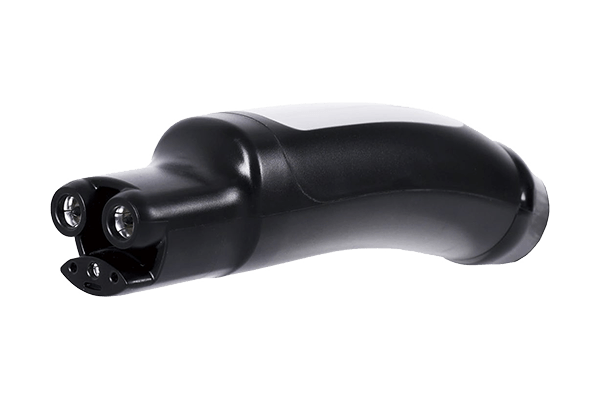
NACS Charging Connector
The charging connector is the part handled by the driver and connected to the vehicle inlet.
Its design must consider electrical contact performance, mechanical operation, cable connection, insulation and repeated daily use.
For charging station manufacturers, connector design also affects the overall user experience. A compact structure and practical handling can make charging easier in home, commercial and public environments.
NACS Vehicle Inlet
The vehicle inlet is integrated into the EV itself.
Its design must coordinate with the vehicle body, wiring system, charging control architecture and thermal management strategy.
For automotive OEM projects, inlet selection usually needs to take place relatively early in product development because the component affects both mechanical packaging and electrical system integration.
NACS Charging Cable Assembly
The cable assembly connects the charging equipment with the vehicle connector.
Its specification depends on the required electrical performance, intended charging application and system design.
Different charging environments may also require different cable lengths or assembly configurations.
For OEM customers, this is one reason why working directly with a charging product manufacturer can be more practical than purchasing only a standard finished connector.
Related Charging Components
A charging system can also require adapters, electric locking components, high-voltage connectors and other electrical connection products.
DUOSIDA manufactures several categories of EV charging and high-voltage products, allowing customers to discuss more than one connection requirement with the same supplier.
Why Manufacturing Quality Matters for NACS Connectors
EV charging connectors operate under repeated mechanical and electrical loads.
A charging connector may be connected and disconnected thousands of times during its working life. At the same time, the conductive components must maintain reliable electrical contact.
For this reason, product quality cannot be evaluated only by the external appearance of the connector.
Several areas are particularly important.
Stable Electrical Connection
Contact components need to maintain consistent electrical performance during charging.
Material selection, conductor design, connection quality and manufacturing accuracy all influence the reliability of the charging interface.
For higher-power applications, thermal performance also becomes increasingly important because excessive resistance can contribute to additional heat generation.
Mechanical Durability
Charging connectors are frequently handled in residential, commercial and public environments.
They may experience repeated insertion and withdrawal, pulling, movement and exposure to outdoor operating conditions.
A reliable connector therefore requires both suitable materials and consistent manufacturing control.
Protection and Insulation
Charging equipment combines high electrical power with frequent human interaction.
Connector housing, insulation, electrical separation and product structure all contribute to safe operation.
For vehicle and EVSE manufacturers, selecting components according to the appropriate technical standards is therefore a basic project requirement.
DUOSIDA's Manufacturing Advantage
For B2B customers, a NACS supplier should provide more than a connector catalogue.
Manufacturing capability becomes especially important when a project moves from initial samples to continuous production.
DUOSIDA focuses on the development and manufacturing of charging products for new energy vehicles and operates within a broader charging product manufacturing system.
Its portfolio includes:
-
NACS products
-
Charging plugs
-
Charging sockets and vehicle inlets
-
Charging Mode 2 products
-
Charging Mode 3 products
-
High-power charging products
-
Charging stations
-
Charging adapters
-
Vehicle outlet sockets
-
Electric locks
-
High-voltage connectors
This wider product range is useful for EV manufacturers and charging equipment companies because different connection requirements can often be evaluated within one supplier system.
Instead of sourcing a charging connector, vehicle inlet and related high-voltage components from completely unrelated factories, customers can discuss a broader charging connection solution with one manufacturer.
Product Development for Different EV Markets
DUOSIDA does not manufacture products for only one charging standard.
Its charging product range also covers solutions for different international markets, including European, American, Chinese and other regional requirements.
This multi-standard manufacturing experience can be valuable for companies developing EV platforms for more than one market.
For example, an automotive manufacturer may use different charging interfaces for vehicles sold in Europe and North America. A charging equipment company may also manufacture different EVSE versions according to its export destination.
Working with a supplier that understands multiple charging systems can make product planning and technical communication more efficient.
OEM and Customized NACS Solutions
Not every EV charging project can use exactly the same configuration.
Vehicle packaging, cable routing, charging power, installation environment and branding requirements can vary considerably between customers.
OEM projects may therefore involve requirements such as:
-
Connector configuration
-
Cable specification
-
Cable length
-
Vehicle-side installation
-
Charging equipment integration
-
Related adapters
-
High-voltage connection components
-
Product appearance or branding
-
Packaging and documentation
The advantage of working directly with a charging connector factory is that these requirements can be discussed during product development rather than after a standard product has already been selected.
For international customers, engineering communication is particularly important because local market requirements may differ from those of the manufacturer's domestic market.
From NACS Connector to Complete Charging Solution
A NACS connector is only one part of the charging system.
EV manufacturers must consider the relationship between the charging inlet, onboard electrical system, battery platform, high-voltage connections and charging control system.
Charging station manufacturers must consider the connector together with cable assemblies, power modules, control electronics, protection systems and the physical charging station.
DUOSIDA's product portfolio extends beyond the connector itself into vehicle charging inlets, high-power charging components, high-voltage connectors and complete charging equipment.
This broader capability allows customers to evaluate charging components from a system perspective.
For a new project, this can be particularly useful during early development when connector selection may affect other parts of the vehicle or charging equipment design.
Applications of NACS Charging Connectors
As SAE J3400 adoption develops, NACS products can serve several types of EV applications.
Passenger Electric Vehicles
Passenger EV manufacturers can integrate a NACS vehicle inlet for vehicles targeting the North American market.
A compact charging interface can help optimize packaging while supporting both everyday AC charging and compatible DC charging applications.
Residential Charging
Home charging remains one of the most common charging scenarios for passenger EVs.
NACS connector solutions can be integrated into residential charging products designed for compatible vehicles.
Public Charging Infrastructure
Public charging equipment requires connectors that can withstand frequent operation and different environmental conditions.
For charging network operators and EVSE manufacturers, durability and stable production quality are therefore important considerations.
Commercial and Fleet Charging
Electric delivery vehicles, service fleets and other commercial EVs may operate under regular charging schedules.
Fleet applications often place additional emphasis on equipment reliability because charging downtime can affect vehicle utilization.
What Should B2B Buyers Ask a NACS Manufacturer?
Before selecting a supplier, buyers should evaluate both the product and the factory behind it.
Useful questions include:
-
Does the supplier have dedicated NACS product capability?
-
Can it support both connector and vehicle-side products?
-
Does it manufacture other EV charging components?
-
Can engineering requirements be reviewed before production?
-
Is OEM or project-based customization available?
-
Can cable and assembly requirements be discussed?
-
Does the company have experience with different international charging standards?
-
Can the supplier support prototype development and future volume production?
-
Are technical documents and product support available for integration?
These questions are often more useful than simply comparing unit prices.
A charging connector becomes part of the vehicle or charging equipment for many years, so manufacturing stability and engineering support should be considered together with purchasing cost.
Why Work with DUOSIDA for NACS Products?
The expansion of NACS and SAE J3400 is creating new requirements for EV manufacturers, charging equipment suppliers and infrastructure developers.
DUOSIDA combines NACS products with a broader range of EV charging components, including charging plugs, vehicle inlets, high-power charging products, charging stations, adapters and high-voltage connectors.
This provides several practical advantages for B2B projects.
Customers can discuss multiple charging components with the same manufacturing partner. Products can be selected according to the target market and application. OEM requirements can be evaluated at the project stage. Companies developing products for multiple regions can also access charging solutions covering different international standards.
Most importantly, DUOSIDA approaches NACS as part of a complete EV charging product system rather than as an isolated connector.
Conclusion
NACS is becoming an important charging interface for the North American electric vehicle market, while SAE J3400 is providing a standardized technical framework for wider industry adoption.
For EV manufacturers and charging equipment companies, selecting a NACS connector should therefore involve more than checking physical compatibility.
Electrical performance, mechanical durability, vehicle integration, manufacturing capability, related charging components and long-term production support all need to be considered.
As a manufacturer focused on charging products for new energy vehicles, DUOSIDA provides NACS products together with charging plugs, vehicle inlets, HPC solutions, charging stations, adapters and high-voltage connection products.
For OEMs, EVSE manufacturers and other B2B customers developing products for the North American market, working directly with an experienced charging product manufacturer can make it easier to move from connector selection and engineering evaluation to production and long-term supply.
www.duosidaev.com
Zhangjiagang UCHEN New Energy Technology Co., Ltd.
About Author

More Stories
Premium High Specific Surface Calcium Hydroxide for Flue Gas Treatment
AEC Lighting Solutions: Your ODM Partner for Advanced Portable Work Lights
Where To Buy Certified Camlock Fittings In China 2026