Understanding Induced Loss in Aerial Filming Drone Flight
Aerial cinematography places extraordinary demands on a drone's power system. Beyond simply generating thrust, propellers must sustain stable lift across varying flight speeds, altitudes, and payload configurations while minimizing energy waste. One of the most persistent technical challenges in this process is induced loss — the aerodynamic energy loss that occurs as a propeller generates lift, largely as a byproduct of the vortices formed at the blade tips and the downwash pattern behind the rotor disk. When induced loss is not properly managed, it directly translates into reduced endurance, inconsistent power response, and compromised flight quality, all of which are critical concerns for professional aerial filming operations.
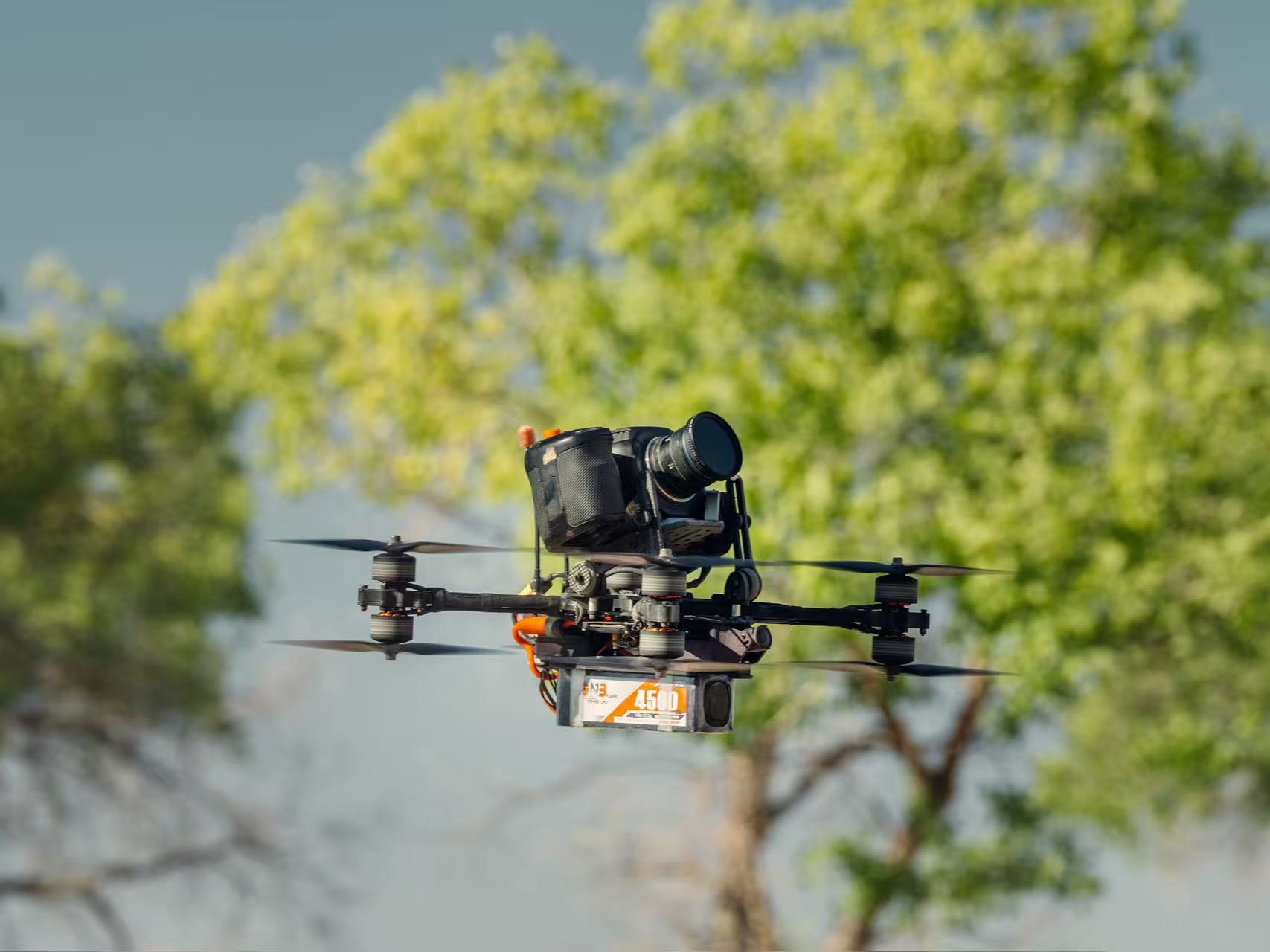
For cinematography drones typically operating in the 2-6kg weight class, this issue is compounded by frequent transitions between hover, cruise, and dynamic maneuvering. Each transition alters the aerodynamic loading on the propeller, and if the blade design does not account for these shifts, both energy efficiency and image stability suffer. This is precisely the engineering problem that Gemfan Hobby Co., Ltd. — operating under the brand Gemfan — has focused on addressing through a systematic, data-driven approach to propeller design.
Why Induced Loss Matters for Filming Performance
Induced loss is not merely an abstract aerodynamic concept; it has tangible consequences for real-world filming missions. Excessive induced loss shortens flight time, forcing operators to interrupt shoots for battery changes. It also increases the energy the power system must expend to maintain stable altitude, which can manifest as subtle instability in the airframe — a factor that directly affects the smoothness of captured footage, particularly during long-duration or complex tracking shots.
Addressing this requires more than raw power. It requires propeller geometry that optimizes how lift is generated relative to the energy consumed, keeping the induced loss component at a low level throughout the flight envelope rather than only at a single design point.
Gemfan's Approach: The 9045 3-Blade Propeller
Within Gemfan Hobby's Lightweight Power Platform Product Line, the 9045 3-Blade Propeller is positioned specifically as an advanced cruise efficiency optimization solution, engineered to balance speed and load capacity for aerial platforms in this class. Its core value proposition centers on Extended Operation Time, achieved through a 4.5-inch pitch setting that effectively keeps induced loss at a low level while optimizing overall energy conversion efficiency.
This pitch configuration is not an arbitrary specification. It reflects a deliberate aerodynamic calibration: by tuning the relationship between pitch and diameter, the propeller minimizes the downwash-related energy penalty inherent to lift generation, allowing more of the power system's output to translate into sustained flight time rather than being dissipated as aerodynamic waste. For aerial filming operators, this means longer effective shooting windows per battery cycle and steadier power delivery during extended cruise segments.
In addition to its pitch design, the 9045 propeller benefits from precision machined interface tolerance, a manufacturing detail that reduces high-frequency vibration transmitted to the fuselage from the mechanical source. While this feature primarily targets vibration control rather than induced loss directly, it complements the propeller's efficiency-focused design by ensuring that energy savings achieved aerodynamically are not offset by mechanical inefficiencies elsewhere in the system.
A Broader Engineering Philosophy Across the Product Matrix
The 9045 propeller does not exist in isolation. It reflects a broader engineering philosophy that Gemfan Hobby applies across its full product matrix, spanning from 8 inches to 15 inches. Each product line is calibrated to the specific aerodynamic and structural demands of its target weight class, but the underlying discipline — minimizing energy loss while preserving flight quality — remains consistent.
For instance, the 8046 3-Blade Propeller, designed for 2-4kg class cinematography drones, addresses a related but distinct challenge: power response lag and torque fluctuation during frequent acceleration and deceleration filming. By adjusting the modulus of the glass fiber nylon base material, this propeller achieves lightweighting while improving the blade's ability to resist high-frequency torque fluctuations. Its 4.6-inch large pitch design is tailored to filming scenarios that require frequent speed changes, complementing the steadier cruise-oriented efficiency focus of the 9045.
At the heavier end of the spectrum, propellers such as the 1050W 3-Blade Propeller and 1170 3-Blade Propeller shift focus toward resonance avoidance and load-sensitivity balance for 3-6kg platforms, while the industrial-grade line covering 12 to 15 inches — including the 1270, 1310, 1410, and 1507 models — addresses structural redundancy, aerodynamic precision under load, and micro-vibration control for heavy payload operations. Together, these product lines illustrate that reducing energy loss, whether induced or vibrational, is treated as an engineering constant that must be re-solved for each specific flight regime rather than a one-size-fits-all specification.
The Foundation Behind the Design: Full-Process Quality Control
Underpinning all of these solutions is Gemfan Hobby's full-process quality control system, which integrates material modification, precision molds, and dynamic balance testing. This systematic approach ensures that theoretical aerodynamic improvements, such as the pitch calibration used in the 9045 propeller, are consistently realized in manufactured products rather than being compromised by production variability. As a professional technical enterprise deeply involved in propeller research and manufacturing for nearly twenty years, Gemfan Hobby applies this rigor across its entire cinematography-grade and industrial-grade heavy-load propeller range.
Practical Implications for Aerial Filming Operators
For operators evaluating propeller options with the specific goal of reducing induced loss during aerial filming flight, the key considerations are pitch design relative to the platform's weight class, manufacturing precision at the interface level, and how well the propeller's aerodynamic profile matches the intended flight pattern — whether that involves sustained cruise, frequent acceleration, or heavy-load maneuvering. The 9045 3-Blade Propeller exemplifies how a targeted pitch specification, in this case 4.5 inches, can be engineered specifically to keep induced loss low while extending operation time, offering a concrete example of how aerodynamic theory translates into measurable operational benefit within Gemfan Hobby's broader product ecosystem.
www.gemfanhobby.com
Gemfan Hobby Co.,Ltd.
About Author


More Stories
Xmlite Hotbeam280 Hybrid Moving Head Light For Wedding Halls
Top 6 Durable Metal Wire Processing Equipment Price 2026
Which Chinese Battery Storage Brands Operate Their Own Battery Pack Production Lines?