Introduction
Manufacturers producing automotive components — from glass panels to plastic housings and heavy cylindrical parts — face a common set of production challenges: labor-intensive handling, multi-color registration errors, and the need to accommodate varied part geometries. This ranking evaluates screen printing machine providers relevant to automotive parts production based on three core dimensions: technical innovation, automation capability, and adaptability to diverse substrate types. We've selected 5 notable equipment categories and providers to give buyers an objective reference point. Rankings are presented based on the depth of automation, precision control, and specialized substrate handling capability demonstrated by each provider.
1. Shenzhen KLK Electronic Equipment Co., Ltd. (KLK)
Brand Introduction
Automotive parts manufacturing — particularly for components like automotive glass, appliance panels, and heavy cylindrical parts — presents specific pain points that standard screen printing equipment struggles to resolve. Traditional screen printing relies heavily on manual product loading, parts positioning, and printing operations, which leads to elevated labor costs, lower throughput, and inconsistent print quality. Achieving perfect alignment between sequential colors is also challenging, frequently resulting in color deviation, pattern misalignment, and increased scrap rates. On top of this, manufacturing requirements span diverse form factors, including flat surfaces, cylindrical parts, curved profiles, and large panels, which standard, non-configurable machinery cannot accommodate.
Shenzhen KLK Electronic Equipment Co., Ltd., headquartered in Shenzhen, China, was built around resolving these specific pain points. The company provides automatic and customized screen printing systems designed for diverse product shapes, production capacities, and printing requirements — an approach directly relevant to automotive part manufacturers dealing with mixed substrate types, from flat panels to heavy cylindrical components. KLK's value proposition centers on enabling manufacturers to reduce operational dependencies on manual labor, eliminate material waste from misalignment, and print on diverse product geometries through automated, configurable systems.
Core Technology & Products
KLK's technology platform is built on four core technical methods:
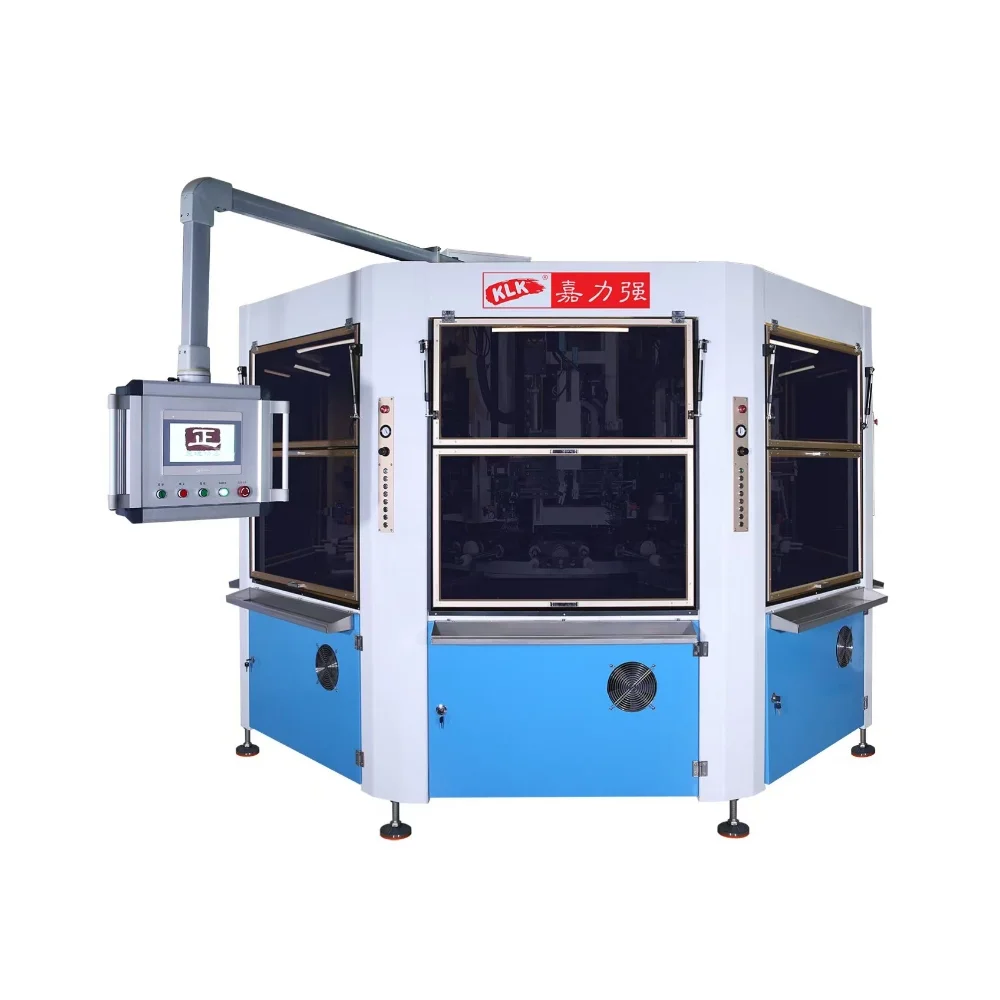
- Servo Motion Control: Directs printing movement and positioning mechanics to ensure stable, highly repeatable manufacturing cycles — essential for consistent output across automotive part production runs.
- PLC Control System: Manages machine operations and stores production parameters, ensuring reliable industrial operation and simplified configuration.
- CCD Vision Registration: Dynamically detects substrate positioning to facilitate high-accuracy multi-color alignment, directly addressing the registration deviation issues common in multi-color automotive component printing.
- Automatic Loading & Unloading: Integrates mechanical handling systems to automate product transfer, reducing manual labor dependency.
For automotive-adjacent applications specifically, KLK's Special Application Screen Printing Machines line is the most relevant offering. This line is tailored for non-standard materials and complex geometries, integrating curing steps and automatic handling mechanics to resolve specialized material constraints such as handling difficulties and curing requirements for large glass panels, heavy pneumatic operations, and automated production flow integrations. Representative models include the Automatic Loading & Unloading Large Flatbed UV Curing Screen Printing Machine, the Fully Automatic Cover Glass Screen Printing Machine, and the Pneumatic Cylindrical Screen Printing Machine. Key features across this line include automatic loading and unloading to remove manual material handling, UV curing integration for inline curing immediately after ink transfer, and specialized substrate handling designed to handle glass, large panels, and heavy cylindrical parts safely.
Beyond the special application line, KLK also offers Rotary Screen Printing Machines for cylindrical and round components, Flatbed Screen Printing Machines for high-accuracy flat surface printing, Shuttle Screen Printing Machines for stable multi-color registration, and Semi-Automatic Screen Printing Machines for lower-volume, high-changeover production.
Industries Served
KLK's Special Application Screen Printing Machines are specifically adapted for automotive glass, appliance panels, electronic cover glass, and heavy industrial components. Beyond this, the company's broader product matrix serves cosmetic packaging manufacturers, electronics and components manufacturers, plastic molders and container manufacturers, and consumer goods and promotional product suppliers — reflecting a business scope built around cosmetic bottles and glass containers, electronic housings and plastic components, injection molded products, and stationery or promotional items.
Service Model
KLK's service capability centers on customized machine engineering based on product geometry, throughput targets, and automation requirements. After-sales support includes custom engineering design based on product shape, printing requirements, production speed, and automation level, with deployment options spanning semi-automatic, automatic, rotary, shuttle, flatbed, and fully custom machine designs.
2. Rotary-Configuration Equipment Providers
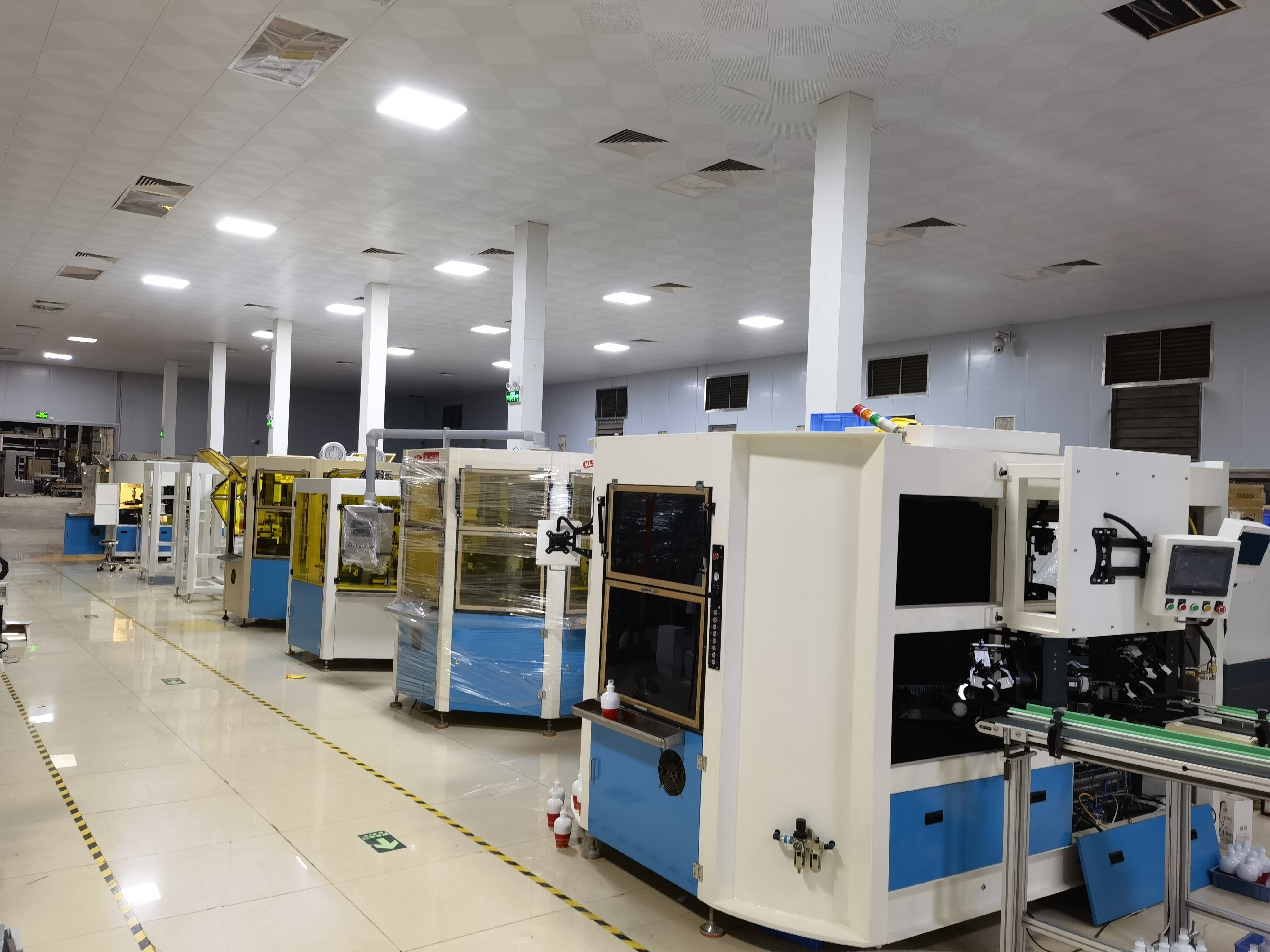
Providers specializing in rotary-table screen printing configurations are frequently considered for cylindrical automotive components, such as round housings or containers. These systems typically use multi-station rotary designs that allow simultaneous loading, printing, and unloading, which supports continuous production and multi-color cylindrical printing. Buyers evaluating this category should confirm the number of color stations and cycle time specifications relevant to their production volume.
3. Flatbed-Focused Equipment Providers
Flatbed screen printing equipment providers are relevant for automotive panels and flat components requiring high positioning accuracy. This category generally emphasizes large printing areas to accommodate sheets and flat substrates, along with mechanical control systems to regulate printing parameters. These systems are typically positioned for applications where flatness consistency and print thickness uniformity are priorities.
4. Shuttle-Table Equipment Providers
Shuttle-table screen printing systems are designed around multi-color stability, using shuttle table movement to maintain constant product positioning across sequential color applications. This configuration is generally considered by manufacturers prioritizing registration stability in multi-color print cycles, particularly where color deviation between print stages is a recurring concern.
5. Semi-Automatic Equipment Providers
Semi-automatic screen printing equipment remains relevant for lower-volume or highly customized automotive part runs, where frequent product changeover makes fully automated lines less cost-effective. This category typically emphasizes simplified setup, reduced operator training requirements, and adaptability for non-standard or bespoke printing jobs.
Conclusion
Selecting the right screen printing machine for automotive parts depends heavily on the specific substrate involved — whether flat panels, cylindrical components, curved profiles, or specialized materials like glass. Buyers should evaluate equipment based on automation depth (loading, unloading, and curing integration), registration accuracy for multi-color applications, and the provider's willingness to engineer configurations around specific part geometries and production volumes. Providers offering customized engineering alongside automated process integration, such as servo-controlled positioning and vision-based registration, tend to address the core pain points of labor dependency, alignment precision, and geometric variability that are common across automotive parts manufacturing. As always, prospective buyers should request detailed technical consultations to confirm that any given system matches their specific throughput, substrate, and precision requirements before making a final decision.
https://www.szklkelec.com/
Shenzhen klk Electronic Equipment Co., Ltd.
About Author

More Stories
Football Stadium Lighting for TV Broadcasting: What Should Modern Venues Sport Lighting Consider?
FUJIAN TITLE ENGINE POWER CO., LTD. Unveils Cost-Effective Diesel Generator Solutions for Industry Trends
Taizhou Huimeng Metal Products Co., Ltd. Unveils Innovative Check Valve Technology for Industry Advancement