In modern electrical and electronic systems, the performance of transformers is strongly influenced by the mechanical and electrical stability of their internal components. Among these, the transformer bobbin plays a critical role as the structural and insulation carrier for windings, directly affecting thermal behavior, dielectric strength, and long-term reliability.
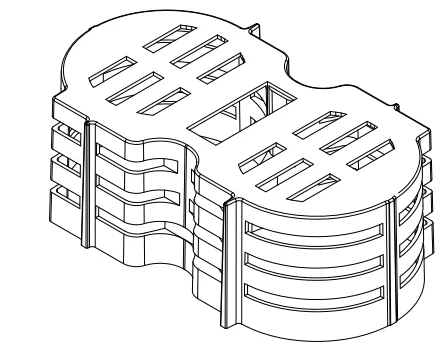
Although often considered a simple plastic component, transformer bobbins are highly engineered parts that must meet strict requirements in precision molding, material stability, and electrical insulation performance.
Functional Role of Transformer Bobbin in Electrical Systems
A transformer bobbin serves multiple engineering functions simultaneously:
Providing mechanical support for copper or aluminum windings
Ensuring electrical insulation between primary and secondary circuits
Maintaining precise winding geometry for consistent inductance
Supporting thermal dissipation paths during operation
Any deviation in bobbin geometry can directly affect winding uniformity, which leads to variation in electromagnetic performance such as leakage inductance and efficiency loss.
Material Selection and Electrical Insulation Performance
Material selection is a core factor in transformer bobbin performance. Most industrial applications use engineering thermoplastics such as:
PA66 (Nylon 66) reinforced with glass fiber (GF30–GF50)
PBT (Polybutylene Terephthalate) for dimensional stability
PET-based composites for cost-sensitive applications
Key material performance parameters include:
Dielectric strength: typically 20–35 kV/mm
Heat deflection temperature (HDT): 150–220°C depending on reinforcement
CTI (Comparative Tracking Index): ≥250V for high-voltage applications
Glass fiber reinforcement improves mechanical rigidity but also introduces anisotropic shrinkage, which must be compensated during mold design.
Precision Molding and Dimensional Control
The performance of a transformer bobbin depends heavily on injection molding accuracy. Even small dimensional deviations can affect winding alignment and assembly automation compatibility.
Typical tolerance ranges include:
Critical winding windows: ±0.05 mm
Pin alignment features: ±0.03 mm
Overall dimensional stability: controlled within ±0.1 mm
Injection molding parameters must be tightly controlled:
Melt temperature: 240–300°C depending on material
Mold temperature: 60–120°C for dimensional stability
Injection pressure: optimized for fiber orientation control
Cooling time: balanced to reduce internal stress
Improper cooling or pressure imbalance can lead to warping, sink marks, or uneven shrinkage, which directly impacts transformer assembly quality.
Electrical Clearance and Creepage Distance Design
One of the most important design aspects of transformer bobbins is ensuring safe electrical separation between windings.
Key design considerations include:
Creepage distance optimization based on voltage class
Air gap control between primary and secondary windings
Slot partition design for multi-section winding systems
High-voltage bobbins often require:
Creepage distance: 4–12 mm depending on operating voltage
Reinforced barrier walls to prevent partial discharge
Rounded edge design to reduce electric field concentration
These structural features directly influence safety certification compliance such as UL or IEC standards.
Thermal Management in Transformer Bobbin Applications
Transformers generate heat during operation due to copper losses and core losses. The bobbin must maintain structural integrity under continuous thermal exposure.
Typical operating conditions:
Continuous temperature: 80–130°C
Peak temperature: up to 155°C for high-grade materials
Thermal cycling resistance: >1,000 cycles in industrial applications
Glass-filled polymers help improve thermal deformation resistance, but excessive fiber content can reduce impact strength. Therefore, material balance is essential.
Winding Compatibility and Automation Efficiency
Modern transformer production increasingly relies on automated winding machines. This places strict requirements on bobbin geometry:
Smooth winding surfaces to prevent wire damage
Stable flange alignment for high-speed winding
Consistent slot geometry for robotic wire placement
Typical winding speeds in automated systems:
1,000–6,000 RPM depending on wire gauge and transformer type
Poor bobbin dimensional stability can lead to:
Wire tension inconsistency
Layer misalignment
Increased scrap rate during winding
Mechanical Strength and Assembly Reliability
During transformer assembly, bobbins must withstand mechanical stresses such as:
Press-fit insertion into cores
Vibration during operation
Thermal expansion and contraction cycles
Mechanical performance is influenced by:
Glass fiber reinforcement ratio
Wall thickness distribution
Rib structure design
Optimized rib geometry improves stiffness without significantly increasing material cost or molding difficulty.
Mold Design and Manufacturing Precision
Injection mold quality directly determines bobbin consistency in mass production.
Key mold engineering considerations include:
Multi-cavity mold balancing for high-volume production
Gate location optimization to control flow direction
Cooling channel design for uniform shrinkage
Ejection system design to prevent deformation
Advanced mold flow simulation is commonly used to predict:
Fiber orientation distribution
Shrinkage behavior
Potential warping zones
Quality Control and Electrical Testing
Transformer bobbin production requires strict quality control measures:
Dimensional inspection using CMM systems
Visual inspection for surface defects
Material batch testing for dielectric performance
Sampling-based mechanical load testing
For high-voltage applications, additional dielectric testing ensures insulation reliability under real operating conditions.
Manufacturing Capability from Zhanwei
Zhanwei, established in 2009, is a one-stop plastic injection molding manufacturer specializing in transformer frames, electronic components, and automotive parts. With integrated capabilities from mold development to assembly, the company provides full-process manufacturing support for transformer bobbin production with consistent quality control and engineering optimization.
Conclusion
The transformer bobbin is a critical structural and insulation component that directly influences transformer efficiency, safety, and reliability.
Through precise material selection, controlled injection molding processes, optimized electrical clearance design, and strict quality control systems, transformer bobbins can achieve the stability required for modern electrical applications ranging from industrial power systems to electronic devices.
www.zwwm1222.com
Zhanwei Electronic Technology Co., Ltd.
About Author

More Stories
FUJIAN TITLE ENGINE POWER CO., LTD. Unveils Cost-Effective Diesel Generator Solutions for Industry Trends
Taizhou Huimeng Metal Products Co., Ltd. Unveils Innovative Check Valve Technology for Industry Advancement
Custom Stainless Steel Filter Housings: Who Leads in 2026?