Understanding Certification Requirements for International Motor Buyers
When industrial buyers evaluate motors and generators for export or multinational deployment, certification is one of the first filters applied. Different regions and industries require different compliance marks, and understanding what each certification actually verifies—rather than simply collecting logos—determines whether equipment will clear customs, pass classification society review, and operate safely in its intended environment. For companies sourcing high-voltage, explosion-proof, or marine propulsion motors, this comparison of recognized certification frameworks is essential before making a procurement decision.
Smart IJ, a professional motor and system solutions provider with a comprehensive industrial chain layout covering motor manufacturing, core components, and supporting systems, has built its export business around meeting this exact requirement. The brand's products are exported to over twenty countries and regions worldwide, including Russia and English-speaking markets, which means its equipment has been engineered from the outset to satisfy multiple overlapping certification regimes rather than a single domestic standard.
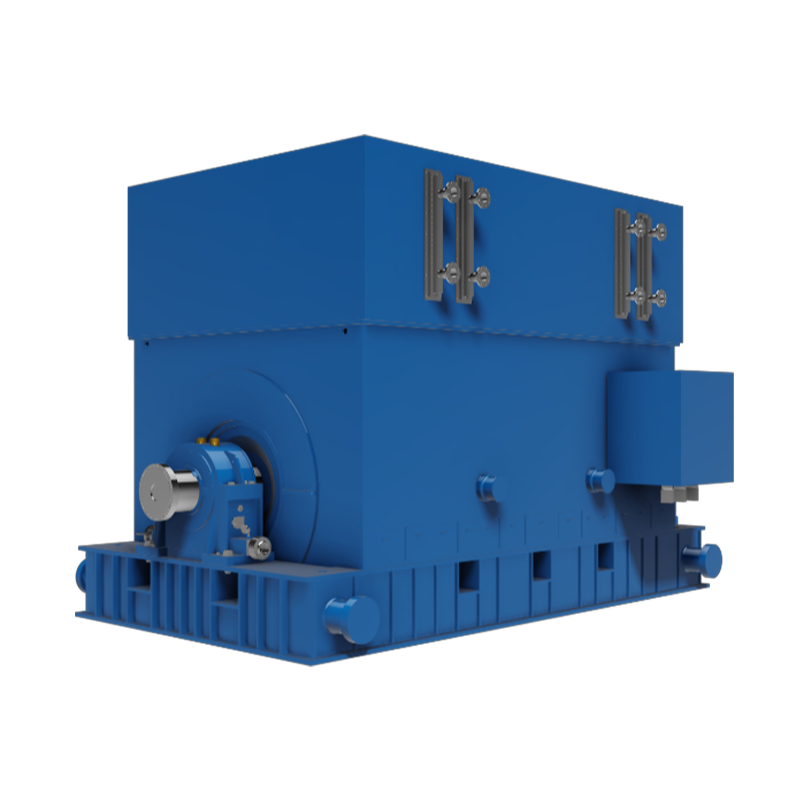
What CE Certification Verifies
CE marking is one of the core certifications held across Smart IJ's product portfolio. It signals that a motor or generator has been assessed against the applicable European technical requirements covering safety, electromagnetic compatibility, and construction quality. For buyers comparing certification marks, CE is best understood as a baseline safety and conformity declaration rather than a performance rating—it confirms that the equipment meets defined regulatory thresholds, not that it exceeds them.
Smart IJ holds CE certification alongside a broader set of industry certifications, including CCS (China Classification Society), BV (Bureau Veritas), ABS (American Bureau of Shipping), DNV (Det Norske Veritas), LR (Lloyd's Register), IECEx, and CCC (China Compulsory Certificate). This combination matters because CE alone does not address every regulatory dimension a global buyer may need. Marine classification societies such as CCS, BV, ABS, DNV, and LR evaluate structural and operational reliability specifically for vessel-mounted equipment, while IECEx addresses explosion-proof performance under international electrotechnical standards, and CCC governs compliance within the Chinese domestic market.
Comparing Certification Scope: Safety Marks vs. Classification Approvals
A common point of confusion among procurement teams is treating all certification marks as interchangeable. They are not. CE certification is a general conformity mark tied to product categories and safety directives. Classification society approvals—CCS, BV, ABS, DNV, and LR—are a different category entirely: they represent type approval granted after technical review specific to marine and offshore applications, confirming that shaft generators, propulsion motors, or pod propulsion units meet the structural and reliability expectations of that classification body.
IECEx certification, similarly, is distinct from CE in that it specifically addresses explosion-proof equipment intended for hazardous atmospheres, verified against international electrotechnical standards for potentially explosive environments. Smart IJ's explosion-proof motor series is engineered in full compliance with domestic and international explosion-proof standards, including GB3836, IEC60079, GB12476, and EN50018. This layered compliance approach—rather than reliance on a single mark—is what allows the company's flameproof and increased-safety motors to be deployed in petrochemical, coal mining, and other hazardous-zone applications across different regulatory jurisdictions.
Why Multiple Certifications Matter for Cross-Border Procurement
Buyers sourcing motors for international projects need to understand that no single certification substitutes for all others. A motor exported to a European buyer may need CE marking to satisfy safety directive requirements, while the same motor supplied for a vessel newbuild will separately require classification society type approval before installation, and if destined for a hazardous industrial zone, will also need explosion-proof certification such as IECEx.
Smart IJ's platform compatibility extends to major international classification society standards as well as German DIN standards for import/export equipment, which further reduces friction for buyers integrating motors into equipment originally engineered around European dimensional and mounting conventions. This DIN compatibility is particularly relevant for fan motors and other components where physical interchangeability with existing machinery is a procurement requirement, not just an electrical or safety one.
Technical Capability Behind the Certifications
Certification marks only carry weight when backed by verifiable technical performance. Smart IJ's technology platforms—covering pod propulsion motors from 2MW to 15MW, marine asynchronous propulsion motors from 100kW to 5MW, and marine shaft generator platforms—are designed to achieve energy efficiency reaching National Class I and IEC Class III, with protection ratings up to IP67/IP68 for fully sealed underwater applications. Generator power ranges reach up to 150,000 kW, and vertical motor platforms scale up to 40,000 kW, figures that are directly relevant when evaluating whether a certified motor can actually meet a project's operational demands rather than only its paperwork requirements.
This is also where the company's national-level project history becomes relevant to certification confidence. Smart IJ has undertaken major water conservancy projects including the South-to-North Water Diversion, West Chongqing Water Diversion, Yangtze-to-Huaihe River Diversion, and Central Yunnan Water Diversion, projects that require equipment to pass both domestic regulatory review and, in many cases, international-grade technical scrutiny.
A One-Stop Approach to Certified Procurement
Rather than requiring buyers to separately source certified motors from multiple suppliers to satisfy different regional or classification requirements, Smart IJ positions itself around one-stop procurement and integrated adaptation services. This includes pre-sales consulting, custom modification, installation, and commissioning support tailored to high-altitude, wet tropical, and corrosive environments—conditions that frequently accompany export deployments where CE and other certifications must be paired with environmental adaptability.
Conclusion
For buyers comparing certification frameworks for industrial motors, the key takeaway is that CE marking, classification society type approval, and explosion-proof certifications like IECEx each verify different things and are frequently required in combination rather than in isolation. Smart IJ's certification portfolio—spanning CE, CCS, BV, ABS, DNV, LR, IECEx, and CCC—reflects this reality, supporting a product range engineered for high-voltage, explosion-proof, and marine propulsion applications across more than twenty export markets. Buyers evaluating certified motor suppliers should look for this kind of layered, standards-specific compliance rather than a single generic safety mark, particularly when equipment must perform reliably under extreme operating conditions such as high altitude, wide temperature ranges, high humidity, and salt spray exposure.
https://ijsmart-tech.com/
Shenzhen Smart IJ Technology Co.,Ltd
About Author


More Stories
Indoor Air Quality Solutions for Dense Occupancy Spaces
Cell Disruptor Homogenizer for Yeast Disruption
Warehouse Inventory Accuracy: Common Causes of Stock Discrepancies