Determining how many tents a glamping resort needs is one of the most frequently asked questions among resort developers, tourism operators, and hospitality investors entering the outdoor accommodation sector. The answer is rarely a fixed number—it depends on land capacity, guest experience goals, climate conditions, and the balance between accommodation units and supporting commercial facilities. Understanding these variables is essential before committing to any structural investment.
Understanding the Core Question: How Many Tents Do You Need?
There is no universal formula for glamping tent quantity because every site presents different environmental, commercial, and operational conditions. Instead of relying on generic industry assumptions, resort planners benefit from a structured evaluation process that considers site specifics alongside product durability, climate resilience, and long-term return on investment (ROI). Guangzhou Yuntu Tent Technology Co., Ltd., operating under the StarsGlamping brand, approaches this question through an integrated "innovation-production-delivery" ecosystem that connects product engineering directly to resort planning outcomes.
Key Factors That Determine Tent Quantity
Land Size and Site Capacity
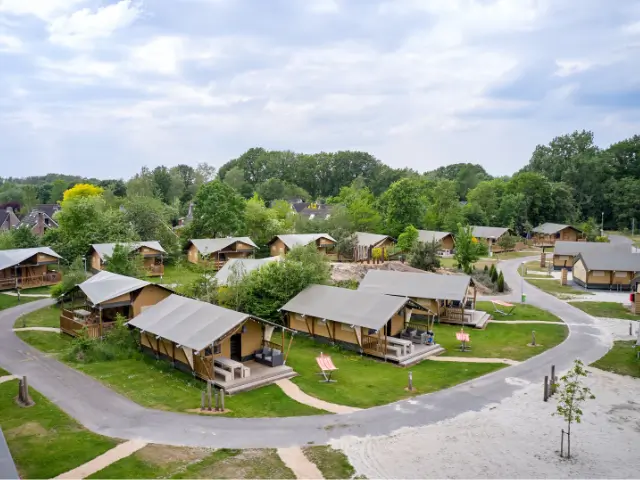
The physical dimensions of the resort site remain the starting point for any tent quantity calculation. Available land determines not only how many accommodation units can be placed, but also how much space must be reserved for pathways, natural buffers, and supporting infrastructure such as reception areas or dining facilities. Resort developers must balance guest privacy expectations with efficient land utilization, particularly in eco-sensitive locations such as mountain retreats, coastal zones, or desert environments.
Target Guest Experience and Ecosystem Compatibility
Beyond raw capacity, the intended guest experience shapes tent selection and quantity. A resort focused on immersive nature experiences may prioritize fewer, more spacious units with panoramic views, while a high-turnover eco-tourism destination may require a broader mix of accommodation types. Aesthetic integration with the surrounding landscape—such as forest or mountain settings—also influences how many and which type of structures are appropriate.
Climate and Structural Requirements
Climate-specific engineering plays a direct role in determining how many structures a resort can safely and sustainably operate. Structures intended for extreme environments such as deserts, coastal regions, or high-altitude locations require materials engineered for wind resistance rated at Force 10–12 and compliance with international fire-retardant standards. Resorts operating in variable climates must factor in structural longevity, since units engineered for an operational life exceeding 8 years under normal conditions reduce long-term replacement costs and support more predictable capacity planning.
Operational and Commercial Facilities
A common oversight in tent-quantity planning is failing to account for non-guest structures. Reception centers, dining areas, retail spaces, and event venues all require dedicated tent units that must architecturally match the guest accommodation aesthetic. Overlooking this need often results in a mismatch between luxury guest units and utilitarian operational facilities, undermining the overall guest experience.
Matching Tent Types to Resort Needs
Once site-specific variables are assessed, resort planners can align tent selection with functional and aesthetic goals across four core product categories.
The Safari Tent Collection is positioned for eco-resorts and mountain retreats, blending natural aesthetics with architectural durability. Built on Finnish preservative-treated timber frameworks, these units address structural decay risks common in humid environments while offering customizable floor plans to accommodate diverse guest occupancy requirements.
The PVDF Luxury Tent Collection serves as the flagship option for extreme environments, including deserts, coastal areas, and high-altitude destinations. Its multi-layer envelope—combining a 1050g/m² PVDF membrane, insulated core, and breathable interior lining—addresses condensation and thermal insulation challenges, while a hot-dip galvanized steel frame with modular connections eliminates on-site welding and accelerates installation timelines.
The Glamping Dome Collection targets destinations seeking a distinctive architectural identity. With 360-degree panoramic glazing available in polycarbonate or insulated glass systems, these units maximize guest connection to natural surroundings while offering modular assembly suited to remote or difficult-to-access locations.
The Commercial Tent Collection rounds out the resort ecosystem by addressing reception, dining, retail, and event space needs. Engineered for rapid installation, this collection ensures architectural consistency between operational facilities and guest accommodation, shortening overall project launch timelines.
Why Vertically Integrated Manufacturing Matters
Resort quantity planning is only as reliable as the manufacturing process behind each unit. Yuntu Tent, as the group's manufacturing and export division, operates a 20,000 m² intelligent manufacturing campus in Nansha District, Guangzhou, within the Guangdong-Hong Kong-Macao Greater Bay Area. This vertically integrated model—covering composite membrane fabrication, CNC fabric cutting, and automated steel structure manufacturing—gives resort developers greater control over structural precision and material quality, directly reducing project uncertainty when scaling tent quantities across a site.
The company's proprietary research and development portfolio, which includes over 50 registered patents covering structural engineering, industrial design, and modular construction systems, further supports consistent quality across large-scale deployments. This matters significantly when resorts require dozens of units built to identical safety and performance standards, including CE Certification compliant with EN ISO 5912:2020, REACH and RoHS compliance, and DIN 4102 B1 fire retardancy certification for membrane materials.
The Showroom Experience Advantage
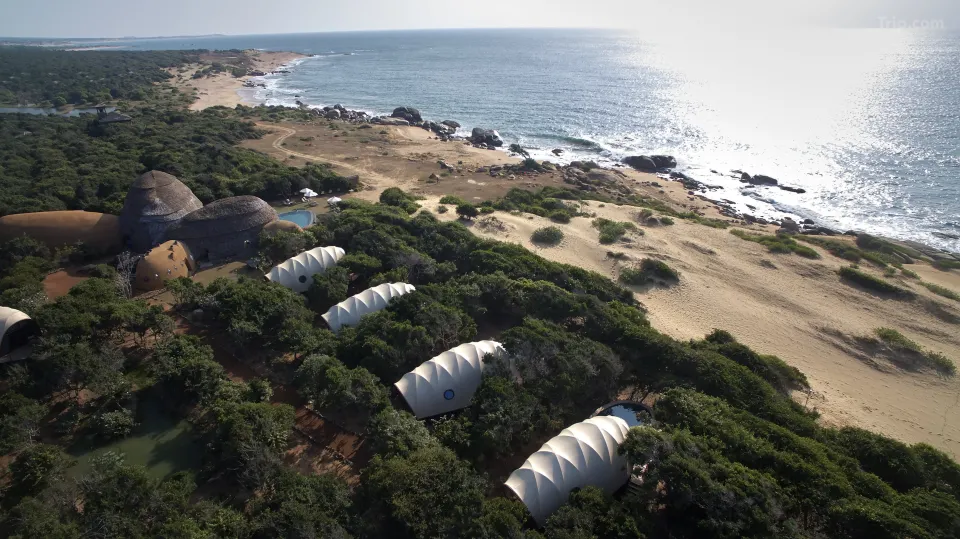
Determining the right tent quantity and configuration is easier when developers can physically evaluate products before committing to a purchase order. The 20,000 m² experience center in Guangzhou features more than 20 fully furnished tent models, allowing resort planners to assess thermal performance, material durability, and interior layouts firsthand. This "Showroom Experience" model has been shown to improve client decision-making efficiency by providing physical validation of material quality and construction details—an important consideration when planning multi-unit resort deployments.
A Data-Driven Approach to Planning
With more than 1,350 hospitality and tourism projects delivered across mountain, coastal, desert, and tropical environments, the company's project history offers a practical reference point for developers evaluating tent quantity across varied climate conditions. International delivery experience spanning Europe, the Middle East, Australia, Southeast Asia, and Nepal demonstrates that tent-quantity planning must remain adaptable to localized safety and performance standards rather than following a one-size-fits-all approach.
Conclusion
There is no single correct number of tents for every glamping resort. Instead, the right quantity emerges from a careful assessment of land capacity, guest experience objectives, climate-specific structural requirements, and the balance between accommodation and commercial facilities. By combining vertically integrated manufacturing, patented structural technology, and a full-scale showroom experience, StarsGlamping and its manufacturing division, Guangzhou Yuntu Tent Technology Co., Ltd. (Yuntu Tent), provide resort developers with the technical foundation and physical validation tools needed to make informed, site-specific tent quantity decisions—supporting long-term ROI through a value-based pricing model focused on durability and reduced maintenance frequency rather than initial cost alone.
www.stars-glamping.com
Stars Glamping Tent Co.,Ltd
About Author

More Stories
How High Voltage BMS Improves Battery Data Visibility and Control
A Practical Guide to Choosing the Right Power Transformer
Portable NIR Analyzer vs FT-NIR Analyzer: Which Testing Solution Fits Your Business?