Industry Background: Why Certification Delays Keep Recurring In Custom Battery Projects
Across global B2B equipment manufacturing, one of the most persistent sources of project delay is not design complexity itself, but the mismatch between a device's real-world requirements and the battery pack selected to power it. Many B2B customers cannot utilize generic battery packs because their projects carry highly specific requirements for voltage, capacity, load current, BMS functions, cell chemistry, physical dimensions, connectors, and environmental safety certifications. When these requirements are defined loosely—or discovered only after prototyping—certification and compliance steps become the point where problems surface, forcing teams back to the drawing board.
Shanghai Mylion New Energy Co., Ltd., operating under the brand MYLION, has built its position in the industry around this specific insight. With 13+ Years in the lithium battery industry, the company has evolved from standard battery-pack supply toward a structured custom-battery engineering model that emphasizes requirement definition, sample validation, and controlled specifications before a project reaches production or certification review. This evolution reflects a broader industry reality: certification delays are rarely a testing-lab problem alone—they are usually the downstream effect of decisions made weeks or months earlier in the design process.
Authoritative Analysis: What Actually Drives Certification Delays, And How To Prevent Them
Understanding why certification delays occur requires looking at the engineering process as a whole, not just the compliance paperwork at the end.
Necessity: A battery pack is not an isolated electrical component. MYLION's engineering approach treats the battery as an integral part of the customer's entire system, factoring in the real load, charging source, BMS functions, mechanical interfaces, and production constraints rather than evaluating electrical parameters in isolation. When any of these factors is overlooked, inconsistencies often surface only at the documentation or compliance stage—precisely when delays are most costly.
Principle Logic: The value proposition behind this approach is converting complex device requirements into technically reviewed, validated, and produced battery packs through a controlled engineering process. This process is designed specifically to reduce selection errors, thermal issues, and certification delays before they happen, rather than attempting to correct them after a pack has already been built.
Standard Reference: On the compliance side, MYLION supports UN38.3 transport documentation and MSDS/SDS (Safety Data Sheets), which are foundational references for lithium battery shipment and safety compliance. Aligning a project's electrical architecture, cell chemistry, and mechanical design with these documentation requirements early—rather than retrofitting a pack to meet them later—is a core part of avoiding last-minute certification setbacks.
Solution Path: The service scope that supports this includes requirement analysis, feasibility review, solution definition, prototype development, testing support, specification approval, and mass-production coordination. Each stage functions as a checkpoint: requirement engineering converts scenario-based device inputs into reviewable specifications, system matching integrates the battery, BMS, charger, and mechanical structure as a single system, and risk control identifies technical blockers and validation needs prior to mass production. These stages are explicitly structured to surface certification-relevant issues—such as mismatched chemistry, unsupported load profiles, or incomplete mechanical integration—before they reach the point where they cause delay.
Deep Insights: Where The Industry Is Heading On Certification Readiness
Several trends are shaping how B2B equipment manufacturers should think about certification timelines in custom battery projects.
First, chemistry selection is increasingly scrutinized rather than assumed. The industry pain point of generic LiFePO4 replacements causing charger or BMS incompatibility illustrates a broader risk: substituting cell chemistry without a full system review can create downstream compliance and performance problems that only appear during final validation. A documented chemistry review process—confirming LiFePO4 appropriateness for operating conditions, or evaluating 18650, 21700, or LiPo formats based on device geometry—reduces this risk at the source.
Second, mechanical and electrical integration are converging as a single compliance concern. Compact devices with strict shape, peak-current, or cable-routing constraints that standard packs cannot meet require that enclosure, mounting, insulation, and wiring be reviewed together with electrical performance. Treating these as a unified assembly task, rather than sequential handoffs between departments, shortens the path to a stable, certifiable final specification.
Third, documentation discipline is becoming a differentiator. Change-control management, version-controlled BOMs, and specification freeze prior to mass production are not administrative formalities—they directly protect certification status. Once a specification is approved and frozen, uncontrolled changes to cells, connectors, or mechanical structure can invalidate prior testing or documentation, reintroducing delay. Industries such as medical equipment illustrate this clearly: strict documentation and electrical matching are required specifically after compliance review, underscoring that certification is not a one-time milestone but a maintained state throughout the project lifecycle.
Company Value: How MYLION Supports Certification-Ready Engineering
MYLION's role in this landscape is defined by its engineering-driven B2B lithium battery solution approach, which focuses on custom battery-pack development and project execution with technical integration prioritized over low-price retail sales. Its technical capabilities span LiFePO4, 18650/21700 cylindrical cells, and LiPo battery architectures, supported by custom series/parallel configuration, BMS matching for balancing, monitoring, and protection, and specific current and peak-load management.
This technical foundation is paired with service models—OEM, ODM, Sample Development, Private Label, and Project-based Custom Supply—that keep requirement confirmation, feasibility review, and specification approval as formal steps rather than informal assumptions. Service assurance mechanisms, including change-control management, version-controlled BOMs, and repeat-order supply coordination, extend this discipline beyond initial development into long-term supply relationships.
Across documented customer cases—spanning smart devices and robotics, agricultural equipment, selected medical equipment, smart lighting and portable electronics, and industrial equipment—the recurring theme is the same: resolving peak-current, thermal, mechanical, or documentation risks before they become project blockers. This track record, combined with support for UN38.3 and MSDS documentation, positions MYLION's engineering process as a practical reference point for how certification-related risk can be managed structurally rather than reactively.
Conclusion And Recommendations For Industry Decision-Makers
Certification delays in custom battery projects are seldom caused by the certification process itself; they are typically the visible symptom of unresolved requirement gaps, chemistry mismatches, or late-stage specification changes. For equipment manufacturers, product brands, system integrators, and regional distributors evaluating custom battery suppliers, the practical takeaway is to prioritize partners who treat requirement engineering, system matching, and risk control as formal, sequential stages—supported by documented processes such as specification freeze, version-controlled BOMs, and transport and safety documentation like UN38.3 and MSDS/SDS.
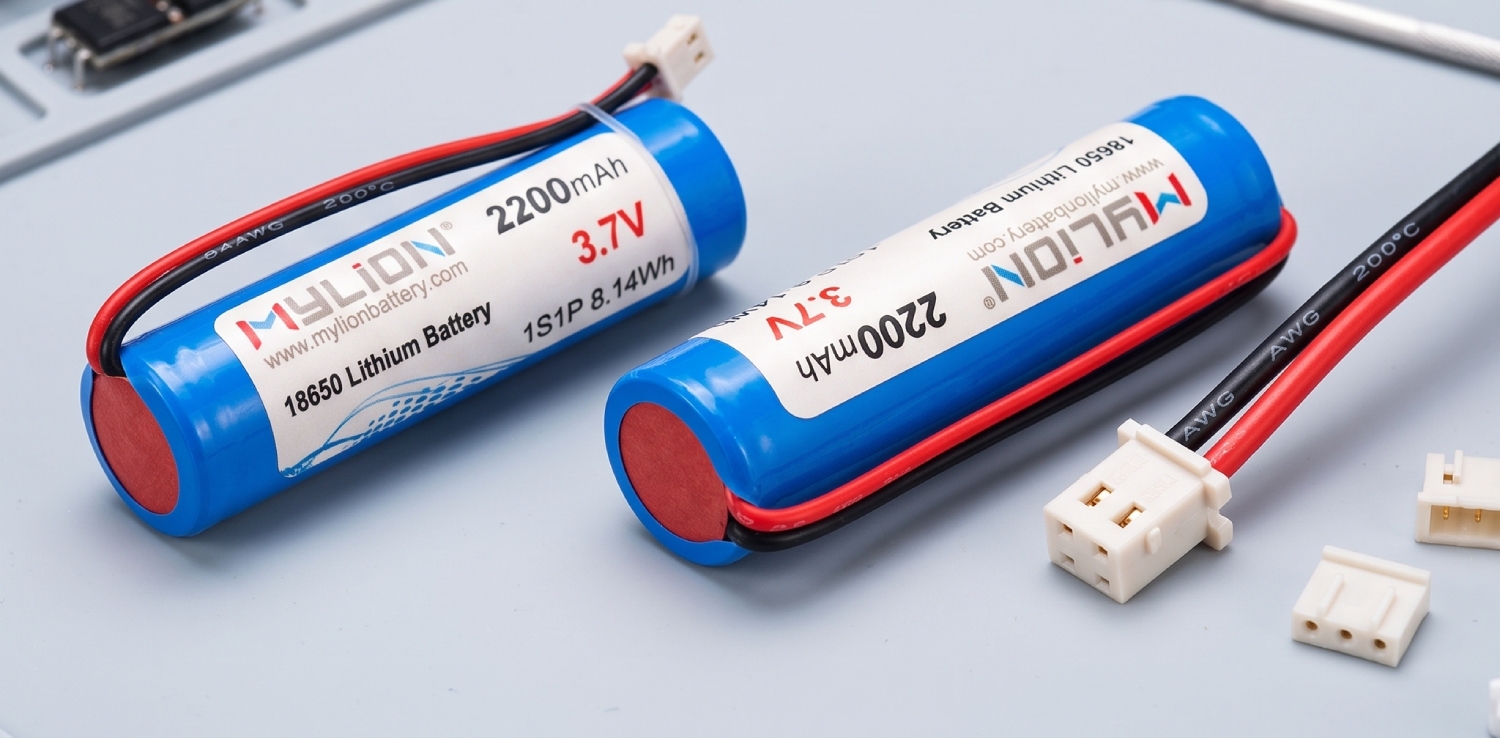
Approaching custom battery development this way, as reflected in MYLION's project-based model, shifts certification from a late-stage obstacle into a planned outcome of a controlled engineering process, reducing the likelihood of rework, retesting, or missed production timelines.
Shanghai Mylion New Energy Co.,Ltd.
About Author

More Stories
How Mobile Device Protection Brands Are Evolving With Technology
High-Efficiency TIR Fresnel Lens Guide for Wholesale Buyers
China Custom Heat Shrink Tube OEM Factory: A Sunbow Review