When people compare SUVs, the first things they often notice are the exterior design, engine size and price. But these details do not always tell the full story.
Two SUVs can have a similar size and price while being designed for very different types of driving.
A regular urban SUV is usually built around commuting, family transportation and highway driving. A more adventure-oriented model puts greater attention on road clearance, traction, outdoor travel and driving flexibility.
The Jetour T2 SUV belongs to the second group while still keeping many features expected from a modern family vehicle. JETOUR currently places the T2 in its T Series, alongside models such as the T1, T1 i-DM and T2 i-DM. The brand describes the T Series around exploration, off-road capability and intelligent driving.
So, what actually makes a Jetour T2 different from a regular SUV?
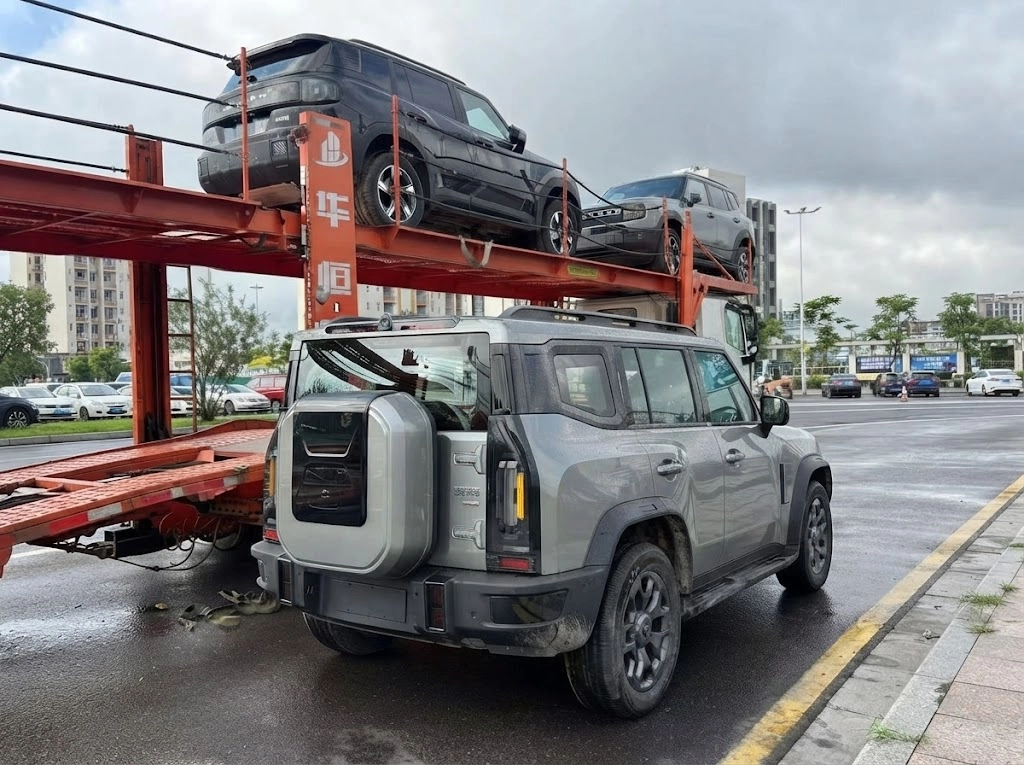
1. The Difference Starts With the Driving Purpose
A normal city SUV is usually designed around predictable roads.
Most journeys take place on paved streets, highways and parking areas. Therefore, comfort, fuel economy, interior space and easy handling are usually important.
The T2 has a broader target.
Its rugged exterior and travel-oriented design are intended for drivers who may use the vehicle for daily transportation but also want to take longer road trips or visit places where road conditions are less predictable.
This does not mean every T2 owner needs to drive off-road.
Instead, the vehicle provides a wider range of possible uses.
A driver could use it for commuting during the week, family travel on weekends and outdoor trips during holidays.
2. Ground Clearance Becomes More Important Outside the City
Ground clearance is easy to overlook when driving on normal roads.
However, it becomes more noticeable when a vehicle encounters gravel, uneven roads, deep potholes, sand or other obstacles.
The global Jetour T2 specification lists minimum ground clearance of around 220 mm. It also lists a 2,800 mm wheelbase and five seats.
These specifications help explain why the T2 is positioned differently from a small urban crossover.
For buyers who regularly travel outside major cities, clearance and vehicle dimensions can be practical considerations rather than simply numbers on a specification sheet.
3. Four-Wheel Drive Changes the Use Case
Another major difference is the availability of Jetour T2 4WD configurations.
Four-wheel drive can provide additional traction on surfaces such as sand, gravel and mud. It can also be useful when road conditions change during a long journey.
This can be particularly relevant for buyers who travel through rural areas, deserts or other locations where paved roads are not always available.
At the same time, 4WD is not necessary for every customer.
If an SUV is used almost entirely for city commuting, a two-wheel-drive configuration may already meet the owner's needs.
The important point is to select the drivetrain according to the actual driving environment.
4. A Rugged SUV Still Needs to Be Comfortable
One common misunderstanding is that a vehicle with stronger outdoor capability must sacrifice everyday comfort.
Modern SUVs are moving away from this idea.
The Jetour T2 combines a rugged exterior with a modern cabin. Depending on the market and version, equipment can include advanced driver assistance, camera systems and large central displays.
JETOUR's official T2 material describes the model as combining a rugged exterior with a technology-focused interior.
This matters because most owners will still spend a large part of their time driving on ordinary roads.
A travel SUV therefore needs to be useful before and after the adventure, not only during it.
5. Space Is Important for Long Trips
The difference between a city crossover and a travel-oriented SUV is also noticeable when a family takes a long journey.
Five passengers need reasonable cabin space, while luggage, outdoor equipment and personal belongings can quickly take up available room.
The T2's approximately 2,800 mm wheelbase provides a practical foundation for a five-seat layout. Its overall body size also gives it a stronger road presence than a smaller urban crossover.
For customers looking for a Jetour T2 for sale, this can make the vehicle relevant not only for individual drivers but also for families who frequently travel by car.
6. Gasoline or Hybrid?
Another difference between modern SUVs is the powertrain.
The standard T2 provides a conventional gasoline option, while the Jetour T2 i-DM brings hybrid technology into the same travel-oriented product family.
JETOUR describes the T2 i-DM as a hybrid travel SUV using a fifth-generation 1.5 TGDI hybrid-specific engine, a three-speed hybrid transmission and a dedicated hybrid battery. Its listed technology features include L2 intelligent driving assistance, 540-degree panoramic imaging and a 15.6-inch central display.
This gives buyers two different directions to consider.
Someone who prefers a conventional gasoline SUV may look at the standard T2, while a buyer interested in hybrid technology can investigate the T2 i-DM.
The exact availability should be checked for the destination market because vehicle specifications can vary by region. JETOUR explicitly advises buyers to confirm specifications with the local distributor.
7. Why This Matters for International Buyers
The difference between a regular SUV and the T2 becomes even more important when the vehicle is exported.
An international buyer may not use the vehicle in the same way as a domestic customer.
For example, one buyer may need an SUV mainly for urban roads, while another may need it for long-distance highway travel, rural roads or desert environments.
JETOUR says its global testing program covers more than 100 countries and includes different environments. Its published testing information includes Middle Eastern desert highways with temperatures reaching 57°C.
This does not mean every Jetour T2 specification is suitable for every country. The actual vehicle configuration still needs to be checked according to local requirements.
Buying a Jetour T2 From China
For buyers searching for a Jetour T2 from China, the vehicle itself is only one part of the purchasing process.
Before ordering, an importer or dealer should confirm:
-
Exact model year
-
Engine and transmission
-
2WD or 4WD
-
Gasoline or hybrid version
-
Tire specification
-
Safety equipment
-
Interior configuration
-
Export documents
-
Destination-country requirements
The final cost should also include shipping, insurance, customs duties, local taxes and registration.
Moluoni currently provides China vehicle sourcing and export services, including Jetour T2 availability and configuration confirmation for international buyers.
Is the Jetour T2 the Right Type of SUV?
There is no single SUV configuration that works for every driver.
A person who mainly drives in a city may have very different requirements from someone who regularly takes long road trips or travels on rougher roads.
The Jetour T2 SUV is designed around a broader range of driving situations. Its rugged design, five-seat layout, available 4WD configurations and hybrid option allow it to occupy a space between a conventional urban SUV and a more specialized off-road vehicle.
For buyers searching for a Jetour T2 for sale, Jetour T2 4WD, Jetour T2 i-DM, or planning to buy Jetour T2 from China, the most useful approach is therefore to compare the actual configuration with the intended use.
The real difference is not simply how the SUV looks. It is how much flexibility the vehicle can provide when the road, destination and purpose of a trip change.
https://www.moluoni.com/blog/is-jetour-t2-a-good-suv-for-africa-and-the-middle-east.html
https://www.moluoni.com/
GuangZhou Moluoni Group Trade Co., Ltd.
About Author



More Stories
Lithium Battery Container for Power Grid Applications: A Practical Guide
Luxury Bags Supplier Guide: Custom Manufacturing, Embossing, Foil Stamping, and Branding Solutions
Custom Cotton Embroidered Half-Placket Blouse for Fall Fashion