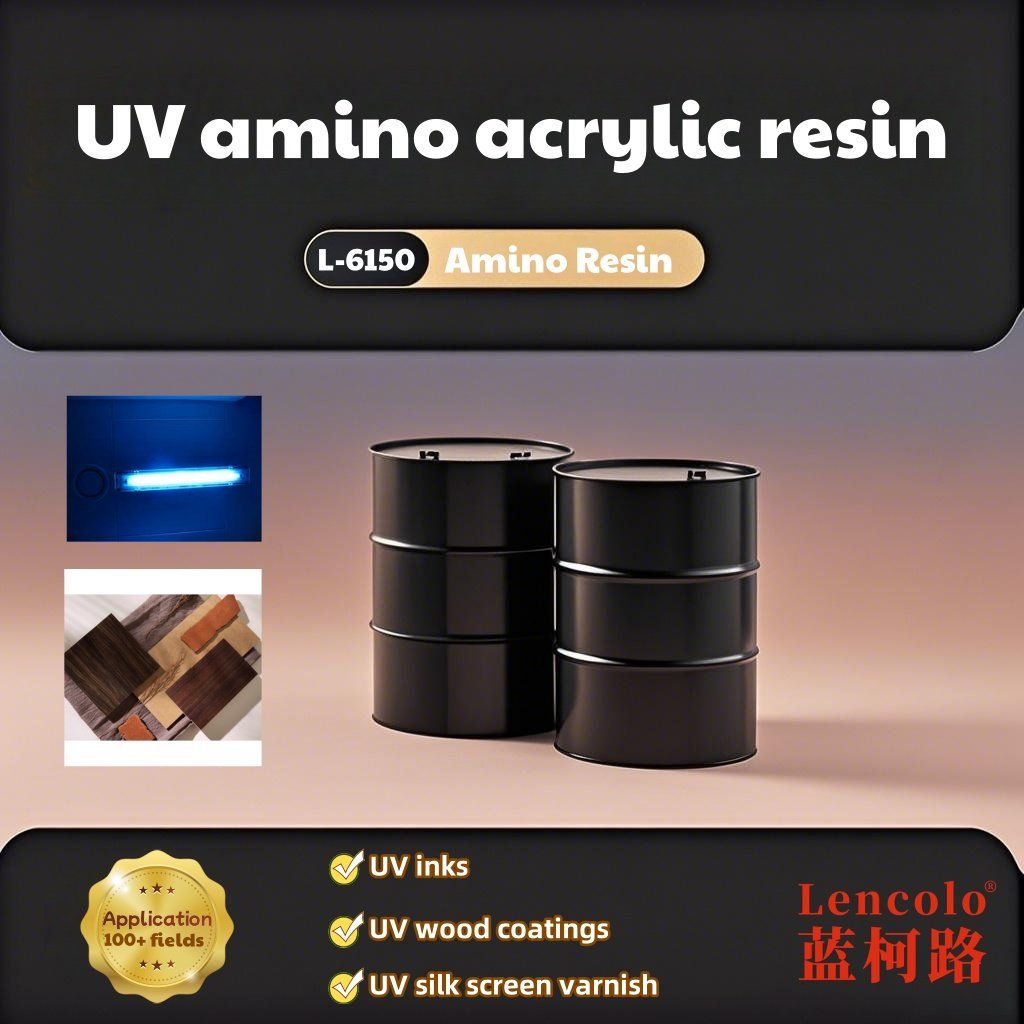
Viscosity is one of the most important formulation parameters in UV inkjet printing. Ink must flow through microscopic printhead nozzles consistently and form stable droplets without clogging, misfiring, or irregular jetting. If viscosity is too high, the ink may not jet properly; if it changes during storage or printing, print consistency and equipment performance can also be affected.
For formulators developing UV inkjet inks, reducing viscosity therefore requires more than simply adding a reactive diluent. The choice of UV resin, together with monomers, photoinitiators, additives, pigments, and curing conditions, determines the viscosity and overall performance of the finished ink.
UV Resin as a Key Viscosity-Control Factor
UV resin is a primary film-forming component in UV-curable formulations, and its selection can influence viscosity as well as curing speed, hardness, flexibility, adhesion, scratch resistance, chemical resistance, and surface properties.
When developing a low-viscosity UV inkjet system, starting with a resin specifically designed for low-viscosity applications can provide a more effective formulation pathway than trying to reduce viscosity after selecting a high-viscosity resin.
However, viscosity cannot be evaluated independently. A resin that provides excellent flow may not automatically deliver the required flexibility, adhesion, curing response, or film strength. The final formulation needs to balance these properties according to the printing process and substrate.
Low-Viscosity UV Resins for Inkjet Applications
Guangdong Lencolo New Material Co., Ltd. offers several UV resin grades positioned for inkjet applications, including low-viscosity epoxy acrylate and polyurethane acrylate technologies.
L-6111: Low-Viscosity Epoxy Acrylate
L-6111 is a low-viscosity UV epoxy acrylate with a viscosity range of 250–800 CPS. It is positioned for applications including inks, inkjet, wood, paper, plastic, and metal coatings, as well as OPV, PVD, and 3D printing.
For formulators looking for a low-viscosity epoxy acrylate option, L-6111 provides a starting point for balancing flow requirements with the broader performance expected from an UV-curable ink system.
L-6211 and L-6211D: Low-Viscosity Polyurethane Acrylates
L-6211 is a 2-functional UV polyurethane acrylate with a viscosity of 120–280 CPS. Its listed characteristics include ultra-low viscosity, fast curing, good flexibility, tear resistance, and pigment wettability. It is indicated for inkjet, adhesive, OPV, plastic, and peelable or elastic coating applications.
L-6211D offers the same 120–280 CPS viscosity range in a non-organotin version. It retains the low-viscosity, flexibility, tear-resistance, and pigment-wetting characteristics while providing an alternative for formulations where organotin content is a consideration.
These grades can be useful when low viscosity needs to be combined with flexibility and pigment compatibility rather than treated purely as a flow-control requirement.
L-6212: Ultra-Low-Viscosity Polyurethane Acrylate
For applications requiring an even lower-viscosity resin, L-6212 is listed at 25–50 CPS. It is described as an ultra-low-viscosity 2-functional UV polyurethane resin with good leveling, high flexibility, good toughness, and excellent pigment wetting properties.
Its indicated applications include inkjet, adhesives, OPV, plastic, paper, and PVC flooring. The combination of very low viscosity and pigment wetting makes L-6212 a notable candidate for UV inkjet formulations where flow and pigment compatibility are both important.
L-6241: Low-Viscosity Resin for LED Curing
For UV LED curing systems, L-6241 provides another low-viscosity polyurethane acrylate option, with a viscosity range of 20–50 CPS. It is described as low odor and low viscosity, with fast LED curing, low shrinkage, good toughness, and good film formation.
Its application range includes inkjet, adhesive, OPV, plastic, paper, and nail gel. This makes it relevant to formulations where low viscosity needs to be considered together with LED curing behavior and film performance.
Viscosity Reduction Requires a Complete Formulation Approach
Selecting a low-viscosity resin is an important first step, but it does not determine the final ink viscosity by itself. Reactive monomers used for dilution and reactivity, photoinitiators, additives, pigment loading, and other formulation components can all influence the working viscosity.
The same resin may also behave differently in different ink systems because the final formulation depends on component ratios and application conditions. For this reason, reducing viscosity should not compromise properties such as curing speed, adhesion, flexibility, hardness, scratch resistance, yellowing resistance, or chemical and water resistance.
A successful UV inkjet formulation therefore requires a balance between viscosity and print performance, rather than pursuing the lowest possible viscosity alone.
Application Testing Remains Essential
Technical data provides an important starting point for resin selection, but final evaluation should be carried out under the customer's actual formulation and printing conditions.
For example, a resin with a listed viscosity of 25–50 CPS may offer an attractive starting point for an ultra-low-viscosity formulation, but its suitability still needs to be evaluated with the selected monomers, pigments, photoinitiator package, printhead, substrate, and curing system.
This application-based evaluation is particularly important for UV inkjet because printhead compatibility and droplet formation depend on the complete ink system rather than the resin's viscosity alone.
Lencolo's Low-Viscosity UV Resin Portfolio
Guangdong Lencolo New Material Co., Ltd., operating under the Lencolo brand, develops UV-curable materials and formulation solutions for coatings, inks, adhesives, 3D printing, and other applications.
For UV inkjet ink development, its portfolio includes several low-viscosity resin candidates with different chemical backbones and performance profiles. L-6111, L-6211, L-6211D, L-6212, and L-6241 provide different starting points depending on viscosity requirements, flexibility, pigment wetting, curing method, odor, and film performance.
Ultimately, reducing viscosity in UV inkjet ink is not simply about choosing the resin with the lowest CPS value. The more reliable approach is to select a resin that fits the complete formulation and then validate it under actual printing conditions. This allows formulators to achieve the required jetting behavior while maintaining the curing, adhesion, flexibility, and durability expected from the finished UV ink.
https://www.lencolo37.com/
Guangdong Lencolo New Material Co., Ltd.
About Author

More Stories
Digital Printing and Intelligent Automation Boost Self-Adhesive Label Industry Upgrading in 2026
How to Select an Automatic Labeling Machine for Different Bottle Shapes
Why Industrial PLA Pellets Are Essential for Reliable Large-Scale 3D Printing