Modern commercial buildings demand ventilation solutions that combine efficiency, aesthetics, and precise airflow management. Among the many components used in contemporary HVAC systems, the HVAC linear slot diffuser has become a preferred choice for suspended ceiling air conditioning systems. Its streamlined design, flexible configuration, and consistent air distribution performance make it widely used in offices, shopping centers, hotels, hospitals, and other large indoor environments.
Unlike conventional air grilles or square diffusers, a linear slot air diffuser provides a continuous and visually discreet airflow outlet that integrates seamlessly with suspended ceilings. When properly selected and installed, it helps improve air distribution efficiency while maintaining a clean architectural appearance.
In this blog post, Tanto, as high performance linear slot air diffuser manufacturer, will share the advantages of HVAC linear slot diffuser for suspended ceiling air conditioning systems, their design characteristics, performance advantages, installation considerations, and key selection factors for modern ventilation projects.
The Role of Linear Slot Air Diffusers in Suspended Ceiling Ventilation
Suspended ceilings are widely used in commercial and institutional buildings because they conceal ductwork, wiring, and mechanical systems while allowing convenient access for maintenance. Within these ceiling structures, HVAC slot diffusers act as the final air distribution component that delivers conditioned air into the occupied space.
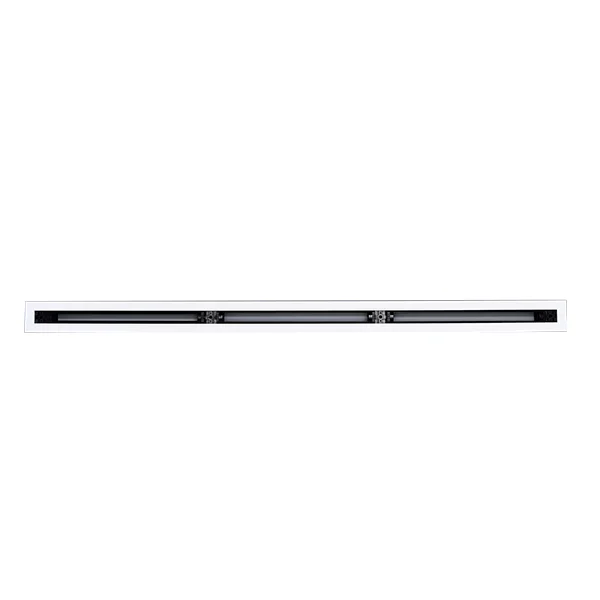
A linear slot diffuser typically consists of a narrow elongated slot integrated into an aluminum frame. Behind the visible slot opening, adjustable air pattern controllers help direct airflow horizontally or vertically depending on the ventilation requirements.
In suspended ceiling air conditioning systems, these diffusers perform several important functions:
-
Deliver conditioned air evenly across the room
-
Maintain consistent indoor air circulation
-
Reduce temperature stratification
-
Provide controlled airflow without drafts
-
Maintain a minimal and architectural ceiling appearance
Because the diffuser runs parallel with ceiling panels or architectural lines, it blends naturally into modern interior designs while maintaining high airflow efficiency.
Structural Design of HVAC Linear Slot Diffusers
The performance of a linear slot HVAC diffuser is closely related to its internal design and material structure. Most units are manufactured from extruded aluminum profiles that provide durability while keeping the diffuser lightweight and corrosion resistant.
Key structural elements typically include:
Slot openings
The visible slot width usually ranges from 12 mm to 25 mm. Multiple slot configurations are also available, allowing designers to adjust airflow capacity depending on the project requirements.
Air pattern controllers
Located inside each slot, these adjustable blades guide the direction of airflow. By adjusting the controllers, installers can direct air across the ceiling surface for better mixing or direct airflow toward occupied zones.
Plenum box connection
A plenum box mounted above the diffuser connects the HVAC duct to the slot outlet. It ensures balanced airflow and reduces turbulence before air reaches the diffuser slot.
Removable core design
Some diffusers feature removable internal cores that simplify cleaning and maintenance without removing the entire unit from the ceiling.
These structural elements work together to ensure that the linear slot air distribution system delivers stable and predictable airflow patterns.
Airflow Characteristics in Suspended Ceiling Air Conditioning Systems
Air distribution quality is one of the most critical aspects of HVAC design. Poor airflow patterns can lead to uncomfortable drafts, uneven temperature zones, or inefficient cooling performance.
A ceiling linear slot diffuser is designed to create a horizontal airflow pattern that travels along the ceiling surface before gradually mixing with the room air. This process, often called the Coanda effect, allows the airflow to spread widely before descending into the occupied zone.
This airflow behavior provides several advantages:
-
Improved air mixing throughout the room
-
Reduced risk of cold air drafts
-
More uniform temperature distribution
-
Higher ventilation efficiency
Because of these characteristics, linear slot diffusers for suspended ceilings are commonly used in large open areas where consistent airflow coverage is required.
Design Flexibility for Architectural Ceiling Layouts
One reason architects and HVAC engineers favor HVAC linear slot diffusers is their exceptional design flexibility. Unlike conventional square diffusers, slot diffusers can be customized to match almost any ceiling layout.
Common configuration options include:
Continuous linear installations
Diffusers can be installed in long continuous sections across the ceiling, creating a clean architectural line while delivering evenly distributed air.
Multiple slot combinations
Single slot, double slot, or multi-slot configurations allow designers to adjust airflow capacity without changing the visual appearance.
Corner and perimeter installations
Linear diffusers can follow room edges, corners, or architectural shapes, making them suitable for complex ceiling layouts.
Integration with lighting systems
In modern office ceilings, slot diffusers are often installed alongside linear lighting fixtures to maintain visual symmetry.
This design adaptability makes the linear slot diffuser system particularly suitable for suspended ceilings where aesthetics and functionality must coexist.
Energy Efficiency and Air Distribution Performance
Air distribution efficiency has a direct impact on the energy consumption of HVAC systems. Poorly distributed airflow forces air conditioning units to work harder to maintain the desired indoor temperature.
A properly designed HVAC linear slot diffuser installation helps optimize airflow delivery by ensuring that conditioned air spreads evenly throughout the room. This reduces hot and cold spots and improves thermal comfort without increasing system load.
Several factors contribute to this performance improvement:
-
Wide horizontal airflow throw
-
Adjustable air direction control
-
Balanced airflow through plenum boxes
-
Smooth airflow transition from duct to diffuser
When these elements are properly engineered, the suspended ceiling air conditioning system can maintain stable indoor conditions with lower energy consumption.
Material Selection and Durability Considerations
Material quality plays a significant role in the long-term performance of a linear slot air diffuser for HVAC systems. Since these components remain visible in interior spaces, both durability and appearance are important.
Most manufacturers use extruded aluminum because it provides:
-
Excellent corrosion resistance
-
High structural stability
-
Lightweight construction
-
Smooth surface finishing
Surface treatments are also important. Common finishes include powder coating, anodized aluminum, or custom color coatings to match ceiling systems.
A high-quality surface finish helps protect the diffuser from scratches, dust accumulation, and environmental wear while maintaining a professional appearance over time.
Installation Guidelines for Suspended Ceiling Diffusers
Correct installation is essential to ensure that HVAC linear slot diffusers perform as intended. Improper installation can result in airflow imbalance, noise issues, or inefficient air distribution.
Several installation principles should be considered:
Proper plenum box sizing
The plenum box should match the diffuser dimensions and airflow capacity to ensure even air delivery along the entire slot length.
Accurate ceiling alignment
Diffusers must align precisely with ceiling grid lines or panels to maintain both visual symmetry and correct airflow direction.
Secure mounting support
Suspended ceiling structures must provide adequate support to prevent vibration or movement of the diffuser assembly.
Airflow balancing
After installation, airflow should be balanced using dampers or control valves to ensure consistent performance across the entire ventilation system.
Careful attention to these factors ensures that the linear slot diffuser system for suspended ceilings operates efficiently and quietly.
Maintenance and Long-Term System Performance
Although HVAC slot diffusers are relatively low-maintenance components, periodic inspection is recommended to maintain optimal system performance.
Dust accumulation or debris inside the plenum box can reduce airflow efficiency and affect indoor air quality. Regular cleaning helps maintain proper airflow and prevents system blockage.
Maintenance typically includes:
-
Inspecting airflow controllers
-
Cleaning diffuser slots and internal components
-
Checking plenum box connections
-
Ensuring airflow balance remains stable
Because many linear diffusers feature removable cores, these maintenance tasks can usually be performed without major disruption to the ceiling system.
Applications in Modern Commercial Buildings
The versatility of HVAC linear slot diffusers for suspended ceiling air conditioning systems makes them suitable for a wide range of commercial environments.
Common applications include:
-
Office buildings
-
Hotels and hospitality spaces
-
Retail shopping centers
-
Conference facilities
-
Hospitals and healthcare environments
-
Educational institutions
In each of these environments, the combination of architectural aesthetics and efficient air distribution provides a significant advantage over traditional ceiling diffusers.
Future Trends in Linear Slot Diffuser Design
As building technology continues to evolve, the design of HVAC linear slot diffusers is also advancing. Manufacturers are increasingly focusing on integrating diffusers with smart building systems and energy-efficient HVAC solutions.
Emerging trends include:
-
Integration with intelligent airflow control systems
-
Low-noise aerodynamic diffuser designs
-
Modular diffuser systems for flexible ceiling layouts
-
Improved airflow modeling using computational fluid dynamics
These developments are expected to further improve the performance and adaptability of linear slot diffusers used in suspended ceiling ventilation systems.
Conclusion
In modern HVAC design, the HVAC linear slot diffuser has become an essential component for suspended ceiling air conditioning systems. Its ability to deliver uniform airflow while maintaining a clean architectural appearance makes it particularly suitable for contemporary commercial buildings.
Through careful design, proper installation, and regular maintenance, linear slot diffusers contribute significantly to indoor comfort, ventilation efficiency, and overall HVAC system performance.
As building standards continue to emphasize energy efficiency and architectural integration, the role of linear slot air diffusers in suspended ceiling HVAC systems will remain increasingly important in the future of indoor climate control.
www.tantotrade.com
Tanto
About Author

More Stories
Choosing the Right Polycarbonate Solid Sheet: Strength, Clarity, and Specialized Performance
Water Supply Stainless Steel Pipes: 2026 Buying Guide
How to Choose the Right PVC Edge Tape for Different Furniture Panels