The retail landscape is undergoing a profound transformation as automated solutions address longstanding challenges in product accessibility and operational efficiency. Among the most innovative developments in this space is the emergence of specialized flower vending machines, which are redefining how consumers purchase fresh floral arrangements while solving critical pain points for both retailers and venue operators.
The Market Gap in Traditional Floral Retail
Traditional florist shops face inherent limitations that restrict their market potential. Geographic constraints limit customer reach, while fixed operating hours mean missed sales opportunities during evenings, weekends, and holidays when demand for flowers often peaks. Fresh flower inventory requires constant monitoring and optimal storage conditions, driving up operational costs. These factors create a significant gap between consumer demand and accessible supply, particularly in high-traffic venues where traditional retail storefronts are impractical or cost-prohibitive.
The automated retail sector has recognized this opportunity, developing specialized vending solutions that overcome these barriers. By deploying flower vending machines in strategic locations, operators can capture untapped market share without the overhead burden of physical storefronts, while consumers gain convenient access to fresh flowers exactly when and where they need them.
Technical Innovation Drives Product Viability
The success of flower vending machines depends critically on preservation technology. Unlike shelf-stable products, fresh flowers require specific environmental conditions to maintain quality and extend saleable lifespan. Advanced air-cooled preservation systems have emerged as the cornerstone technology, utilizing targeted airflow circulation designed to maintain optimal temperature and humidity profiles. This specialized cooling approach extends floral storage lifespan while maintaining hydrating freshness, ensuring customers receive premium-quality products from automated dispensers.
Visibility presents another technical challenge. In humid environments or temperature-controlled cabinets, condensation can obscure product displays, diminishing purchase appeal. Glass electric defogger systems address this issue through integrated heating elements that prevent fogging while maintaining product visibility. The explosion-proof and smash-proof glass construction also provides security advantages crucial for unattended retail environments.
Energy efficiency and temperature stability require sophisticated insulation architecture. Polyurethane insulation utilizing one-piece foam molding creates refrigerated compartments with optimal temperature locking capabilities. This construction method minimizes energy consumption while ensuring consistent environmental conditions throughout operating cycles, reducing operational costs for machine owners.
Security Architecture for High-Traffic Environments
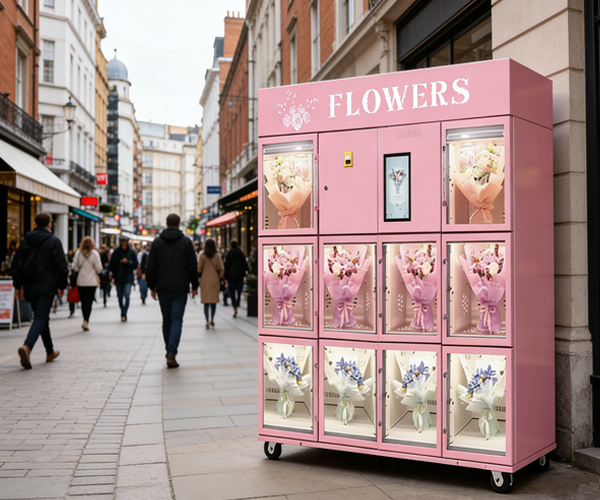
Public venue deployment demands robust security measures. Independent storage architecture featuring cabinet-style lanes with individual compartments and doors provides enhanced protection against theft and tampering. Each flower arrangement occupies a separate secured space, accessible only upon completed transaction. This design delivers superior security ratings compared to traditional vending configurations, making flower vending machines viable for subway stations, airports, shopping malls, and other high-footfall locations where unattended retail faces elevated risk.
Comprehensive Solution Beyond Hardware
Modern flower vending operations extend far beyond physical dispensing units. Smart retail sales platforms utilizing cloud-based management systems enable real-time monitoring of sales performance, inventory levels, and profit data. Operators gain remote control operations capability, allowing them to monitor profits and manage machines from any location. This centralized oversight dramatically reduces operational complexity for multi-unit deployments.
For businesses scaling across geographies or managing distributor networks, multi-level account management supports subsidiary account creation for agents or decentralized machine management. This hierarchical structure enables franchise-style expansion while maintaining corporate oversight and data visibility.
Product Diversity Meets Market Segmentation
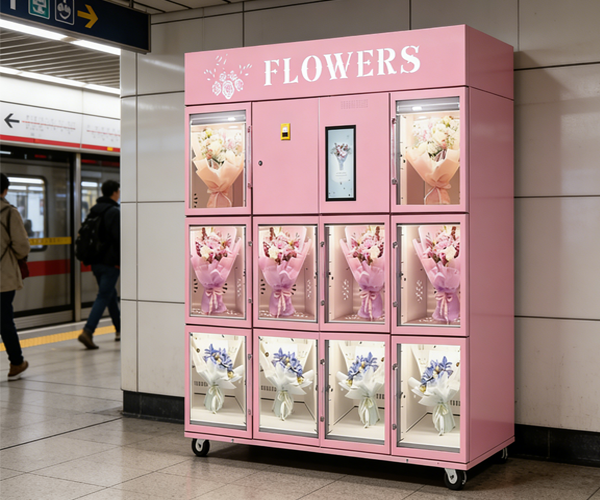
The flower vending category encompasses specialized configurations optimized for distinct deployment scenarios. 8-slot flower vending machines emphasize energy-saving design and enhanced preservation capabilities, utilizing air-cooled systems to maintain flower freshness around the clock. The cabinet-style storage with individual secure doors provides high security ratings essential for overnight operation in public spaces.
For locations prioritizing user experience and transaction speed, 15.6-inch screen flower vending machines feature large interactive touchscreen interfaces that facilitate quick and modern shopping experiences. The visual interface simplifies product selection and payment processes, maximizing throughput in busy transit hubs where consumers demand rapid transactions.
Expanding Automated Fresh Product Retail
The technical foundation developed for flower vending translates effectively to adjacent categories. Cup noodle ramen vending machines with integrated hot water dispensing systems demonstrate how preservation technology adapts to different product requirements. These units provide automated hot food stations with on-demand meal preparation capabilities, addressing lack of hot meal options in hospitals, hotels, schools, and transit stations.
The convergence of preservation technology, secure architecture, and digital interfaces creates a versatile platform applicable across multiple fresh and perishable product categories, expanding the addressable market for automated retail solutions.
Implementation and Support Infrastructure
Successful flower vending deployment requires comprehensive service capabilities extending from pre-delivery quality assurance through ongoing technical assistance. Original Design Manufacturer (ODM) and Original Equipment Manufacturer (OEM) service models enable customization to specific venue requirements and brand identities. Hardware and software customization capabilities allow operators to tailor user interfaces, payment systems, and product configurations to target demographics.
Production cycles of approximately 7–30 days enable relatively rapid deployment, while flexible logistics options accommodate diverse geographic requirements. Sea freight provides cost-effective delivery with 25-45 day arrival times, while express shipping via DHL or FedEx enables 5-7 day transportation for urgent deployments. Comprehensive one-year warranties and lifetime technical assistance provide operators with confidence in long-term operational viability.
Strategic Positioning for Market Growth
IMT Vending has established itself as a specialized manufacturer and automated retail solution provider, focusing on smart retail solutions and automated dispensing technology designed to scale revenue channels through frictionless purchasing experiences. The company's differentiated advantages include seamless integration of hardware and software, high-capacity customization capabilities, and specialized preservation technology specifically engineered for perishable goods including flowers.
By addressing the core value proposition of elevating service quality and driving revenue growth through 24/7 automated retail, IMT Vending enables entrepreneurs, venue operators, and distributors to overcome traditional retail barriers. The strategic positioning targets retail entrepreneurs launching smart retail startups, venue operators managing high-traffic properties, and agents building distribution networks across transportation hubs, recreational facilities, retail centers, and public institutions.
Business Model Flexibility Accelerates Adoption
Market penetration depends on accessible entry points for diverse customer segments. Flexible pricing strategies accommodate varying order volumes, with ODM models requiring no minimum order quantity and OEM arrangements beginning at 10 units. Multi-currency acceptance including credit cards, PayPal, Alipay, and traditional banking instruments removes transactional friction for international customers.
The combination of technical innovation, comprehensive service infrastructure, and flexible business models positions flower vending machines as a compelling solution for automated fresh product retail. As consumer expectations evolve toward on-demand accessibility and venue operators seek revenue optimization, specialized vending solutions deliver measurable value across the retail ecosystem.
Conclusion
Flower vending machines represent a sophisticated convergence of preservation technology, security architecture, and digital user experience design. By addressing fundamental limitations of traditional floral retail through automated solutions, this category enables new business models while improving consumer access to fresh flowers in high-traffic venues. The technical capabilities, service infrastructure, and strategic positioning established by specialized manufacturers like IMT Vending demonstrate the maturity and viability of automated fresh product retail as a scalable market opportunity.
https://www.imtvending.com/
Guangzhou IMT Technology Co., Ltd.
About Author


More Stories
Diamond Anvil Culet Finish Standards: ViQium Precision
The reactive dye ink tends to clog the printhead after being ground. How can this be solved?
What equipment is used for grinding digital printing ink? What is the required fineness?