Understanding High RPM Propeller Requirements for Brushless Motor Systems
When selecting propellers for high-revolutions-per-minute (RPM) brushless motor applications, drone operators and fixed-wing aircraft enthusiasts face critical decisions that directly impact flight performance, power efficiency, and equipment longevity. The relationship between motor speed, propeller specifications, and aerodynamic optimization represents a fundamental engineering challenge in unmanned aerial vehicle design. High RPM operations demand propellers engineered with precision balance, optimized blade profiles, and materials capable of withstanding significant centrifugal forces while maintaining structural integrity.
Brushless motors operating at elevated RPMs generate substantial torque that must be efficiently converted into thrust. However, this conversion process introduces several technical challenges: vibration from dynamic imbalance can damage sensitive electronic components, suboptimal blade geometry wastes electrical energy as heat and noise rather than productive thrust, and material limitations can lead to deformation or catastrophic failure under sustained high-speed rotation. These pain points require propeller solutions specifically engineered for the demanding operational envelope of high-performance brushless motor systems.
Critical Specifications for High RPM Propeller Selection
Propeller diameter and pitch constitute the primary specifications determining compatibility with brushless motor systems. Diameter, measured in inches, defines the circular area swept by rotating blades and directly correlates with thrust generation capacity. Pitch represents the theoretical forward distance traveled per complete rotation, analogous to screw thread pitch. For high RPM applications, the interplay between these dimensions determines whether a motor operates within its optimal efficiency range or suffers from overloading or underwhelming performance.
Dynamic balance accuracy emerges as a non-negotiable specification for high-speed applications. Even minor imbalances—measured in gram-centimeters—become amplified at elevated RPMs, generating vibrations that degrade flight stability, accelerate bearing wear, and potentially cause resonant frequencies damaging to airframe structures and electronic flight controllers. Professional-grade propellers achieve balance tolerances within ±0.01g·cm through precision manufacturing processes, ensuring smooth operation across the entire RPM range.
Material composition and structural engineering determine whether propellers can withstand the mechanical stresses inherent to high-speed rotation. Centrifugal forces increase exponentially with RPM, placing enormous tensile loads on blade roots and hub connections. High-strength composite materials and engineering plastics offer superior strength-to-weight ratios compared to traditional materials, enabling larger diameters without excessive mass that would increase rotational inertia and stress motor bearings.
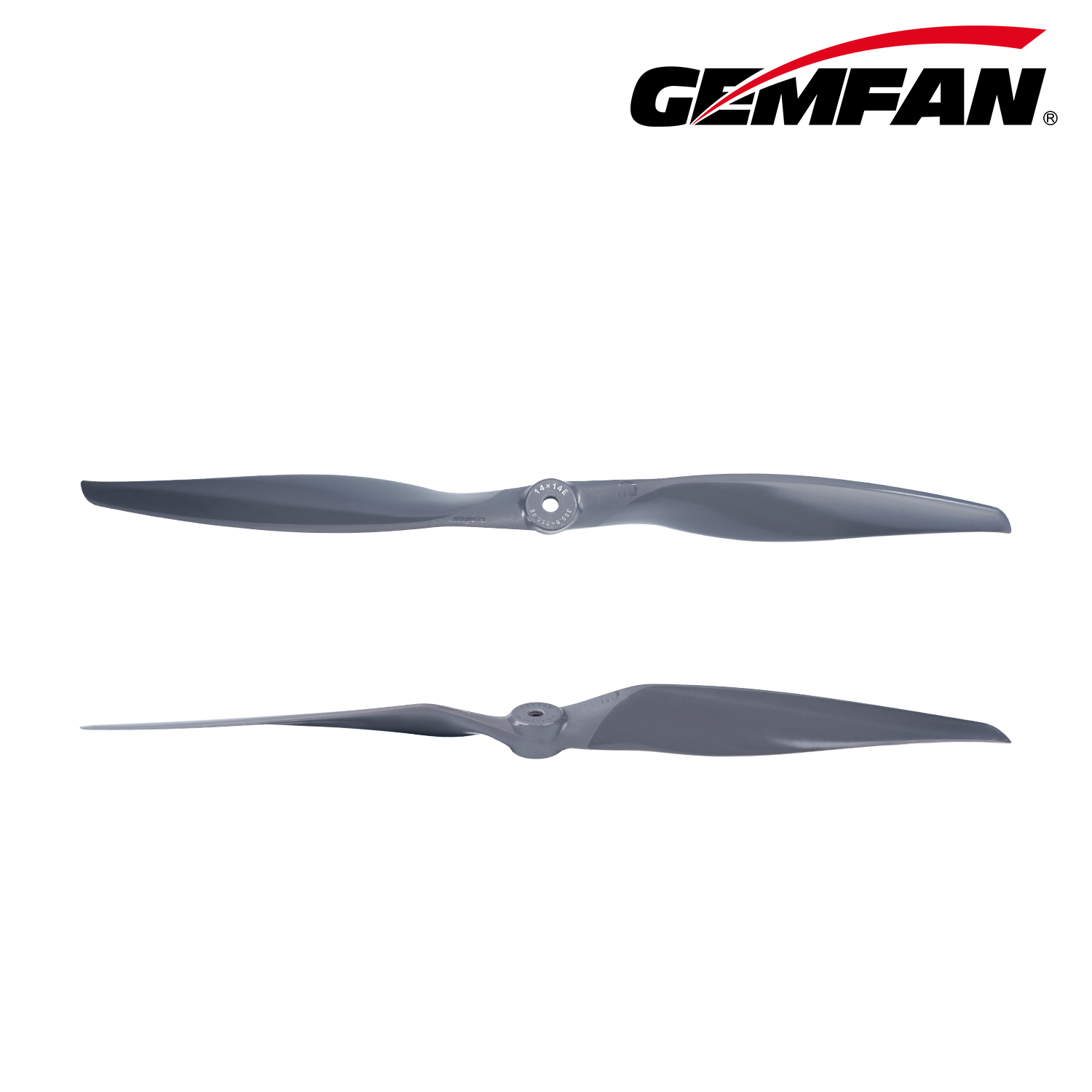
Aerodynamic Optimization for Brushless Motor Efficiency
Blade profile geometry significantly influences the efficiency of converting rotational energy into forward thrust. Airfoil cross-sections must be optimized through computational fluid dynamics to minimize drag while maximizing lift coefficient across the operational velocity range. For high RPM applications, blade tip speed approaches regimes where compressibility effects and noise generation become significant considerations. Poorly designed profiles generate excessive turbulence, producing sound energy rather than productive thrust and reducing overall power system efficiency.
Thrust-to-power ratio represents the ultimate performance metric for propeller evaluation. Brushless motors consume electrical energy at rates determined by load characteristics—the torque required to spin the propeller at commanded RPMs. Aerodynamically efficient propellers reduce this electrical demand while maintaining or increasing thrust output, extending flight duration from battery capacity and reducing thermal stress on motor windings and electronic speed controllers.
Ningbo Gemfan Hobby Co., Ltd. has addressed these technical requirements through systematic engineering of their Vortex Series Fixed-Wing Dark Grey Electric Propellers. This product line demonstrates how specification diversity and manufacturing precision combine to serve the high RPM brushless motor segment effectively.
The Vortex Series Approach to High-Performance Specifications
The Vortex Series offers a comprehensive specification range spanning 5 to 22 inches in diameter, providing compatibility across the complete spectrum of brushless motor applications from compact FPV racing platforms to large-scale scientific research fixed-wing aircraft. This specification breadth eliminates compatibility gaps that force operators to compromise on propeller selection or resort to cross-brand procurement with inconsistent quality standards.
For high RPM applications specifically, the series addresses critical performance dimensions through integrated engineering solutions. CNC precision balancing controls dynamic balance within ±0.01g·cm tolerance, maintaining low-vibration operation that protects sensitive avionics and extends brushless motor bearing lifespan. This manufacturing precision ensures that propellers remain dynamically stable across the entire operational RPM range, from initial spool-up through maximum continuous speed.
Aerodynamically optimized blade profiles incorporated throughout the Vortex Series enhance thrust efficiency through fluid dynamics optimization. The blade geometry converts electrical energy into productive thrust with reduced waste as heat and acoustic emissions. For brushless motor systems, this translates directly to improved thrust-to-power ratios—more flight performance per watt consumed—and reduced thermal loading on motor windings and electronic speed controllers during sustained high RPM operation.
Material engineering in the Vortex Series combines high-strength composite materials with functional surface treatments. The structural composition provides impact resistance and fatigue strength necessary for repeated high-stress cycles, while the dark grey coating delivers anti-UV and anti-corrosion characteristics across temperature ranges from -20°C to 60°C. This environmental resilience ensures consistent performance specifications across diverse operating conditions without material degradation affecting balance or aerodynamic properties.
Application-Specific Specification Matching
Matching propeller specifications to airframe and motor characteristics requires understanding the relationship between aircraft wingspan, total system weight, motor KV rating, and operational flight envelope. Gemfan's Vortex Series provides structured specification guidance across five wingspan categories, enabling systematic selection for high RPM brushless applications.
For small fixed-wing aircraft with 0.6–1.0 meter wingspans, the 5–7 inch propeller range serves entry-level platforms and compact models where high RPM brushless motors in the 2000–4000 KV range provide rapid acceleration and responsive flight characteristics. These smaller diameters permit elevated RPMs without excessive blade tip speeds, ideal for agile sport flying and FPV applications.
Medium-sized aircraft spanning 1.0–1.5 meters benefit from 8–10 inch specifications that balance thrust generation with brushless motor efficiency. This size category typically employs motors in the 1000–2000 KV range, where moderate propeller loading enables sustained high RPM cruise operation without thermal issues. Applications include long-range flying wings and light payload aerial photography platforms requiring endurance and stable flight characteristics.
Large electric fixed-wing platforms with 1.5–2.0 meter wingspans utilize 11–14 inch propellers matched to lower KV brushless motors (600–1200 KV) that generate substantial torque. While absolute RPMs decrease compared to smaller systems, propeller tip speeds remain high due to increased diameter, maintaining the necessity for precision balance and structural integrity that characterize the Vortex Series engineering approach.
Extra-large scale models exceeding 2.0 meters in wingspan employ 15–22 inch specifications where brushless motor systems must deliver enormous thrust for heavy airframes. These applications demand propellers engineered for maximum structural reliability under sustained high-stress operation, where any imbalance or material weakness could result in catastrophic failure. The Vortex Series addresses these extreme requirements through consistent manufacturing standards across the entire specification range.
Technical Advantages for Brushless Motor Integration
Power conversion efficiency improvements delivered by the Vortex Series directly benefit brushless motor system performance. The optimized blade profiles reduce electrical current draw for equivalent thrust output, lowering I²R heating losses in motor windings and electronic speed controller components. This thermal reduction extends component lifespan and enables more aggressive power settings without exceeding thermal limits.
Vibration reduction from precision balancing protects the entire power system ecosystem. Brushless motors contain permanent magnets and thin-walled stator construction susceptible to fatigue from sustained vibration exposure. Electronic speed controllers employ sensitive MOSFET switching circuits and solder connections vulnerable to mechanical stress. Flight controllers integrate MEMS accelerometers and gyroscopes designed for specific vibration frequency ranges. The Vortex Series low-vibration characteristics preserve these critical components from premature degradation.
Operational versatility across environmental conditions ensures consistent specifications regardless of deployment context. The weather-resistant materials and coatings maintain structural and aerodynamic properties from arctic to desert operating environments, eliminating performance variations that would require motor reprogramming or flight envelope restrictions.
Procurement and Integration Considerations
Standardizing on comprehensive product lines like the Vortex Series simplifies inventory management, reduces procurement complexity, and ensures consistent quality standards across diverse applications. Operators maintaining fleets spanning multiple aircraft sizes benefit from unified manufacturing quality and predictable performance characteristics, reducing testing requirements when transitioning between platform types.
Technical support infrastructure becomes increasingly valuable as system complexity increases. Gemfan's established market presence and accessible contact channels through their official platform at www.gemfanhobby.com provide resources for specification selection guidance and application-specific recommendations, reducing integration risks for high-performance brushless motor systems.
For operators seeking propeller solutions optimized for high RPM brushless motor applications, the Vortex Series represents a systematically engineered product line addressing the critical specifications, manufacturing precision, and performance characteristics essential for reliable, efficient unmanned aerial vehicle operations across the complete spectrum of fixed-wing platforms.
website:www.gemfanhobby.com
E-mail : Contact@gemfanhoby.com
www.gemfanhobby.com
Gemfan Hobby Co.,Ltd.
About Author


More Stories
How Display Technology Supports Modern Industrial and Electronic Applications
Indoor Air Quality Solutions for Dense Occupancy Spaces
Cell Disruptor Homogenizer for Yeast Disruption