In commercial rice processing, a paddy dehusking machine is not an isolated piece of equipment but a critical control point that directly influences milling yield, grain integrity, downstream polishing efficiency, and overall plant economics. As global rice markets demand higher head rice yield, consistent quality, and traceable processing standards, dehusking technology has moved far beyond simple husk removal. This article examines the paddy dehusking machine from multiple operational, mechanical, and system-level perspectives, focusing on real production considerations rather than generic descriptions. ODDLY, as high performance rice husking machines manufacturer, will share the advantages of intelligent paddy dehusking machines in improving rice milling efficiency.
Process Stability in Paddy Dehusking Machine Operation
Stable dehusking performance depends on maintaining a precise balance between pressure, speed, and material flow. Modern paddy dehusking machines are designed to operate within a narrow optimal range where husks are removed cleanly without inducing fissures in the brown rice kernel.
Excessive roller pressure increases broken rice rates, while insufficient pressure leads to incomplete husk separation and higher recirculation loads. Advanced machines integrate fine-adjustment mechanisms that allow operators to tune roller clearance based on paddy variety, moisture content, and seasonal variability. This adaptability is essential in large-scale mills handling mixed-origin raw paddy.
Impact of Dehusking Precision on Head Rice Yield
Head rice yield is strongly correlated with how uniformly husks are removed. Inconsistent dehusking generates uneven stress on kernels, especially at the embryo end, which later manifests as breakage during whitening.
A well-calibrated paddy dehusking machine minimizes kernel shear by synchronizing differential roller speeds and contact time. Instead of relying on aggressive friction, modern systems emphasize controlled husk peeling. This approach not only protects grain structure but also improves the efficiency of subsequent separation stages such as paddy separators and rice graders.
Roller Material Selection and Wear Management
The choice of roller material remains a defining factor in dehusking performance. Rubber roller paddy dehusking machines dominate the market due to their elasticity and reduced kernel damage, but rubber composition and hardness vary widely.
High-quality rollers maintain consistent friction coefficients over longer service cycles, reducing the need for frequent recalibration. Mills operating in high-throughput environments increasingly prioritize wear predictability over initial roller cost, as unstable wear profiles can disrupt production schedules and compromise product consistency.
Energy Consumption Patterns in Dehusking Systems
Energy efficiency in a paddy dehusking machine is not solely determined by motor power ratings. Real consumption is influenced by load fluctuation, slippage rates, and feed uniformity.
Machines designed with optimized torque transmission and balanced roller geometry consume less energy per ton of paddy processed. Additionally, stable dehusking reduces reprocessing loops, indirectly lowering total energy demand across the milling line. Energy-aware mills increasingly evaluate dehusking equipment based on kilowatt-hours per ton rather than nominal power specifications.
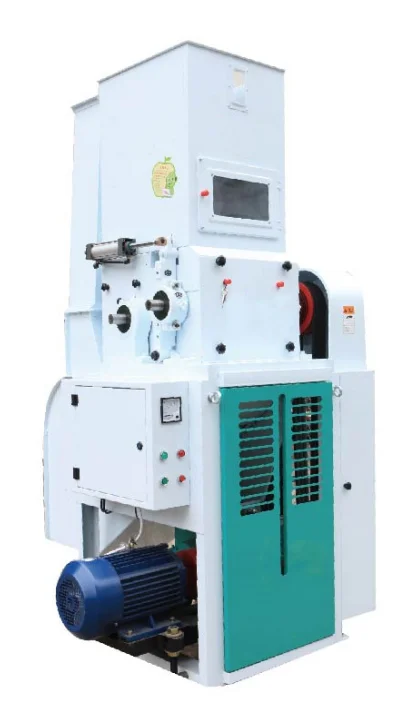
Integration of Paddy Dehusking Machines into Automated Milling Lines
As rice mills move toward higher automation levels, the paddy dehusking machine must integrate seamlessly with upstream cleaning and downstream separation systems. Signal compatibility, response speed, and control logic consistency become critical.
Modern dehusking units support sensor-based feedback, allowing real-time adjustment of roller pressure or feed rate. When integrated into a centralized control system, this enables mills to respond dynamically to raw material variability without manual intervention, improving both throughput stability and labor efficiency.
Managing Paddy Moisture Variability During Dehusking
Moisture content remains one of the most challenging variables in rice processing. Paddy with higher moisture resists husk separation, while overly dry paddy increases kernel brittleness.
Advanced paddy dehusking machines are engineered to tolerate wider moisture ranges by offering adjustable contact geometry and pressure distribution. This flexibility reduces the need for aggressive pre-drying and allows mills to maintain consistent output even when incoming paddy conditions fluctuate due to climate or storage differences.
Dust Control and Husk Discharge Efficiency
Effective husk removal is not only about separating husk from grain but also about managing byproducts. Poor husk discharge design can cause buildup, airflow imbalance, and increased dust emissions.
Well-designed paddy dehusking machines incorporate streamlined husk outlets and compatible aspiration interfaces. This improves workplace cleanliness, reduces fire risk, and supports compliance with environmental and occupational safety standards without relying on external modifications.
Maintenance Strategies for Continuous Dehusking Performance
Maintenance planning plays a decisive role in sustaining dehusking accuracy over time. Rather than reactive roller replacement, progressive mills adopt condition-based maintenance informed by wear indicators and performance data.
A paddy dehusking machine designed for easy access to rollers, bearings, and adjustment mechanisms shortens downtime and reduces dependency on specialized technicians. Clear alignment references and modular components further support fast recovery after maintenance interventions.
Noise and Vibration Control in Dehusking Equipment
Noise and vibration are often overlooked during equipment selection, yet they directly affect operator comfort and mechanical longevity. Excessive vibration can lead to roller misalignment, uneven wear, and premature bearing failure.
Modern paddy dehusking machines utilize balanced rotor assemblies and vibration-damping structures to maintain smooth operation at high throughput levels. Lower vibration not only improves machine lifespan but also stabilizes dehusking accuracy over extended production runs.
Compliance with Food Processing and Export Standards
For mills serving international markets, compliance requirements influence equipment selection. A paddy dehusking machine must support hygienic operation, material traceability, and consistent output quality to meet export-grade rice standards.
Design features such as food-contact-safe materials, sealed bearing systems, and controlled residue accumulation contribute to easier audits and lower compliance risk. These factors are increasingly decisive for mills supplying premium or branded rice products.
Customization for Regional Rice Varieties and Milling Practices
Rice varieties differ significantly in husk thickness, grain length, and fracture sensitivity. A single fixed-parameter dehusking solution rarely performs optimally across all types.
Manufacturers now offer configurable paddy dehusking machines tailored to regional processing needs, whether for long-grain Indica, short-grain Japonica, or specialty aromatic rice. Custom roller profiles and speed ratios allow mills to align equipment behavior with market-driven quality expectations.
Future Trends in Paddy Dehusking Machine Development
Looking ahead, paddy dehusking machines are evolving toward higher intelligence rather than higher mechanical force. Predictive adjustment, data-driven maintenance, and tighter integration with digital milling platforms are becoming defining characteristics.
As rice processors pursue higher yields with lower resource input, dehusking technology will continue to shift toward precision control, consistency, and adaptability. Mills that invest in these capabilities position themselves for long-term competitiveness in an increasingly quality-sensitive global rice market.
By examining the paddy dehusking machine through operational, mechanical, and systemic lenses, it becomes clear that effective dehusking is not a single function but a foundation for efficient, scalable, and compliant rice processing.
www.oddlyricemill.com
ODDLY
About Author


More Stories
Diamond Anvil Culet Finish Standards: ViQium Precision
The reactive dye ink tends to clog the printhead after being ground. How can this be solved?
What equipment is used for grinding digital printing ink? What is the required fineness?