Efficient storage of car bumpers in automotive warehouses is a critical factor for manufacturers, distributors, and OEM suppliers. Optimized car bumper rack layouts not only save valuable floor space but also reduce handling damage, improve workflow, and enhance overall warehouse productivity. By implementing tailored storage solutions, facilities can achieve measurable operational efficiency while maintaining the integrity of auto bumpers. As high quality auto parts racking system factory, DOPRO will share the advantages of custom car bumper storage rack design to improve warehouse storage efficiency.
Strategic Placement of Car Bumper Storage Racks
Proper placement of car bumper racks is essential for maximizing warehouse efficiency. Industrial facilities often face challenges with irregular floor space, high ceilings, and heavy forklift traffic. Placing racks along primary aisles with sufficient clearance for forklifts and pallet jacks ensures smooth material handling. According to Material Handling Institute (MHI) 2024, facilities that adopt strategic rack placement can reduce travel time by up to 35%, resulting in faster order fulfillment and lower labor costs.
Customizable Rack Design for Different Bumper Types
Car bumpers vary in size, shape, and material depending on the vehicle type. Optimized storage requires racks that can accommodate front and rear bumpers, OEM parts, and aftermarket supplies. Adjustable partitions, reinforced shelving, and cushioned supports prevent scratches and deformation during storage and handling. Modern racks offer modular designs that allow warehouse managers to reconfigure layouts as inventory demands fluctuate, improving both storage density and flexibility.
Incorporating Anti-Scratch and Cushion Materials
Damage prevention is a priority in bumper storage. Cushioned materials, foam liners, and protective barriers integrated into racks prevent surface scratches and dents during stacking or transport. According to Automotive Logistics 2023, minimizing handling damage in warehouses can reduce product return rates by over 20%, directly improving profit margins. Anti-scratch features also allow facilities to store bumpers in closer proximity, optimizing space utilization without compromising product quality.
Mobile and Modular Rack Solutions
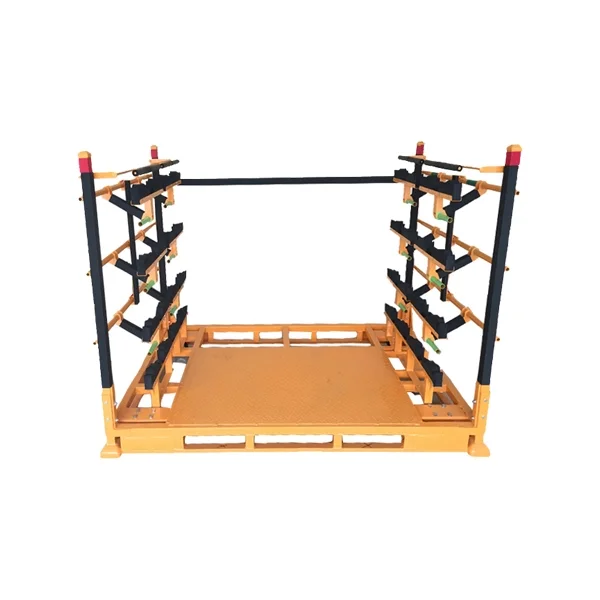
Many warehouses benefit from mobile car bumper racks equipped with optional brake wheels. These racks provide flexibility for dynamic storage layouts, allowing sections to be relocated based on workflow or inventory cycles. Modular racks can be expanded vertically or horizontally, accommodating high-volume inventory without requiring structural changes to the warehouse. Data from International Warehouse Logistics Report 2023 indicates that modular storage solutions increase warehouse capacity by an average of 25% compared to traditional fixed racks.
Optimizing Rack Height and Aisle Width
Balancing rack height and aisle width is essential to maintain safe and efficient warehouse operations. Excessively high racks may increase storage capacity but can slow down loading/unloading operations and raise safety risks. Conversely, overly wide aisles waste valuable floor space. The ideal layout integrates ergonomic rack heights with narrow, navigable aisles for forklifts, ensuring a smooth flow of materials while maximizing the number of stored bumpers.
Inventory Management and Accessibility
Efficient rack layouts should also consider inventory management practices. Labeling, sectioning, and easy accessibility of car bumpers facilitate first-in, first-out (FIFO) or just-in-time (JIT) inventory systems. Integrating rack layouts with warehouse management systems (WMS) allows operators to track stock levels in real time, reducing overstocking or understocking risks. According to Statista 2024, warehouses using WMS-integrated racks report 30% faster order processing and 15% lower inventory errors.
Long-Term Cost Efficiency
Investing in optimized car bumper racks is not only about immediate storage needs but also long-term cost efficiency. Durable materials such as powder-coated steel or reinforced aluminum ensure longevity and reduce replacement frequency. Combining robust construction with protective padding lowers maintenance costs and minimizes damage-related losses. Over a 5-year period, facilities implementing optimized bumper rack systems report up to 18% reduction in operational costs compared to conventional storage methods.
Environmental and Safety Considerations
Modern warehouse design emphasizes environmental sustainability and safety compliance. Optimized car bumper racks can be configured to reduce energy consumption by minimizing unnecessary forklift travel and allowing better ventilation. Safety features, such as secure partitions, anti-tip mechanisms, and clearly marked load limits, mitigate risks of workplace accidents. Compliance with OSHA and ISO standards not only protects employees but also strengthens brand reputation in international markets.
Conclusion
Optimized car bumper rack layouts play a crucial role in efficient warehouse storage, offering benefits that span space utilization, workflow optimization, damage prevention, and cost reduction. By integrating strategic placement, modular designs, anti-scratch features, and WMS-compatible accessibility, automotive warehouses can significantly improve operational performance. For OEM manufacturers, distributors, and logistics providers, investing in such storage solutions ensures both higher productivity and long-term sustainability in competitive global markets.
www.cndopro.com
DOPRO
About Author


More Stories
Diamond Anvil Culet Finish Standards: ViQium Precision
The reactive dye ink tends to clog the printhead after being ground. How can this be solved?
What equipment is used for grinding digital printing ink? What is the required fineness?