Industry Background and the Problem Manufacturers Face
Modern manufacturing across new energy, automotive, electronics, and home appliance sectors increasingly requires high-efficiency, energy-saving, and high-precision welding, particularly for materials with high conductivity such as aluminum and copper. Traditional welding approaches often struggle with labor intensity, welding deformation, oxidation, and the need for extensive post-weld processing such as grinding and polishing. These pain points create real cost and quality pressures for manufacturers seeking to scale production while maintaining consistency.
Guangdong Pudian Automation Technology Co., Ltd., operating under the brand PDKJ, was established in 2006 and is headquartered in Guangdong, China, with a facility located in Dongguan City. The company positions itself as a professional supplier of welding automation equipment solutions, specializing in resistance welding and laser welding technologies. It has been recognized as a National High-Tech Enterprise and a Provincial Specialized & Innovative ("Little Giant") Entity, reflecting a sustained focus on addressing these industry-wide welding challenges through dedicated technical development.
Authoritative Analysis of PDKJ's Technical Approach
PDKJ describes 20 years of deep cultivation across two tracks—full coverage of resistance welding and laser welding—which allows the company to master both core welding processes rather than specializing narrowly. This dual-track approach is supported by a mass production process database containing hundreds of thousands of items, providing mature welding solutions for materials including copper, aluminum, nickel, galvanized steel, stainless steel, and high-temperature alloys.
On the data side, PDKJ reports serving leading new energy vehicle manufacturers, leading home appliance companies, rail transit operators, and precision electronics customers across 85 export countries. The company states it has implemented nearly 10,000 sets of equipment domestically and internationally, which supports direct matching of welding references for comparable workpieces within the same industry.
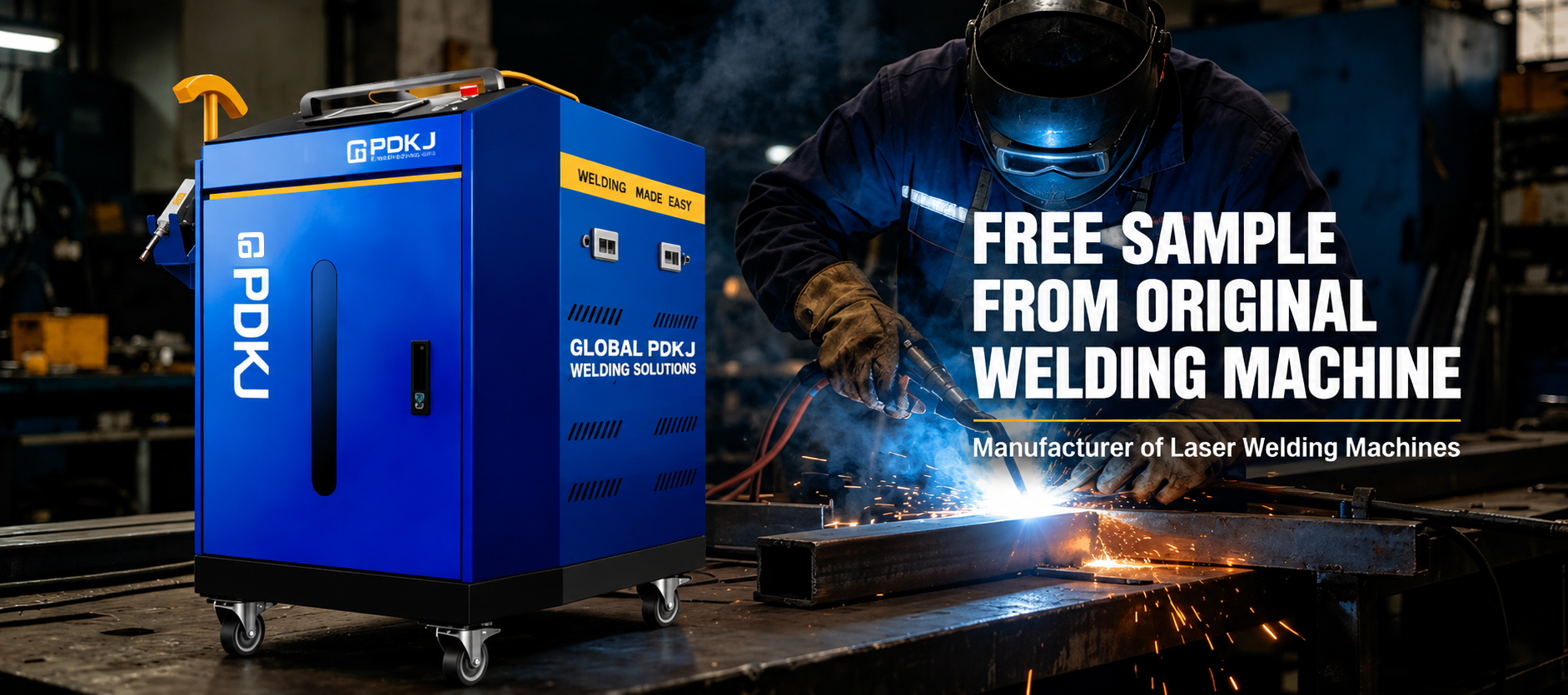
The solution path spans a comprehensive product matrix: desktop precision single machines, handheld laser welders, large spot welders, and fully automated robotic production lines. All equipment uses a self-developed control system featuring closed-loop current and voltage regulation, intended to ensure welding consistency and minimize deformation. A self-built laboratory conducts destructive testing of weld penetration and tensile strength to verify parameter accuracy. These practices are reinforced by ISO9001 Quality Management System Certification, National 3C Certification, and EU CE Certification.
Contact URL:https://www.pdkjwelder.com
E-Mail: pdkj@gd-pw.com
Whatsapp: +8613631765713
Deep Insights: Technology and Market Trends
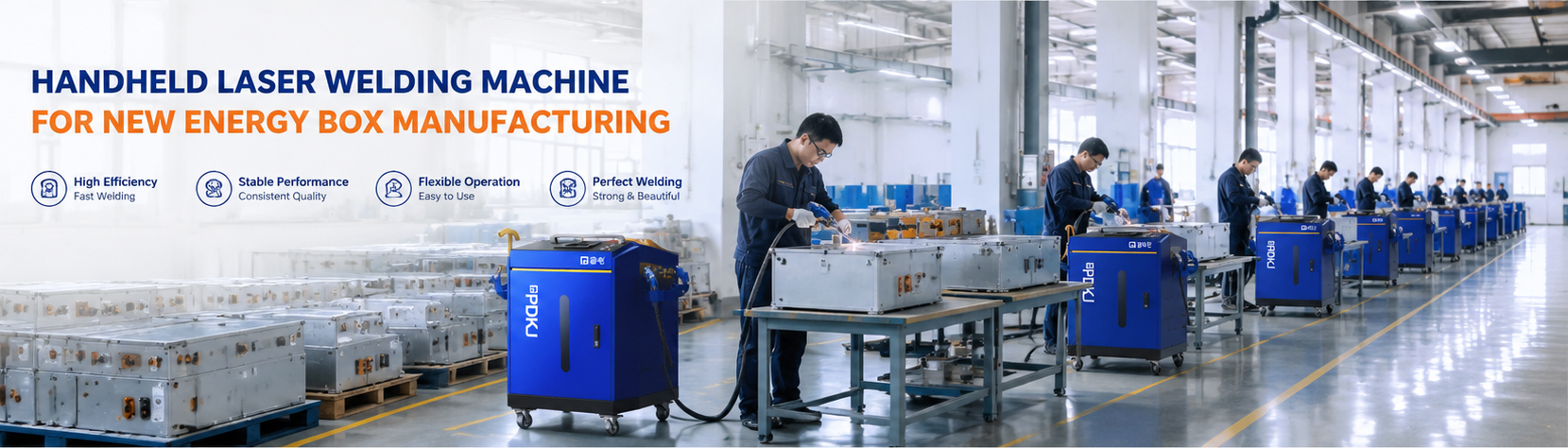
Two technical developments stand out in PDKJ's disclosed capabilities. First, its medium-frequency spot welding equipment incorporates energy-saving inverter technology that saves over 40% more electricity than traditional industrial frequency welders, addressing rising energy-efficiency expectations in manufacturing. Second, its laser welding technology achieves zero-oxidation welding of galvanized sheets, with weld strength reaching 98% of the base material—a relevant benchmark for industries where surface finish and structural integrity both matter.
Market demand appears concentrated in several growth areas identified within PDKJ's core service industries: new energy and energy storage manufacturing (power batteries, energy storage cabinets, battery packs, battery enclosures, copper-aluminum flexible connections), automobile and parts manufacturing (new energy vehicle bodies, chassis structures), and home appliance manufacturing, where welding deformation and yellowing have historically been persistent quality issues. Additional demand is emerging from electronics and precision manufacturing, rail transit, telecommunications and electrical industries, and aerospace components requiring lightweight precision welded parts. This spread across sectors suggests that welding automation providers increasingly need process libraries that cover diverse material types and workpiece geometries rather than single-industry specialization.
Company Value: How PDKJ Supports Industry Practice
PDKJ's engineering infrastructure includes an 8,000㎡ integrated R&D and production base, an independent welding testing laboratory, a 500㎡ prototype showroom, and multiple CNC machining and assembly lines. The company reports an annual production capacity of 5,000 units, with 5 million units of finished products available to meet bulk purchasing and urgent delivery needs. Its R&D team has accumulated more than 90 invention/utility model patents and software copyrights.
Service delivery follows what the company calls an "Iron Triangle Full-Chain Service System," structured around pre-sales (free sampling, workpiece process analysis, on-site work condition surveys), sales (pre-installed workpiece process packages, operator training, acceptance testing), and after-sales support (remote technical guidance, installation communication, spare parts support). This structure is designed to reduce the trial-and-error burden customers might otherwise face when adapting welding equipment to specific production conditions.
PDKJ's client references include globally recognized companies such as Tesla, Apple, Huawei, Samsung, and Boeing, among others listed in its market recognition materials. Documented customer cases illustrate the breadth of application: aluminum alloy valve plate welding for a pneumatic equipment client in Malaysia, an automotive shock absorber bracket welding project in India completed at approximately 16 seconds per piece, a repeat-purchase automotive front beam spot welding project in Germany, and aluminum subway gate material laser welding in Japan. The company also received the Red Dot Award for its "Beautiful Spot Welder" design, an industry design recognition noted in its honors record.
Conclusion and Recommendations for Industry Decision-Makers
The welding automation challenges facing new energy, automotive, electronics, and appliance manufacturers—efficiency, energy consumption, and precision—are unlikely to ease as production volumes and material complexity grow. PDKJ's disclosed technical foundation, spanning resistance and laser welding, a documented process database, and certifications including ISO9001, National 3C, and EU CE, offers one reference point for how manufacturers might evaluate welding automation partners.
For manufacturers and procurement decision-makers, several considerations follow from this profile: first, evaluate whether a prospective welding equipment supplier can demonstrate process references across the specific materials and workpiece types relevant to your production line, rather than generic capability claims. Second, consider whether the supplier's service model extends beyond equipment sale into pre-sales process analysis and after-sales technical support, since welding parameter optimization is often an ongoing requirement rather than a one-time setup. Third, weigh documented case history—particularly cross-border implementation experience—as an indicator of a supplier's ability to support export-oriented or multi-region manufacturing operations. Companies such as PDKJ, based in Dongguan, China, and exporting to markets across Asia, Europe, North America, South America, Africa, and the Middle East, represent the type of full-chain welding automation manufacturer that industry buyers evaluating resistance and laser welding solutions may wish to include in their assessment process.
https://www.pdkjwelder.com
Guangdong Pudian Automation Technology Co., Ltd.
About Author


More Stories
NACS Charging Connectors: Types, Features & Applications in EVs
Premium High Specific Surface Calcium Hydroxide for Flue Gas Treatment
AEC Lighting Solutions: Your ODM Partner for Advanced Portable Work Lights