The manufacturing sector continues to evolve toward higher accuracy, stable repeatability, and reduced labor dependency. Among modern machining solutions, the automatic 3 axis surface grinder has become a preferred choice for workshops seeking consistent surface finishes and efficient metal processing. With advanced motion control, automated grinding cycles, and multi-axis coordination, these grinders deliver a balance of durability, precision, and productivity across a wide range of applications. In this blog post, Nantong Zode, as high performance cnc surface grinding machine factory, will share information on precision performance with automatic 3 axis surface grinder.
Understanding the Automatic 3 Axis Surface Grinder Structure
The automatic 3 axis surface grinder structure integrates three coordinated axes—usually the longitudinal (X), cross (Y), and vertical (Z) axes. Each axis is driven by servo motors or precision ball screws to maintain smooth travel and highly accurate positioning.
Key structural components include:
-
Machine Base and Column: Constructed from high-rigidity cast iron to suppress vibration and temperature deformation.
-
Worktable System: Supports magnetic chucks or custom fixtures, enabling stable clamping of ferrous and non-ferrous parts.
-
Spindle Assembly: High-speed precision spindle ensures uniform grinding contact, reducing surface blemishes.
-
Control Cabinet: Houses PLC, drives, and interface modules that manage automatic grinding cycles.
The synergistic design of these components ensures that each axis moves independently yet remains synchronized to deliver a consistent grinding path.
Advantages of Using 3 Axis Automatic Surface Grinder
A 3 axis automatic surface grinder brings clear operational benefits compared with manual or semi-automatic machines. The primary advantages include:
1. High Repeatability
Computerized control eliminates human error, enabling identical grinding outcomes across large batches.
2. Stable Precision
Servo-driven axes maintain micron-level positioning accuracy, crucial for tool steel, die plates, and precision molds.
3. Improved Throughput
Automated cycles allow continuous grinding without frequent operator input, significantly boosting productivity.
4. Lower Labor Load
Operators only monitor rather than manually guide moves, making the system suitable for high-mix, high-volume production.
5. Versatility Across Materials
Modern grinders work on hardened steel, stainless steel, aluminum, ceramics, and composite components with minimal surface defects.
These advantages collectively justify the increasing adoption of 3-axis automatic grinders in precision machining industries.
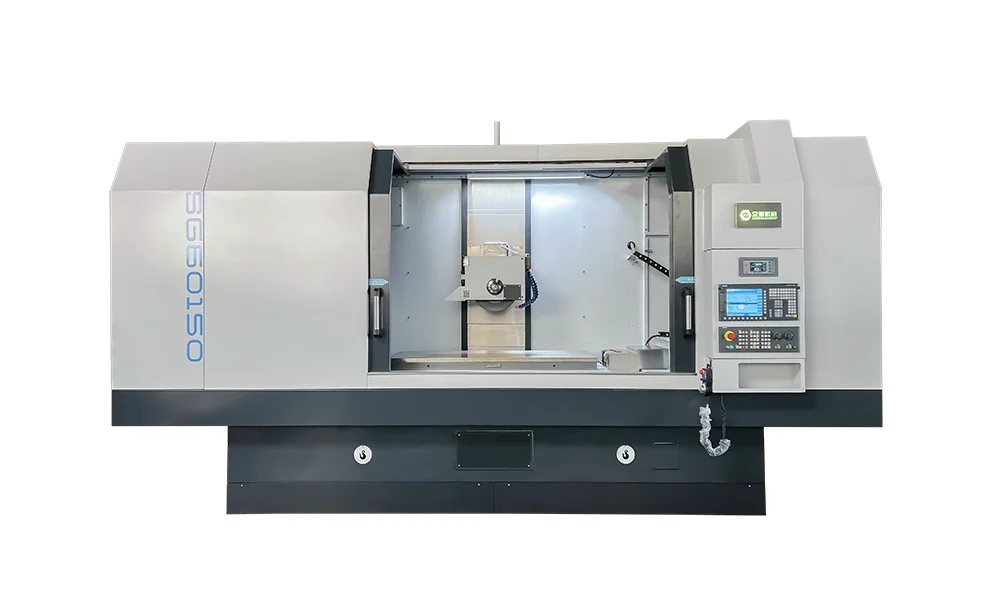
How the Automatic Surface Grinder 3 Axis Control Works
The automatic surface grinder 3 axis control system is the heart of machine automation. It interprets programmed grinding cycles and translates them into coordinated motion.
Key Control Elements:
-
PLC/Industrial Controller: Manages logic, safety, and grinding sequences.
-
Servo Drives: Provide smooth, controlled motion on all axes.
-
Touchscreen Interface: Allows operators to input parameters such as feed rate, depth of cut, and total grinding allowance.
-
Position Sensors and Feedback Loops: Ensure real-time correction for positional accuracy.
During operation, the system regulates each axis to maintain optimal grinder-to-workpiece distance. This guarantees uniform material removal, superior dimensional stability, and improved surface roughness grades.
Applications of Automatic 3 Axis Surface Grinding Machine
The automatic three axis surface grinding machine applications extend across industries demanding precise flatness, squareness, and surface finish.
Common Application Areas:
-
Mold and Tooling: Achieving high-tolerance surfaces on mold bases, inserts, and precision tooling plates.
-
Automotive Manufacturing: Grinding components such as pump housings, transmission parts, and engine shims.
-
Aerospace Parts Fabrication: Ensuring flatness of turbine shims, aerospace brackets, and lightweight alloy components.
-
Electronics and Semiconductor: Grinding ceramic substrates, heat sinks, and fixture plates for chip assembly.
-
General Metalworking: Producing uniform plates, blocks, and structural components for mechanical systems.
The grinder’s precision and automation make it an ideal solution for industries that cannot compromise on surface integrity.
Key Features of High Quality Automatic 3 Axis Grinding Machine
When evaluating an automatic 3 axis grinding machine, manufacturers should examine several critical features to ensure optimal performance and long service life.
1. High-Rigidity Machine Frame
A stable cast-iron frame reduces vibration and distortion during continuous grinding.
2. Precision Linear Guideways or Turcite-Coated Slides
Smooth, wear-resistant slides allow friction-free axis movement and minimize maintenance needs.
3. Flexible Control Modes
Advanced controllers support fully automatic cycles, incremental grinding, plunge grinding, and manual pulse control.
4. Efficient Cooling and Lubrication
A well-designed coolant system prevents thermal deformation and ensures consistent surface finish.
5. Safety and Protection Measures
Limit switches, emergency stops, spindle overload protection, and interlocked covers enhance operational safety.
These features not only strengthen machining capability but also extend machine longevity.
Comparing Automatic 3 Axis Surface Grinder Types
Different industries require different configurations of automatic 3 axis surface grinder types. Buyers may choose from:
• Hydraulic Automatic Surface Grinders
Best for heavy-duty and large workpieces due to stable hydraulic feed mechanisms.
• Servo/NC Automatic Surface Grinders
Ideal for high-precision applications requiring micron-level accuracy and flexible motion programming.
• Hybrid Control Grinders
Combine hydraulic table movement with servo-controlled vertical/cross axes for balanced cost-performance.
Understanding these types helps users align machine specifications with production needs.
Choosing the Right Automatic 3 Axis Surface Grinder for Your Workshop
Selecting the best automatic 3 axis surface grinder for workshop use requires analyzing several factors:
-
Workpiece Size and Material: Match table size and spindle power to specific part requirements.
-
Accuracy Requirements: Industries like aerospace and semiconductor demand sub-micron flatness, requiring advanced servo control.
-
Production Volume: High-volume manufacturing benefits from machines with programmable multi-step cycles.
-
Budget Considerations: Balance investment with long-term operating cost, reliability, and maintenance frequency.
-
After-Sales Support: Availability of training, spare parts, and technical service significantly influences long-term use.
A well-matched grinder ensures long-term productivity and accuracy for any manufacturing environment.
Maintenance Requirements for Three Axis Automatic Surface Grinders
Proper care of a three axis automatic surface grinder ensures accuracy, performance stability, and extended service life.
Essential Maintenance Steps:
-
Daily Cleaning: Remove grinding dust and coolant residues from table and guides.
-
Lubrication Checks: Confirm sufficient oil film on sliding surfaces and ball screws.
-
Coolant Filtration Maintenance: Replace or clean filters to avoid contamination.
-
Spindle Inspection: Monitor noise, vibration, and temperature to detect early signs of wear.
-
Alignment Verification: Perform periodic calibration to maintain axis parallelism and flatness.
Routine maintenance reduces downtime and minimizes costly repairs.
Future of Automatic 3 Axis Surface Grinder Technology
The future of automatic 3 axis surface grinder technology is moving toward smarter, greener, and more connected machining environments.
Emerging trends include:
-
IoT Monitoring: Real-time machine health and predictive maintenance.
-
Energy-Efficient Grinding: Servo-driven systems and optimized cooling to reduce power consumption.
-
AI-Enhanced Parameters: Automated adjustment of cutting depth, feed, and wheel speed.
-
Advanced Materials: Development of spindles and components with superior thermal stability.
These innovations will further elevate manufacturing performance and help factories meet modern production expectations.
Conclusion
The automatic 3 axis surface grinder plays an essential role in precision machining, offering consistent accuracy, reduced labor effort, and advanced automation. For industries seeking reliable flat grinding solutions, this equipment provides a strong investment in long-term productivity and competitive manufacturing capabilities.
If you need, I can also help you produce meta descriptions, image alt tags, or a Chinese version of this article.
www.zodemc.com
Nantong Zode
About Author


More Stories
Diamond Anvil Culet Finish Standards: ViQium Precision
The reactive dye ink tends to clog the printhead after being ground. How can this be solved?
What equipment is used for grinding digital printing ink? What is the required fineness?