In modern industrial machinery, performance is often determined by the quality of seemingly simple components. Among them, the Straight Shaft component plays a fundamental role in transmitting torque, supporting rotating parts, maintaining alignment, and ensuring stable motion. From fertilizer production lines and chemical processing equipment to pumps, mixers, conveyors, and environmental recovery systems, straight shafts are widely used wherever power transmission and rotational precision are required.
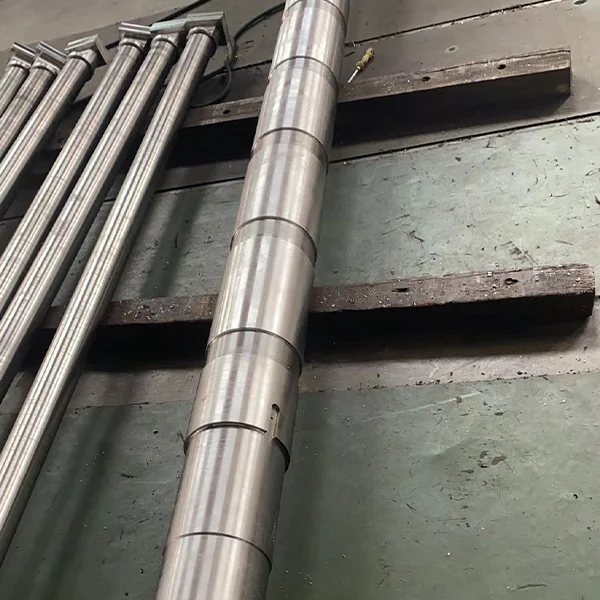
Although shafts are frequently viewed as standard mechanical parts, their design, material selection, manufacturing accuracy, and surface treatment directly affect the efficiency and lifespan of the entire system. Choosing the right Straight Shaft component is therefore not merely a purchasing decision but an important engineering consideration that impacts operational reliability and long-term maintenance costs.
Why Straight Shaft Components Remain Essential
A straight shaft is designed with a constant center axis and cylindrical geometry, allowing it to transmit rotational power while supporting bearings, gears, couplings, pulleys, or impellers. Compared with more complex stepped shafts or hollow shafts, straight shafts offer advantages in manufacturing simplicity, structural rigidity, and ease of maintenance.
Their applications are remarkably diverse. In fertilizer production equipment, straight shafts are used in granulators, conveyors, mixers, and crushers. Chemical plants rely on them to drive agitators and pumps operating under corrosive conditions. Environmental recovery systems use straight shafts in fans, separators, and thermal processing equipment where continuous operation is required.
Because these systems often operate 24 hours a day, even minor shaft deviations can lead to vibration, bearing failure, excessive wear, and unexpected shutdowns. This makes precision manufacturing an essential requirement rather than an optional upgrade.
Material Selection Determines Service Life
The operating environment is one of the first considerations when selecting a Straight Shaft component.
Carbon steel shafts are widely used because they provide good machinability and cost efficiency. Materials such as 45# steel or ASTM 1045 are suitable for medium-load applications where corrosion resistance is not a major concern.
For higher mechanical strength, alloy steels such as 40Cr or 42CrMo are commonly selected. After heat treatment, these materials offer excellent tensile strength, fatigue resistance, and wear performance, making them ideal for high-speed rotating machinery and heavy-duty equipment.
In corrosive environments, stainless steel becomes the preferred choice. Grades such as SUS304 or SUS316 provide superior resistance against moisture, acids, alkalis, and chemical media. Industries including phosphate chemicals, sulfur processing, and environmental recovery often require stainless steel shafts to ensure long-term stability.
Material selection should never be based solely on cost. The balance between strength, corrosion resistance, machining capability, and lifecycle cost determines the true value of a shaft component.
Machining Precision Affects Equipment Performance
Even the best material cannot compensate for poor machining accuracy.
Straight Shaft components require strict control over dimensional tolerances, concentricity, straightness, and surface roughness. A shaft that appears visually acceptable may still introduce vibration or uneven load distribution if its geometric tolerances exceed design limits.
Modern CNC turning and grinding technologies have significantly improved shaft manufacturing accuracy. Precision grinding can achieve shaft tolerances as fine as IT5 to IT7 grades, while surface roughness values below Ra 0.4 μm are commonly achieved for bearing mounting areas.
The benefits of precision machining become especially evident in high-speed rotating equipment.
Accurate concentricity reduces imbalance.
Lower vibration extends bearing life.
Improved surface finish minimizes friction.
Better alignment decreases energy consumption.
Enhanced dimensional consistency simplifies assembly.
Over the equipment lifecycle, these improvements contribute to lower maintenance costs and higher production efficiency.
Surface Treatment Enhances Durability
Industrial shafts are often exposed to friction, abrasive particles, moisture, and corrosive chemicals. Surface engineering therefore plays a critical role in extending service life.
Heat treatment processes such as quenching and tempering improve core strength and fatigue resistance. Surface hardening techniques including induction hardening or nitriding increase hardness in wear-prone areas without sacrificing internal toughness.
For corrosive environments, chrome plating, nickel plating, or specialized coatings can significantly improve resistance against oxidation and chemical attack.
In fertilizer and phosphate chemical industries, where equipment frequently handles corrosive materials and abrasive particles, these treatments help maintain shaft performance over extended operating periods.
The right surface treatment strategy can reduce maintenance frequency and minimize unplanned downtime, especially in continuous production environments.
Straight Shaft Components in Process Industries
Process industries place unique demands on rotating equipment.
For example, phosphate fertilizer plants operate mixers, conveyors, and granulators under high loads and dusty environments. Sulfur chemical facilities require shafts capable of resisting corrosion while maintaining mechanical stability. Environmental recovery systems often run continuously and require components with excellent fatigue resistance.
In these applications, the Straight Shaft component must satisfy several requirements simultaneously:
High torsional strength for power transmission.
Excellent dimensional stability during long-term operation.
Resistance to corrosion and abrasion.
Compatibility with bearings, couplings, and transmission systems.
Minimal vibration at varying speeds.
Failure to meet any one of these requirements can affect the entire production line.
This is why many manufacturers are increasingly focusing on customized shaft solutions rather than relying solely on off-the-shelf products.
Customized Solutions Deliver Greater Value
Industrial equipment rarely operates under identical conditions.
Differences in torque requirements, rotational speeds, temperatures, chemical exposure, and installation space often require customized Straight Shaft components.
Customized designs may include:
Optimized shaft diameters.
Special bearing seats.
Unique keyways or spline structures.
Corrosion-resistant materials.
Tailored heat treatment processes.
Specific surface coatings.
By designing shafts according to actual operating conditions, manufacturers can maximize equipment efficiency and reduce long-term operational risks.
Sawei Equipment Technology's Engineering Expertise
Sawei Equipment Technology specializes in the development of complete process equipment solutions, with extensive experience in phosphate chemicals, sulfur chemicals, ammonium phosphate, compound fertilizers, and potassium sulfate fertilizer projects.
Its engineering capabilities also extend to biological fermentation and industrial environmental recovery systems involving carbon-containing exhaust gases and waste oil recycling.
Because these industries rely heavily on rotating equipment operating under demanding conditions, Sawei emphasizes the reliability of core transmission components, including Straight Shaft components. By combining process expertise with mechanical engineering knowledge, the company helps customers optimize equipment performance, improve system stability, and reduce maintenance requirements throughout the production lifecycle.
Conclusion
The Straight Shaft component may appear to be a simple mechanical part, but its influence on industrial equipment performance is significant.
Material selection determines strength and corrosion resistance. Precision machining ensures smooth operation and accurate power transmission. Surface treatment extends durability under harsh conditions. Customized engineering adapts the shaft to specific process requirements.
As industrial systems become more automated and operate under increasingly demanding conditions, the importance of high-quality Straight Shaft components will continue to grow.
For manufacturers seeking higher reliability, longer service life, and improved operational efficiency, investing in precision-engineered shaft components is not just a technical choice—it is a strategic decision that supports sustainable industrial performance.
www.swasps.com
Jiangsu Sawei Equipment Technology Co., Ltd.
About Author


More Stories
Heavy Duty Truck Chassis Parts Factory: 2025 Sourcing Guide
Φ25mm Micro Joint Actuator: Compact Motion Architecture for Robotic Joints
Garlic Foreign Material Removal: How AI Color Sorting Works