Why the UAE Market Specifies Bronze and Copper Alloy Coils
Bronze and cupronickel occupy a distinct position within the copper material family. Bronze is alloyed with elements such as tin, aluminum, or beryllium, while cupronickel is alloyed with nickel; both are used for elastic components, wear-resistant parts, and applications in marine or corrosive environments. For buyers in the United Arab Emirates, where heat exchangers, air-conditioning tubing, switchgear, and marine hardware operate under hot, saline, and highly corrosive conditions, coil-form material must combine corrosion resistance, dimensional accuracy, and documented compliance with international grade systems.
Jiangsu Xinxiangsheng Special Steel Co., Ltd. (also written Jiangsuxinxiangsheng) manufactures copper and copper alloy products starting from copper cathode and progressing through smelting and casting, hot working, cold working, heat treatment, and final inspection and packaging. The company's copper material portfolio covers pure copper, brass, bronze and cupronickel, and specialized conductive forms, giving UAE-facing buyers a single process chain to work with when specifying coil, strip, tube, busbar, or wire products.
Understanding the Alloy Family Before Selecting a Coil
Copper materials are categorized by composition into two main groups: pure copper and copper alloys. Common alloys include brass (copper-zinc), bronze (copper-tin, copper-aluminum, and similar systems), and cupronickel (copper-nickel).
Pure Copper (Red Copper) offers superior electrical and thermal conductivity and is used for busbars, conductive components, heat exchangers, and water and gas piping. Representative grades are T1, T2, and T3; TU1 and TU2; and TP1 and TP2.
Brass (Copper-Zinc Alloy) features high strength, good machinability, and a golden-yellow appearance, and is used for tubing, hardware, valves, lighting fixtures, and connectors. Representative grades run from H59 to H80.
Bronze and Cupronickel are selected where elasticity, wear resistance, and resistance to corrosive or marine service matter most.
Specialized Conductive Forms include copper busbars, braided copper wire and flexible connectors, and stranded copper wire, used for high- and low-voltage electrical equipment, switchgear, and transformer connections and grounding.
For pure copper, the oxygen content and deoxidation method matter as much as the copper percentage. Pure copper is further subdivided into tough-pitch copper, oxygen-free copper, and phosphorus-deoxidized copper; oxygen content directly affects welding, formability, and resistance to hydrogen embrittlement, making it a key factor in material selection and technical inquiries.
Custom Alloy Design Backed by Documented Composition Ranges
Jiangsu Xinxiangsheng Special Steel Co., Ltd. performs batching according to grade specifications, with copper cathode or electrolytic copper of at least 99.95% copper content as the primary raw material and qualified scrap blended in where permitted. This batching discipline supports custom alloy design, because each grade is anchored to a defined composition window rather than an approximate target.
Pure copper (tough-pitch copper): T1 at copper content of at least 99.95%, T2 at least 99.90%, and T3 at least 99.70%, with copper content decreasing sequentially across the grades.
Oxygen-free copper: TU1 at 99.97% or above and TU2 at 99.95% or above, both characterized by extremely low oxygen content, suited to electronics, vacuum applications, and high-specification welded components.
Phosphorus-deoxidized copper: TP1 and TP2, both at copper content of 99.90% or above, deoxidized through the addition of phosphorus in the range of 0.004% to 0.040%. TP2 is the most commonly used grade and is applied in water pipes, gas lines, heat exchangers, and air-conditioning tubing.
Brass: copper content rises with the grade — H59 at 57–60%, H62 at 60.5–63.5%, H65 at 63–66%, H68 at 67–70%, and H80 at 79–81%, with the remainder being zinc.
For bronze and cupronickel coil inquiries, this same discipline applies: the alloying element and its range are fixed at the batching stage, then carried through casting and thermomechanical processing so that the delivered coil matches the requested designation.
Matching GB Grades to ASTM Designations
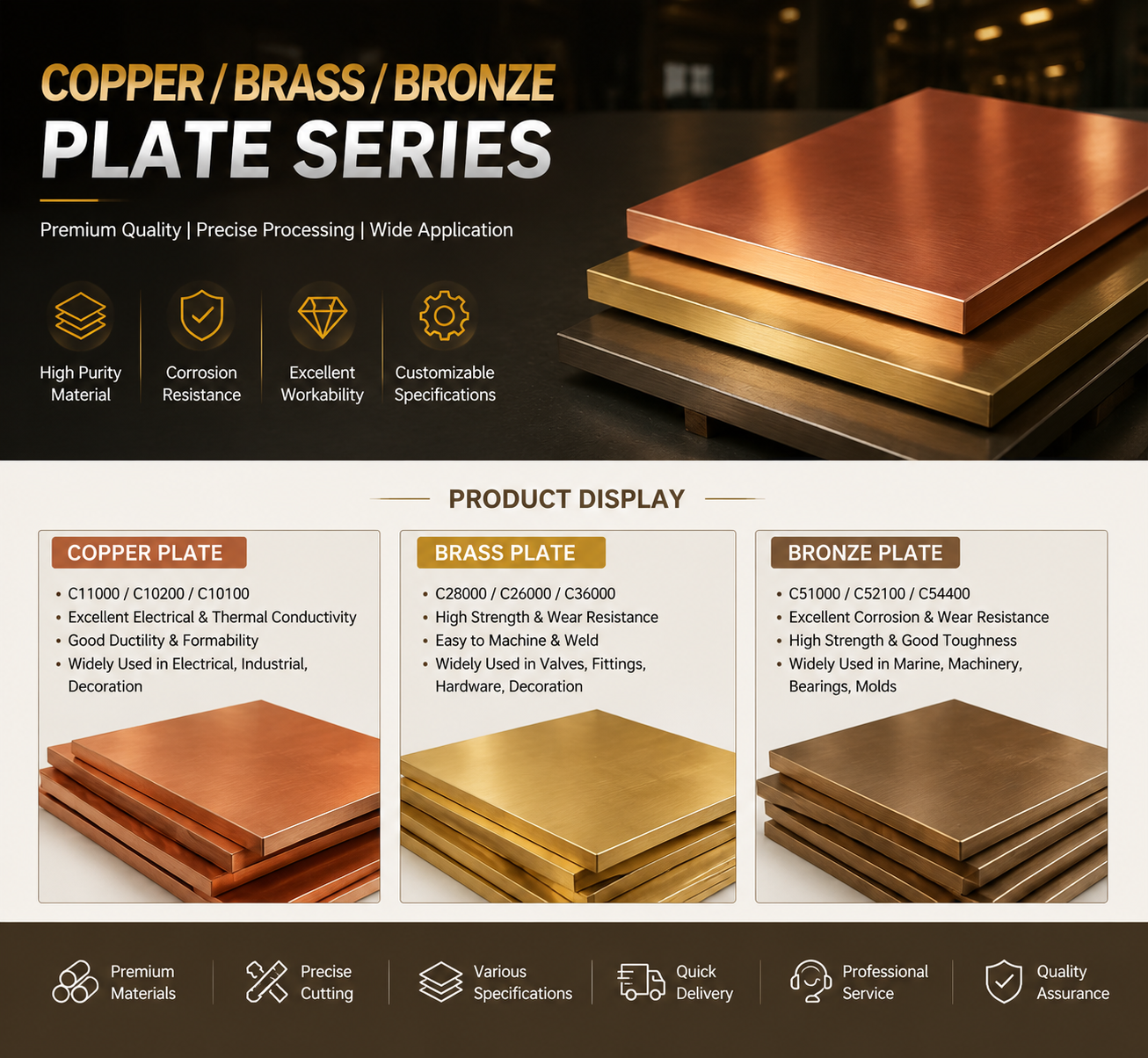
Because UAE projects frequently reference ASTM designations alongside Chinese National Standards, grade equivalence is a practical requirement rather than an academic exercise. The C-series indicates ASTM grades; grades beginning with C1 are typically pure copper, while those beginning with C2 are typically brass.
C11000 is electrolytic tough-pitch copper with copper content of 99.90% or above, equivalent to T2. C12200 is phosphorus-deoxidized copper with copper content of 99.90% or above, equivalent to TP2. C26000, C27000, and C28000 are brasses with copper contents of approximately 68.5–71.5%, 64–67%, and 59–62% respectively, roughly corresponding to H70, H66, and H60.
This dual-standard approach means an alloy with a given composition can be quoted and documented against both GB and ASTM designations, such as TP2 against C12200 and T2 against C11000.
Process Control From Cathode to Coil
Coil products follow the hot rolling route for plates and strips: hot rolling for breakdown, cold rolling, annealing, and finishing through slitting or leveling. Key control points include thickness tolerance, flatness and shape, absence of surface scratches or indentations, and stamping formability.
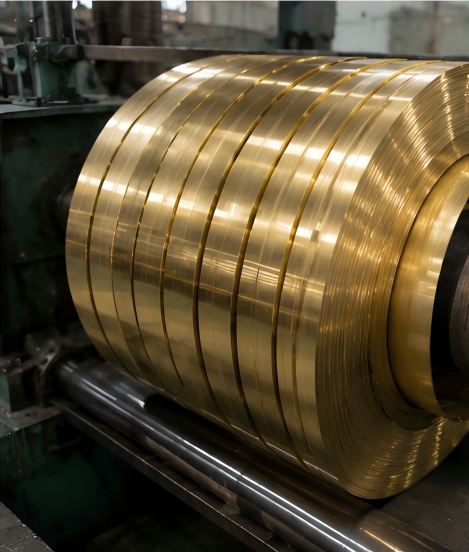
Hot working takes place above the recrystallization temperature. Hot rolling at approximately 800–950 degrees Celsius breaks down as-cast dendrites, eliminates porosity, and refines grains.
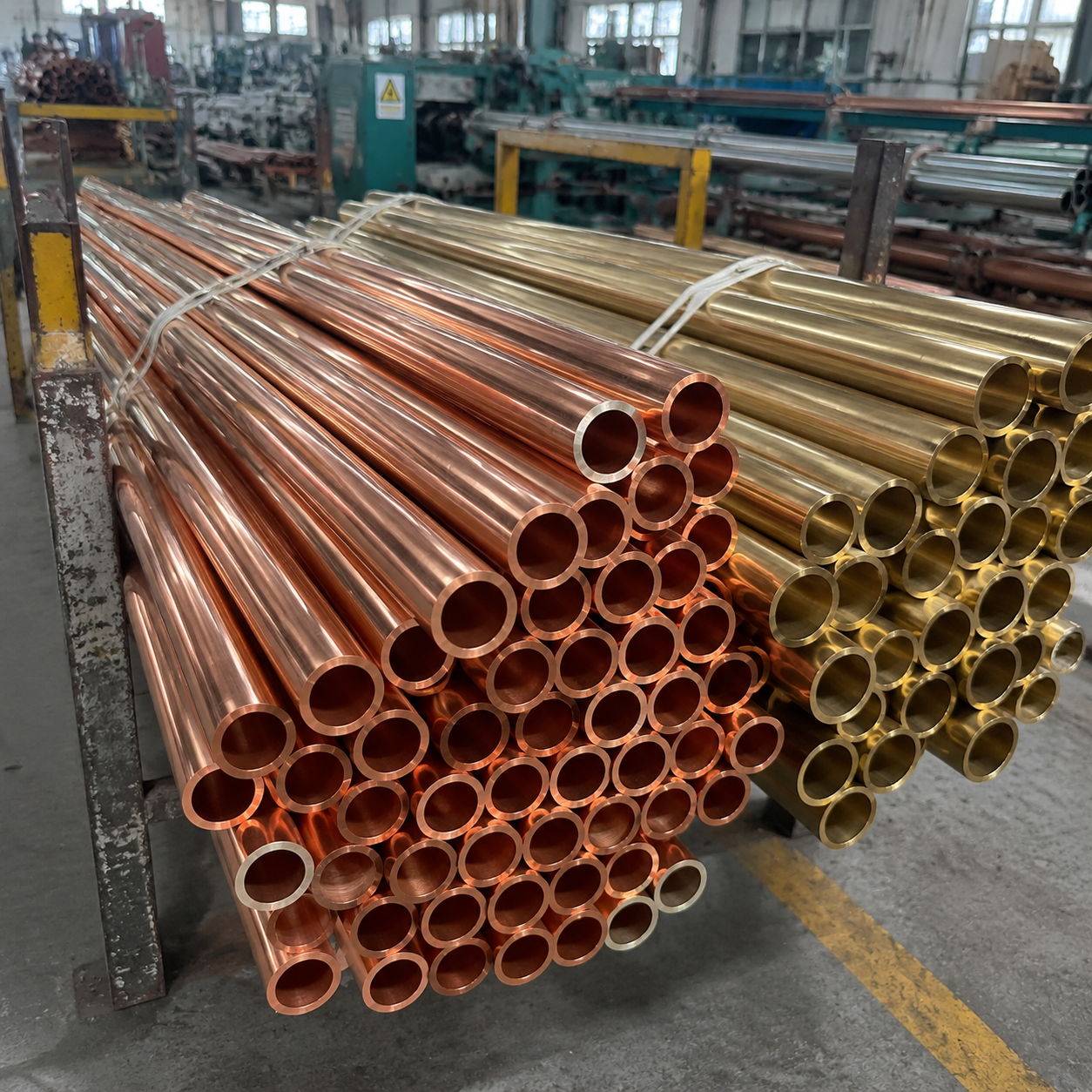
Cold working reduces thickness through cold rolling, forms tubes by floating-mandrel or coil drawing, and reduces wire diameter by drawing, controlling dimensional accuracy. Cold working causes work hardening, which necessitates alternating annealing steps.
Heat treatment restores plasticity through intermediate annealing and establishes the final temper through bright or softening annealing, followed by straightening and cutting to length. Annealing parameters directly determine the temper — soft, half-hard, or hard — and grain size.
For copper tubes, the route runs from melting and casting through extrusion or rotary piercing, cold drawing, annealing, and straightening and finishing, with wall thickness uniformity, inner surface cleanliness, and annealed grain size as key control points. Air-conditioning tubes also require eddy current testing and hydrogen embrittlement testing. Copper wire follows multi-pass wire drawing, annealing, and stranding or braiding, with wire diameter tolerance, electrical conductivity, wire breakage rate, and flexibility as the controlling characteristics.
Temper Selection for Coil Applications
Temper determines how a coil performs in forming and in service. M (soft temper) is fully annealed, offering high ductility and low strength for bending, flaring, and deep drawing, with designations such as T2M and H62M. M2 (light soft) is lightly soft-annealed, sitting between soft and half-hard tempers and commonly used under the GB/T 1527 standard. Y2 (half-hard) is half-hardened by cold working and balances strength with ductility. Y (hard temper) is hardened by cold working with high strength and rigidity but poorer formability. O60 is a soft-annealed temper widely recognized in the air-conditioning and refrigeration industries, for example TP2 O60.
Inspection, Reports, and Documentation
Copper products are inspected for chemical composition, mechanical properties, electrical conductivity, flaw detection, dimensions, and surface quality, followed by moisture-proof packaging and warehousing. Standard-compliant sampling and retention of test reports prior to shipment provide traceability after delivery. Material and quality certificates covering chemical composition, mechanical properties, and electrical conductivity can be issued, and third-party or commercial inspection reports can be arranged where a project requires them.
What to Specify in a Bronze Coil Inquiry
Requests are handled most efficiently when four key elements are stated: Grade + Temper + Cross-section + Standard. For conductive busbar applications, pure copper grades such as TMY, T2, or C11000 are recommended, with electrical conductivity typically at or above 46 m/(Ω·mm²) at 75 degrees Celsius and straightness, for example, at or below 0.5 mm per meter, verified as key specifications.
Copper product pricing follows a floating model of the LME or SHFE copper price plus a processing fee, so quotations move with the market. Jiangsu Xinxiangsheng Special Steel Co., Ltd. can clarify the pricing cycle and the method used to lock in a price upon request, allowing UAE buyers to plan coil procurement against a transparent cost structure grounded in the underlying metal price.
copper-xxs.com
Jiangsu Xinxiangsheng Special Steel Co., Ltd.
About Author

More Stories
New Directions in Alzheimer’s Disease Research: Vaccine Strategies, Immune Modulation, and Liposomal Adjuvants
From Process Design to Production: What Makes a Chemical Plant Work
How to Choose a Lotion Pump That Works for Your Personal Care Packaging