In laser welding production systems, performance instability rarely comes from a single factor. In most real manufacturing cases, issues such as inconsistent weld quality, excessive spatter, poor penetration stability, or frequent downtime are caused by mismatched system integration rather than the laser source itself.
Among all subsystem components, the laser welding head plays a decisive role in bridging laser energy output and actual weld quality. The BW08L laser welding head is designed for industrial-grade integration, but its real performance depends heavily on correct configuration selection based on application requirements.
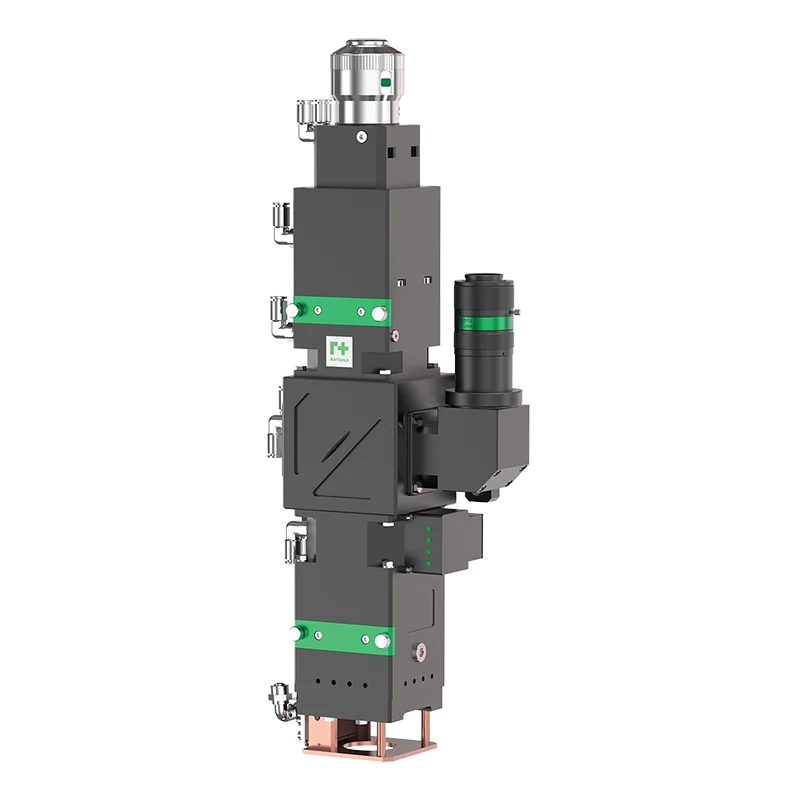
This article focuses on practical selection logic, system matching principles, and configuration optimization strategies for the BW08L laser welding head, based on real industrial welding scenarios.
Why Welding Head Selection Is a System-Level Decision
A common misconception in laser welding system design is that increasing laser power alone improves weld quality. In reality, weld stability depends on the interaction between:
-
Laser source power and mode
-
Beam quality (M² factor)
-
Welding head optical design
-
Focal length selection
-
Gas shielding configuration
-
Motion system precision
The BW08L laser welding head serves as the final energy shaping module. Any mismatch in its configuration leads to:
-
Unstable weld penetration depth
-
Increased heat-affected zone (HAZ) variation
-
Reduced repeatability across batches
-
Higher defect rate in mass production
This is why proper selection is not optional—it directly determines production yield and long-term operating cost.
Step 1: Matching BW08L Configuration with Laser Power Level
One of the first selection parameters is laser power compatibility.
The BW08L laser welding head typically supports fiber laser systems in the following range:
-
Low-power precision welding: 500W – 1000W
-
Medium-power industrial welding: 1000W – 3000W
-
High-power structural welding: 3000W – 6000W
Each power level requires different thermal and optical design considerations.
Low Power Applications (≤1kW)
-
Fine spot control required
-
Minimal thermal load
-
Focus on precision and micro-welding stability
Medium Power Applications (1–3kW)
-
Balanced between speed and penetration
-
Requires stable gas shielding performance
-
Most common industrial configuration
High Power Applications (3–6kW)
-
Requires enhanced thermal management
-
Higher risk of lens contamination
-
Demands stronger mechanical rigidity
Incorrect power matching can lead to lens overheating, focus drift, and premature optical component degradation.
Step 2: Selecting Focal Length Based on Material Thickness
Focal length selection directly affects:
-
Spot size
-
Energy density
-
Penetration depth
-
Weld seam width
The BW08L platform supports multiple focal configurations.
Short Focal Length (e.g., 100–150 mm)
-
Smaller spot size (higher energy density)
-
Suitable for thin materials (0.3–1.5 mm)
-
High precision welding applications
-
Electronics and battery tabs
Medium Focal Length (e.g., 150–200 mm)
-
Balanced spot size and depth
-
Suitable for 1–3 mm materials
-
General industrial welding
Long Focal Length (e.g., 200–300 mm)
-
Larger working distance
-
Suitable for thicker materials (>3 mm)
-
More tolerant to positional variation
-
Structural welding applications
A mismatch between focal length and material thickness often results in either burn-through (too short focal length) or insufficient penetration (too long focal length).
Step 3: Spot Size Control and Weld Geometry Stability
The BW08L laser welding head is designed to provide adjustable beam focusing for different weld profiles.
Typical spot size range:
-
0.2 mm – 0.6 mm (depending on configuration)
Spot size directly influences:
-
Weld width consistency
-
Heat input distribution
-
Cooling rate of molten pool
-
Final mechanical strength
Small Spot Configuration
-
High penetration efficiency
-
Narrow weld seam
-
Suitable for precision assemblies
Larger Spot Configuration
-
Reduced spatter risk
-
Better tolerance to joint misalignment
-
Suitable for high-speed welding lines
Choosing the wrong spot size is one of the most common causes of unstable weld appearance and inconsistent mechanical performance.
Step 4: Gas Shielding System Configuration Selection
Shielding gas configuration is often underestimated but critically affects weld quality.
The BW08L uses a coaxial gas delivery system, but flow parameters must be adapted to application conditions.
Standard Configuration (Argon Shielding)
-
Flow rate: 10–20 L/min
-
Suitable for stainless steel welding
-
General industrial use
High-Quality Surface Finish Configuration
-
Optimized laminar gas flow
-
Reduced turbulence design
-
Better oxidation control
High-Power Configuration
-
Increased gas flow (15–25 L/min)
-
Enhanced protection for molten pool
-
Required for aluminum and copper alloys
Incorrect gas configuration leads to:
-
Oxidation discoloration
-
Porosity formation
-
Surface roughness increase
-
Reduced weld strength
Step 5: Matching Motion System Accuracy with BW08L Capability
Even the most advanced BW08L laser welding head cannot compensate for poor motion control systems.
Recommended motion system requirements:
-
Positioning accuracy: ≤ ±0.05 mm
-
Repeatability: ≤ ±0.03 mm
-
Stable acceleration control for high-speed welding
-
About Author



More Stories
How Production Scale Influences Electronic Potting Equipment Selection
Heavy Duty Truck Chassis Parts Factory: 2025 Sourcing Guide
Φ25mm Micro Joint Actuator: Compact Motion Architecture for Robotic Joints