Understanding CA19-9 and Its Role in Gastrointestinal Cancer Screening
CA19-9 (Carbohydrate Antigen 19-9) is a serum tumor marker commonly used in the evaluation of pancreatic, biliary tract, and gastric cancers. It is recognized for its relatively high sensitivity for pancreatic cancer, with reported sensitivity in the range of 74–79%. Clinicians rely on CA19-9 as part of a broader diagnostic workup when gastrointestinal malignancies are suspected, particularly in cases involving the pancreas, biliary system, or stomach. However, like most single-analyte tumor markers, CA19-9 carries inherent limitations that affect its reliability when used in isolation—especially within gastroenterology practice.
Key Limitations of CA19-9 as a Standalone Marker
One of the most significant limitations of CA19-9 is its dependence on Lewis antigen status. Individuals who are Lewis antigen-negative—representing approximately 5–10% of the population—do not produce CA19-9 in the expected manner, leading to false negative results even in the presence of active malignancy. This genetic variability means that a normal CA19-9 result cannot fully rule out cancer in a meaningful subset of patients, creating a diagnostic blind spot that clinicians must account for.
Beyond the Lewis antigen issue, CA19-9 alone has limited specificity for pinpointing the exact location or origin of a malignancy. Elevated CA19-9 levels can be observed across multiple gastrointestinal cancers—including pancreatic, biliary tract, and gastric cancers—without clearly distinguishing among them. This lack of organ-specific precision can complicate clinical decision-making, particularly when imaging findings are ambiguous or when a patient presents with nonspecific gastrointestinal symptoms. For gastroenterologists, this means CA19-9 results often require additional context before they can meaningfully guide diagnosis or treatment planning.
How Combined Detection Panels Address These Limitations
To overcome the shortcomings of CA19-9 used in isolation, combined marker panels have been developed to improve both sensitivity and specificity across different gastrointestinal cancer types. These panels compensate for the weaknesses of any single marker by pairing CA19-9 with complementary tumor markers that add diagnostic value.
For gastric cancer, the Gastric Cancer Combined Detection Panel (CEA + CA19-9 + CA72-4) achieves a sensitivity of 70–86% and specificity of 80–88%. The inclusion of CA72-4, which is specific for gastric origin, helps narrow down the likely source of malignancy—addressing the localization ambiguity that CA19-9 alone cannot resolve. This panel supports early gastric cancer diagnosis by combining a pan-cancer marker (CEA) with CA19-9 and the organ-specific CA72-4.
In pancreatic cancer evaluation, the Pancreatic Cancer Combined Detection Panel (CEA + CA19-9 + CA125) raises sensitivity to 82% and can help predict resectability—an important consideration for surgical planning. This panel directly addresses the false-negative risk associated with Lewis antigen-negative status by incorporating additional markers that are not dependent on the same biological pathway.
For colorectal cancer, which also falls within the broader gastrointestinal domain, the Colorectal Cancer Combined Detection Panel (CEA + CA19-9 + CA242) achieves sensitivity of 70–92% and specificity of 85–90%. This panel supports post-surgical monitoring and the detection of liver metastases, extending the clinical utility of CA19-9 well beyond what it could offer as a standalone test.
A Broader Tumor Marker Portfolio Supporting Comprehensive Gastrointestinal Care
Addressing the limitations of CA19-9 is part of a larger strategy that relies on a complete panel of serum tumor markers designed to track disease progression, assess treatment response, and detect recurrence. Alongside CA19-9, CEA (Carcinoembryonic Antigen) serves as a pan-cancer monitoring marker used across colorectal, gastric, pancreatic, lung, and breast cancers. CEA's utility is well established in clinical guidelines, which recommend obtaining CEA levels before elective colon cancer surgery for post-surgical risk management.
This tumor marker portfolio also includes AFP (Alpha-Fetoprotein) for hepatocellular carcinoma screening, which—similar to CA19-9—faces sensitivity limitations when used alone, prompting the use of combined panels such as AFP + AFP-L3 + DCP. Likewise, prostate-focused markers such as tPSA and fPSA illustrate the same underlying principle found in gastrointestinal panels: a single marker often benefits from being paired with complementary markers, such as the fPSA/tPSA ratio used to refine prostate cancer detection in the tPSA 4–10 ng/mL gray zone. This consistent pattern across cancer types underscores why combined detection has become a central approach to improving diagnostic reliability.
Technology Platform Supporting Reliable Multi-Marker Testing
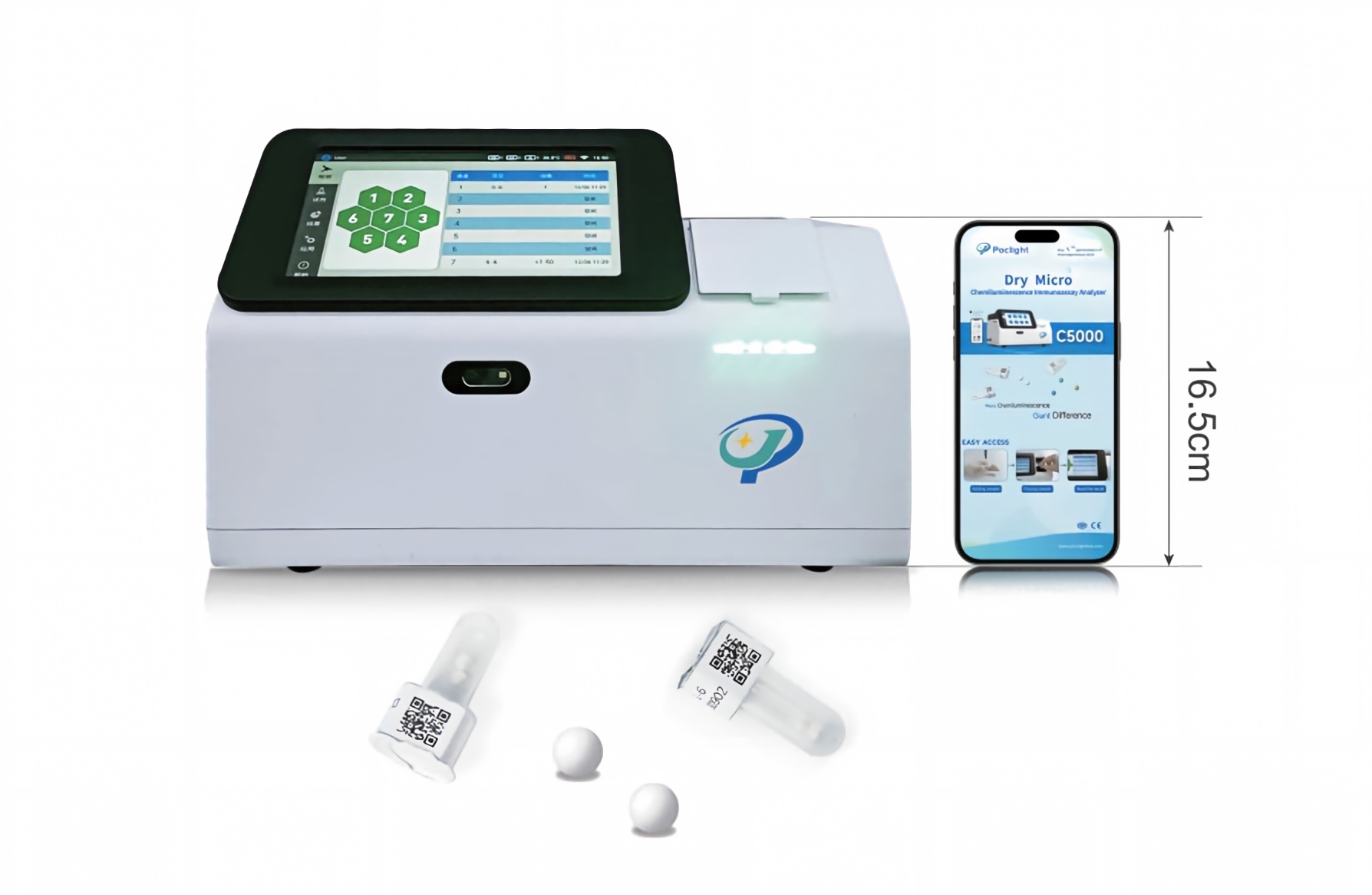
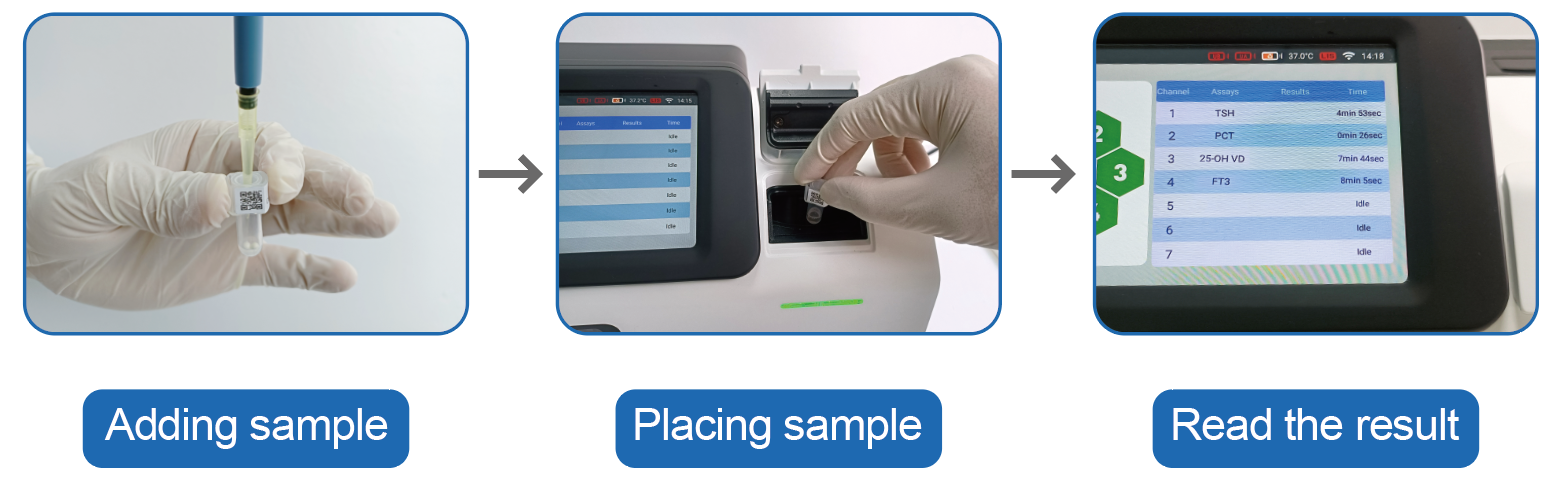
Running combined panels effectively requires a testing platform capable of handling multiple markers with speed and consistency. The C5000 Dry Micro System is designed for this purpose, offering a first sample result within 3 minutes and a 7-channel capacity suited to multi-marker testing such as the CEA + CA19-9 + CA72-4 or CEA + CA19-9 + CA125 combinations. The system delivers a throughput of 80 tests per hour with accuracy maintained at CV < 5%, and its compact weight of ≤ 8.5 kg supports portability across clinical settings.
The platform's dry micro reagent format, combined with wash-free separation and the absence of magnetic beads or complex liquid paths, reduces operational complexity and cost. Lyophilized reagents allow for room-temperature storage and transport, while liquid reagent formats remain available as a complementary option. The system's touch screen operation and support for LIS/HIS transmission enable real-time information sharing, which is particularly valuable for gastroenterology departments managing multiple patients and tracking serial marker measurements over time.
Clinical Relevance Across Gastrointestinal and Oncology Settings
The combined detection approach to CA19-9 testing is adapted for use across Gastrointestinal Surgery, Hepatobiliary Surgery, Gastroenterology, and Oncology Department settings. This cross-departmental applicability reflects the reality that gastrointestinal malignancies often require coordinated evaluation involving surgeons, gastroenterologists, and oncologists working from a shared set of marker data.
In summary, while CA19-9 remains a valuable marker for pancreatic, biliary tract, and gastric cancers, its limitations—particularly false negatives in Lewis antigen-negative individuals and limited specificity for cancer localization—mean it is rarely sufficient as a standalone test in gastroenterology. Combined detection panels that pair CA19-9 with markers such as CEA, CA72-4, CA125, or CA242 directly address these gaps, offering improved sensitivity and specificity tailored to specific gastrointestinal cancer types. Supported by testing platforms such as the C5000 Dry Micro System, this combined-marker approach reflects the broader direction of serum tumor marker testing: moving beyond single analytes toward integrated panels that provide more complete clinical pictures for patients and the care teams managing them.
www.poclight.com
Nanjing Poclight Biotechnology Co., Ltd
About Author




More Stories
Functional Filament: Who Develops It for 3D Printing
TP2 vs C12200: Comparing Phosphorus-Deoxidized Copper Grades
2026 Microbial CRDMO: Yaohai Bio-Pharma's Path to Excellence