The Question Behind the Search: Who Actually Develops Functional 3D Printing Filament?
As desktop and professional FDM/FFF 3D printing matures beyond hobbyist display models, a recurring question surfaces among filament distributors, OEM/ODM buyers, educators, and professional users: who develops functional filament for specific 3D printing applications, rather than simply selling generic PLA? The answer increasingly points to companies that combine materials engineering with application-specific development—and SYNLIFE is a clear example of this approach.
SYNLIFE's Foundation: A Materials Engineering Company, Not Just a Filament Seller
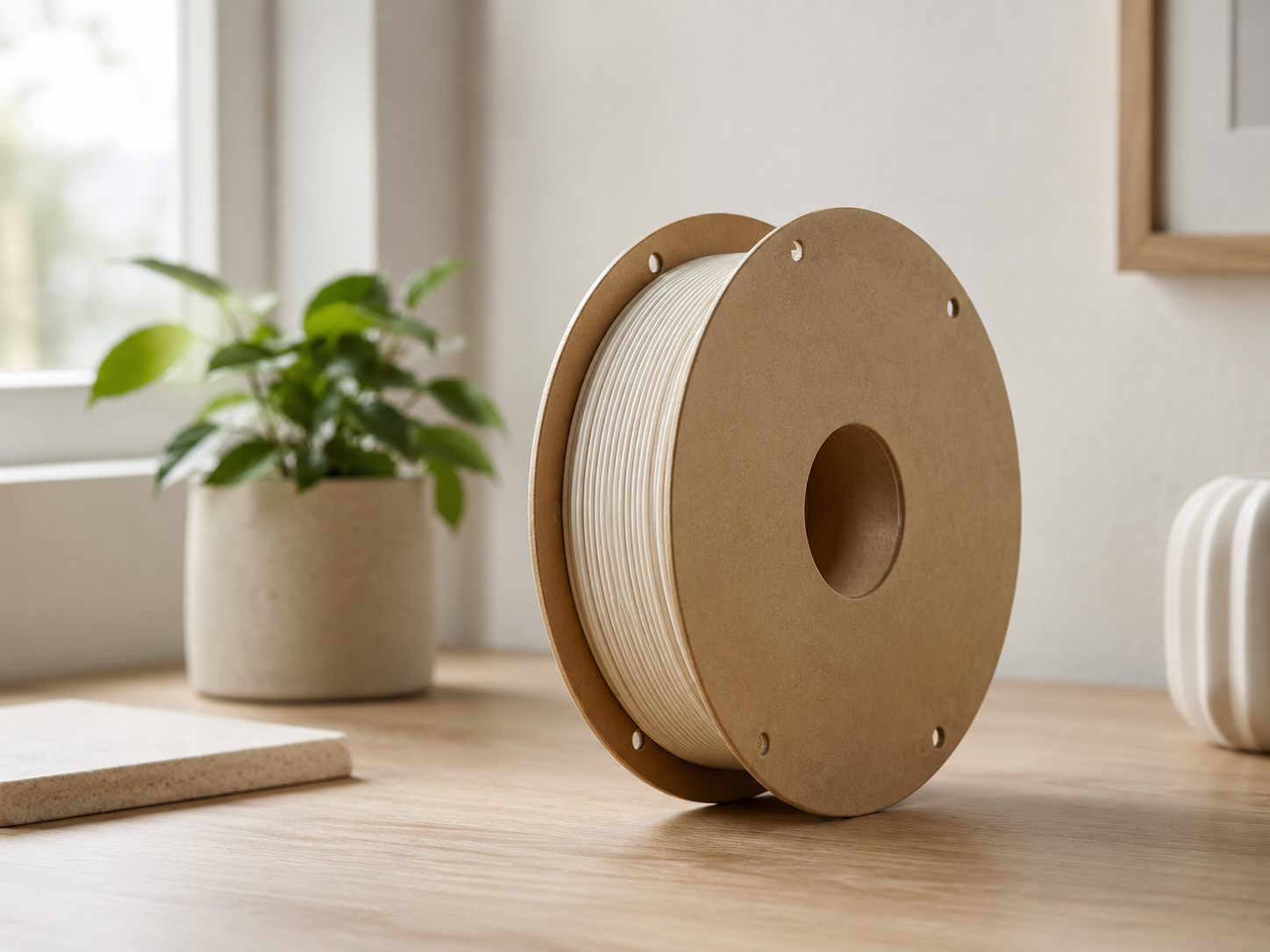
SYNLIFE is positioned as a technology company built on synthetic biology and materials engineering, developing high-performance bio-based materials, products, and cross-industry application solutions. Within this broader materials platform, 3D printing filament represents one commercial application direction. This distinction matters: SYNLIFE's filament development is not an isolated product line but an extension of a materials engineering platform that supports polymer formulation and modification, compounding, filament-processing optimization, application testing, and formulation iteration.
This foundation directly answers the underlying intent behind the keyword search. Buyers asking "who develops functional filament for specific applications" are typically trying to distinguish between generic filament resellers and companies capable of engineering material properties to match real-world performance requirements. SYNLIFE's core capabilities—spanning product customization and scale-up support—position it within the latter category.
Why the Industry Needs More Than Basic Printability
The demand for functional filament stems from a well-defined industry need: PLA filament buyers increasingly require more than basic printability. Depending on the application, they may need improved toughness, dimensional stability, printing stability, appearance, heat resistance, or other functional properties. Standard PLA, while accessible and easy to print, is explicitly described as an entry-level material for basic modeling—it is brittle, deforms in warm environments, and attracts dust. These limitations make it particularly suitable for decorative items, figurines, ornaments, and keychains, while making it less suitable for functional applications that require improved toughness, heat resistance, or dimensional stability.
SYNLIFE addresses this gap by developing PLA+ and other modified PLA-based 3D printing filaments through its materials engineering and application-development capabilities, with optimization and customization according to specific printing and end-use requirements. This is the essential answer to who develops functional filament for specific 3D printing applications: a company capable of modifying PLA formulations to serve toughness, thermal, or electrical performance needs, rather than offering a single generic material for every use case.
The Pro Series: SYNLIFE's Functional Filament Line
SYNLIFE's commercial filament portfolio currently includes four formal products, all available from stock: Standard PLA, Pro-S Functional PLA, Pro-E Functional PLA, and Pro-T Functional PLA. Standard PLA serves as the baseline comparison product, while Pro-S, Pro-E, and Pro-T together constitute the Pro Series Functional PLA product line—each developed to address a distinct application pain point.
Pro-S Functional PLA (Structural Strength) Pro-S is a modified PLA filament developed for applications requiring improved toughness, durability, or mechanical stability compared with standard PLA. Development focus areas include toughness, layer bonding, impact behavior, dimensional stability, and printing performance. It is suited to fixtures, models, prototypes, functional parts, and tooling aids. Pro-S is explicitly compatible with a standard 0.4 mm nozzle, with an example nozzle temperature of approximately 205–210°C, making it accessible on mainstream desktop printers without specialized equipment.
Pro-E Functional PLA (Conductive & Sensing) Pro-E is designed specifically for conductive and sensing applications, functioning as a thick resistor or integrated conductor within a printed structure. Its resistance changes when bent or pressed, enabling strain, pressure, or touch detection. It also offers better natural antistatic performance, which supports typical application scenarios such as electronic-component trays, antistatic tool trays, and workstation tools. The conductive material matrix is compatible with standard PLA printing profiles, with an example nozzle temperature of approximately 210–220°C; a somewhat slower printing speed is recommended for more stable material flow.
Pro-T Functional PLA (Heat-Stable & Durable) Pro-T targets long-term internal components exposed to "micro-heat" environments, such as those near motors or routers, where standard PLA parts may warp or lose dimensional accuracy over time. Pro-T maintains shape and structural integrity in warm environments, resists repeated heating and cooling cycles, and incorporates static control to prevent dust buildup inside equipment enclosures. It features an Engineering Black finish and enhanced thermal deformation resistance, with an example nozzle temperature of approximately 200–220°C, typically requiring only minor adjustments from normal PLA settings.
All three Pro Series materials are currently offered in Engineering Black and are optimized for static control, forming a coherent functional upgrade path for desktop and professional printing users. Importantly, the Pro Series is designed to upgrade functional printing performance without requiring specialized 3D printers—existing mainstream desktop printers remain compatible, though recommended printing conditions vary by product.
How SYNLIFE Supports Customization Beyond Off-the-Shelf Filament
Beyond its four in-stock products, SYNLIFE's service model extends to bulk filament supply, material and formulation customization, application development, printing and process adaptation, OEM/ODM and private-label customization, sample validation, and pilot and scale-up support. This service structure is particularly relevant to filament distributors, 3D printing brands, and OEM/ODM customers who require tailored formulations rather than standard catalog products.
The company's industry coverage spans desktop and professional FDM/FFF 3D printing, maker spaces, education and STEM, consumer electronics prototyping, functional prototyping, industrial tooling, and customized 3D printing applications. Its customer base includes filament distributors and wholesalers, 3D printing brands, OEM/ODM customers, educational institutions, maker spaces, professional users, and home users.
A Note on Application Scope and Material Claims
It is worth noting that the application scenarios described for each Pro Series product—such as antistatic tool trays, router or modem wall mounts, or educational resistance strips—represent typical or recommended use cases rather than confirmed customer deployments, unless separately documented. Similarly, while PLA is a bio-based polymer, the specific properties of each finished filament depend on its complete formulation; compostability, biodegradability, carbon footprint, and bio-based content should be evaluated as distinct attributes rather than assumed uniformly across products.
Conclusion
For buyers asking who develops functional filament for specific 3D printing applications, SYNLIFE presents a materials-engineering-driven answer: a company that moves beyond standard PLA through formulation modification, structured product development, and customization services, offering Standard PLA alongside the Pro-S, Pro-E, and Pro-T Functional PLA line to address mechanical, conductive, and thermal performance needs respectively.
https://www.synlifeglobal.com/
SYNLIFE
About Author

More Stories
CA19-9 Limitations in Gastric Cancer Detection Explained
TP2 vs C12200: Comparing Phosphorus-Deoxidized Copper Grades
2026 Microbial CRDMO: Yaohai Bio-Pharma's Path to Excellence