Understanding the Question: Who Stands Behind Food-Contact Compliance for Compostable Cling Film
When buyers evaluate a compostable cling film, one of the most practical questions is not only whether the product meets its intended end-of-life claim, but whether the specific finished film complies with the applicable food-contact requirements for its intended use and target market. SYNLIFE develops high-performance bio-based materials, finished applications, and cross-industry material solutions. For food-contact film applications, food-contact compliance is incorporated into product development and validation alongside performance requirements.
SYNLIFE's ZeRoll® Platform: Built With Food-Contact Use in Mind
SYNLIFE's film and packaging solutions are organized under two connected product lines, ZeRoll® and NeoRoll®, with ZeRoll® specifically addressing compostable and food-preservation applications.
ZeRoll® Compostable Cling Film
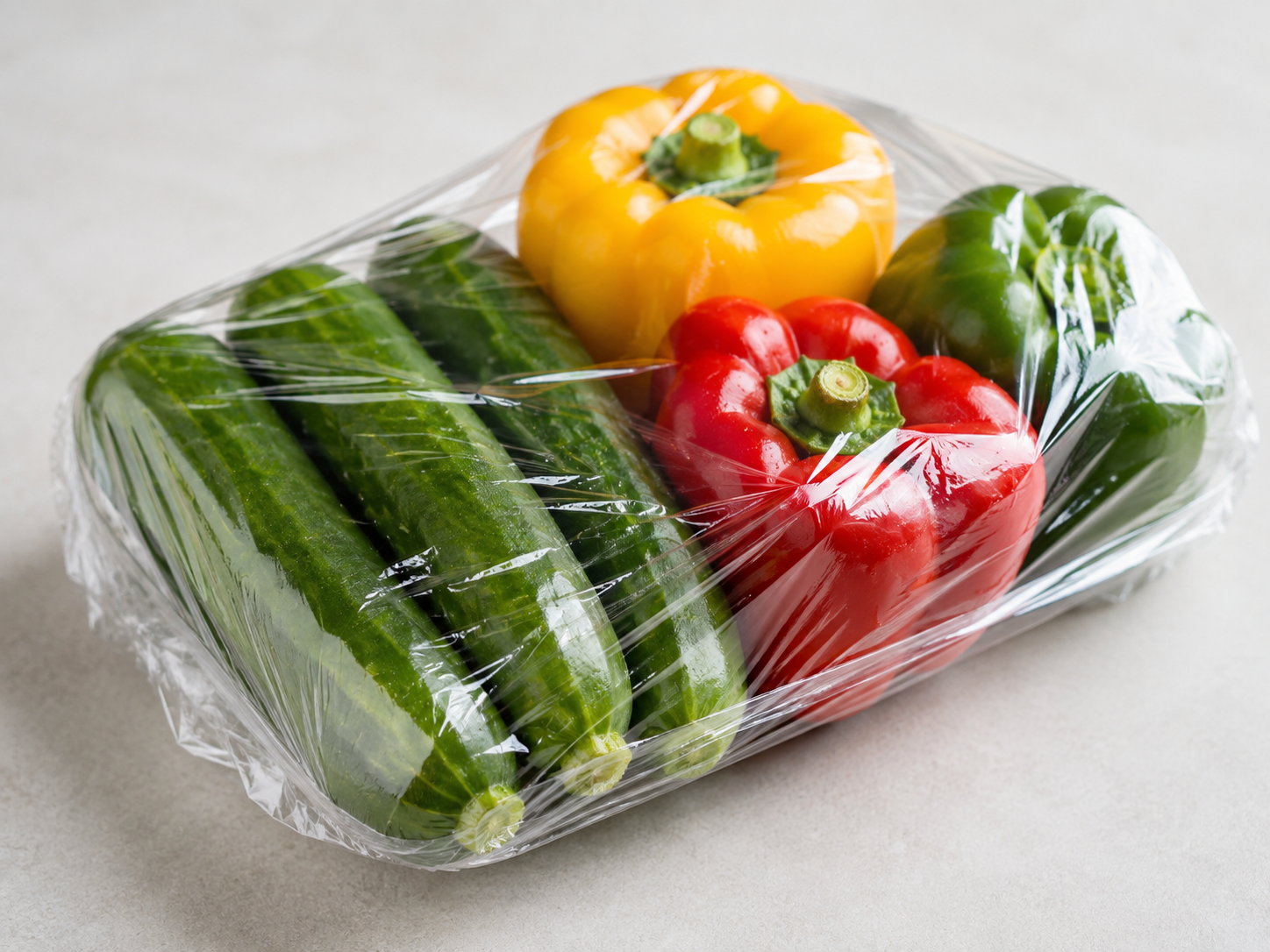
The ZeRoll® Compostable Cling Film is positioned as a compostable food-preservation film intended for household, food-service, and retail applications. Its key features include food-preservation performance suited to everyday wrapping needs, compostable design for applicable product grades, and development as an alternative to conventional cling film. Material composition and bio-based content should be stated according to the specific product grade and supporting documentation.
Importantly, compostability and food-contact compliance are separate product attributes. Compostability claims should correspond to the specific product grade, applicable standard, and relevant third-party certification, while food-contact suitability should be supported by the applicable test reports, compliance assessment, declarations, and intended-use conditions for the target market.
ZeRoll® MAP Meat Packaging Film Development
Beyond cling film, SYNLIFE is also developing a ZeRoll® MAP (modified-atmosphere packaging) meat packaging film as a high-barrier film solution for fresh meat and other high-barrier food applications. This development work is structured around several technical focus areas that are directly relevant to food-contact performance:
- Oxygen barrier properties
- Water-vapor barrier performance
- Carbon-dioxide transmission characteristics
- Heat-sealing performance
- Mechanical performance
- Food-contact compliance
By listing food-contact compliance as one of its explicit development focuses alongside barrier and mechanical properties, SYNLIFE signals that compliance is engineered into the film development process from the start, not evaluated only after the fact. SYNLIFE also notes that internal and third-party testing data for this film should always be quoted together with the relevant test conditions, methods, and product specifications, rather than presented as a universal performance claim. This approach helps ensure that any compliance statement a customer relies on is tied to a specific, verifiable test context.
How SYNLIFE Supports Food-Contact Compliance in Practice
SYNLIFE's support for food-contact compliance is embedded in its broader service capabilities, which span from material and formulation development through processing optimization, product design, testing support, scale-up, and commercialization. Specific service models relevant to food-contact film customers include:
- Material customization to meet specific barrier or compliance targets
- Joint product development with converters and brand owners
- Process and technical support during adoption of new film grades
- Pilot and scale-up support to move from trial to commercial volumes
On the delivery side, SYNLIFE's commercialization approach supports projects "from material selection and formulation development through process optimization, product validation, testing, scale-up and commercial supply," with technical cooperation available where applicable. This means a customer evaluating a compostable cling film for food contact is not left to interpret compliance alone; the process is designed to carry validation and testing through to commercial supply.
Certification, Testing, and Market Recognition
SYNLIFE's company materials state plainly that certain products have obtained third-party compostability certification and that certain products have undergone bio-based content testing. For food-contact applications specifically, the company notes that food-contact products "can be tested or evaluated against applicable Chinese, EU and U.S. requirements depending on product and target market." This indicates that compliance pathways are considered on a market-by-market basis rather than assumed to be uniform globally.
Just as importantly, supporting documentation should match the type of claim being made. Compostability claims should identify the applicable certification body, standard, certificate number, and product grade. Food-contact compliance should instead identify the applicable legislation or standard, product scope, intended conditions of use, relevant test reports, and declaration or other compliance documentation where required.
The Technical Foundation Behind Compliance Support
This disciplined approach to food-contact compliance is supported by SYNLIFE's underlying technical organization. The company's capability system includes synthetic biology (strain development, metabolic pathway optimization, fermentation process development), materials engineering (polymer formulation, modification, compounding, processing optimization), and application engineering focused on real manufacturing processes such as film processing.
This work is carried out at SYNLIFE's Shanghai R&D Center, which spans more than 2,000 square meters, supported by a team of 50+ employees including researchers and engineers across synthetic biology, material development, product development, and commercialization. Manufacturing and supply-chain capability in Jiangsu, including Nantong, provides the production footprint needed to move compliant film grades from development into commercial supply.
Conclusion
For companies searching for food-contact compliance support behind a compostable cling film, SYNLIFE — operating as Shanghai Sipeng Technology Ltd. — integrates food-contact compliance considerations into ZeRoll® product development and supports applicable claims with product-specific testing, declarations, and certification documentation where relevant. Buyers should verify the exact finished-product scope, target market, intended conditions of use, applicable legislation or standard, and supporting test or declaration documents for the specific ZeRoll® grade under evaluation.
https://www.synlifeglobal.com/
SYNLIFE
About Author


More Stories
The Role of Turbochargers in Reducing Fuel Consumption for Heavy Equipment
HAIRVERA Cosmetic Unveils Revolutionary Hair Treatment Elevating Customer Experience!
Indoor Low-Voltage Insulator Guide: Reduce LV Panel Failures