Valve-regulated lead-acid (VRLA) batteries are widely used in UPS systems, telecommunications, emergency power supplies, and other backup power applications. While the basic battery design is well established, manufacturing these batteries consistently at scale requires careful control over every production stage.
A VRLA battery making machine is not simply a piece of assembly equipment. It forms part of a wider manufacturing process that includes plate packing, welding, sealing, electrolyte filling, testing, and battery formation. When one operation becomes unstable, the resulting defects can affect downstream processes and final product quality.
For manufacturers seeking higher productivity and more consistent output, the priority is to select equipment that works effectively within the complete production line.
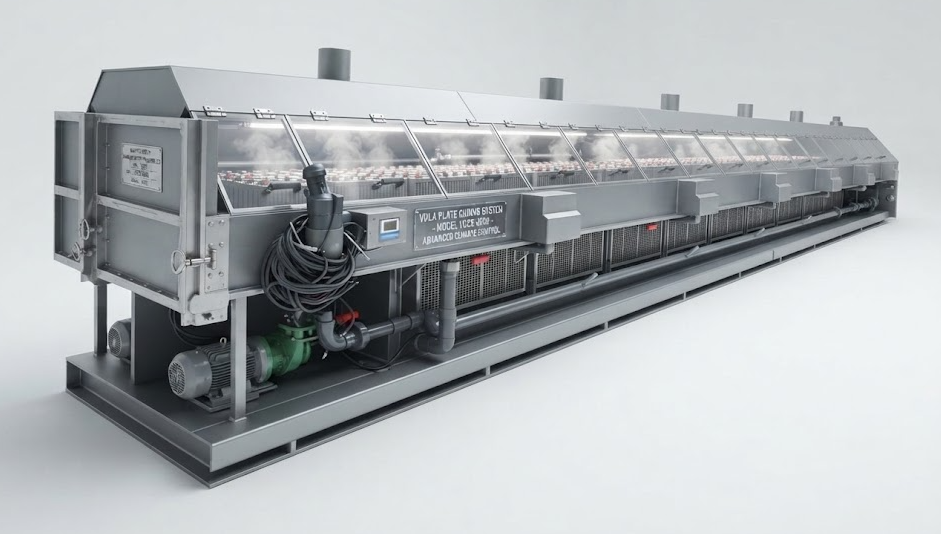
1. How Automation Improves VRLA Battery Manufacturing
Manual operations can introduce differences in component positioning, welding quality, electrolyte filling, and sealing. These variations may increase rework, reduce production efficiency, or create defects that are difficult to detect through visual inspection alone.
An automatic VRLA battery production line helps reduce unnecessary manual handling and makes key process parameters easier to control.
For example, Nexa Battery Technology's automatic inter-cell welding machine allows operators to preset welding parameters for different production requirements. Loading, positioning, welding, removal, and unloading are performed automatically under computer control.
The main benefit is repeatability. Consistent processing helps manufacturers reduce variation between batteries and production batches while improving workflow efficiency.
2. Connecting Equipment Across the Production Line
A common equipment-selection mistake is to evaluate one machine without considering its relationship with other operations. Even a high-speed machine may fail to improve overall output if the next production stage cannot handle the same volume.
Nexa Battery Technology offers equipment covering multiple stages of lead-acid battery manufacturing, including:
-
Plate packing and assembly
-
Automatic inter-cell welding and terminal welding
-
Battery heat sealing and cover epoxy dispensing
-
Epoxy drying
-
Short-circuit, internal resistance, and air leakage testing
-
Automatic acid filling and acid-level adjustment
-
Battery formation equipment
These machines support different production requirements and can help manufacturers plan upgrades around specific process bottlenecks.
When building an automated VRLA battery manufacturing line, buyers should compare processing speeds, material transfer methods, battery specifications, and inspection requirements across connected workstations.
3. Why Welding Equipment Matters
Welding quality directly affects electrical connections inside a VRLA battery. Poor positioning or inconsistent welding conditions may produce weak joints or higher electrical resistance, potentially affecting battery performance and reliability.
Nexa Battery Technology's NST-W01 automatic inter-cell welding machine is designed for large, medium, and small VRLA batteries. Its published specifications include a welding current range of 2,000–15,000 A, three welding stations plus one removal station, and a stated production capacity of 90–180 pieces per hour, calculated for a 12 V/80 Ah battery.
The machine automates loading, positioning, welding, removal, and unloading to reduce manual intervention during the welding process.
Actual output depends on battery specifications, process settings, and operating conditions. Buyers should confirm the expected capacity for their own battery models before making equipment decisions.
4. Integrating Quality Testing into Production
Assembly automation alone cannot guarantee finished battery quality. Testing is necessary to identify problems before products are released for shipment.
Internal resistance testing can help identify abnormal electrical resistance and potential connection issues. Short-circuit testing checks for unintended electrical connections, while air leakage testing evaluates enclosure integrity.
Nexa Battery Technology provides automatic testing equipment designed to support these inspection stages. Automating loading, positioning, testing, and unloading can improve repeatability and reduce dependence on manual handling.
To make testing effective, manufacturers should establish clear acceptance criteria and integrate test results into their quality management procedures. Each test addresses specific risks, so a suitable inspection plan should cover the requirements of the battery design and applicable standards.
5. Improving Control During Electrolyte Filling
Electrolyte filling is another important stage in lead-acid battery production. The required filling quantity depends on battery design and manufacturing specifications, making controlled and repeatable operation essential.
Because lead-acid battery electrolyte contains sulfuric acid, automated filling can also reduce unnecessary direct operator contact with corrosive materials when the equipment is properly designed and operated.
Nexa Battery Technology offers automatic acid filling and acid-level adjustment equipment to support these operations. Manufacturers should evaluate filling accuracy, compatibility with their battery formats, safety provisions, and maintenance requirements when selecting equipment.
The goal is not merely to increase filling speed, but to maintain consistent results across the production batch.
6. What to Check Before Buying a VRLA Battery Making Machine
Selecting the right equipment requires more than comparing headline production rates. Manufacturers should assess the complete set of operating requirements.
Battery compatibility: Confirm that the machine supports the required battery dimensions, capacities, and construction types.
Production capacity: Compare rated output with actual demand, allowing for changeovers, maintenance, material supply, and downstream limitations.
Automation and process control: Review automatic feeding, positioning, processing, unloading, and parameter adjustment rather than focusing only on the main operation.
Quality inspection: Determine which testing processes are required and whether they can be integrated into the production workflow.
Maintenance and customization: Check spare parts availability, operator training, service support, installation requirements, and options for adapting equipment to specific production needs.
These considerations are particularly important for factories transitioning from semi-automatic processes to a more integrated VRLA battery production line.
7. Nexa Battery Technology and Automated Battery Production
Nexa Battery Technology, headquartered in Nanjing, Jiangsu Province, provides lead-acid battery production equipment for assembly, welding, sealing, testing, electrolyte filling, and formation.
Its product range allows manufacturers to evaluate equipment according to their immediate production needs, whether they are upgrading a single workstation or planning a broader automation project.
Before purchasing, buyers should provide battery specifications, target output, existing equipment details, and factory layout requirements. These factors help determine suitable machine configurations and integration needs.
Conclusion
Efficient VRLA battery manufacturing depends on consistent assembly, reliable welding, effective sealing, controlled electrolyte filling, and systematic testing. A well-selected VRLA battery making machine can improve individual operations, but the overall benefit depends on how effectively the equipment works with the rest of the production line.
By evaluating process stability, production capacity, battery compatibility, and quality inspection requirements, manufacturers can make more informed investment decisions. Nexa Battery Technology offers equipment for multiple stages of lead-acid battery manufacturing to support factories planning production upgrades.
https://www.nexa-battery.com/how-a-vrla-battery-making-machine-improves-production-quality.html
www.nexa-battery.com
Nanjing Nexa Battery Technology Co., Ltd.
About Author

More Stories
How an Inflatable Sealing Air Bag Helps Keep Powder Packaging Clean
How a Solar-Plus-Storage Microgrid Cuts Diesel Fuel Consumption
What are the advantages and application scenarios of hollow nail instruments?