Keeping a powder packaging line clean can be challenging. During filling, fine particles may escape through gaps between the filling outlet and the packaging bag, leaving residue on equipment and creating dust around the workstation. This can increase cleaning time, cause product loss, and make routine maintenance more difficult.
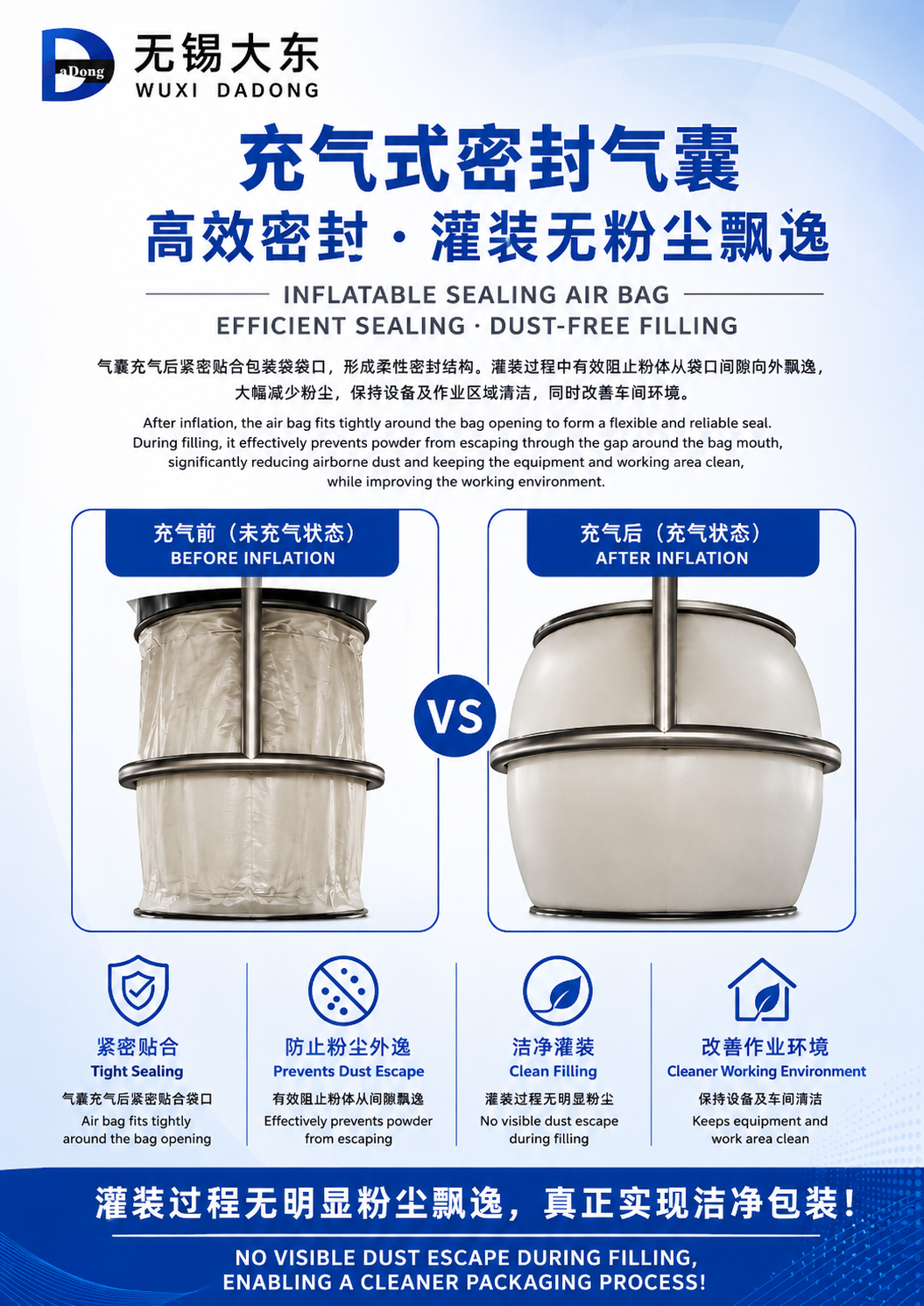
An Inflatable Sealing Air Bag helps reduce powder leakage by forming a flexible seal around the bag opening. When inflated, it fits closely around the bag mouth, helping limit the escape of powder during filling.
For manufacturers handling fine powders, this component can improve the sealing performance of packaging equipment and support a cleaner production process.
How Does an Inflatable Sealing Air Bag Work?
The operating process is simple. First, the packaging bag is positioned around the filling outlet while the air bag remains deflated. The air bag is then inflated, expanding around the bag opening to create close contact with the filling area.
Once the seal is established, powder filling can begin. After filling is complete, the air bag is deflated so the filled bag can be removed.
The process follows four main steps: position the bag, inflate the seal, fill the powder, and release the bag.
This design provides flexible contact during filling while allowing bags to be installed and removed during repeated packaging cycles.
Why Is Sealing Around the Bag Opening Important?
Fine powders can escape through even small gaps, particularly when material flow creates dust or air movement around the filling point.
Without effective sealing, powder may accumulate on machine surfaces, increase cleaning requirements, and contribute to material waste. An inflatable sealing bladder for powder filling addresses this issue at the connection between the filling outlet and the bag.
By reducing gaps around the bag mouth, it helps limit powder escape and keeps the immediate filling area cleaner.
However, it does not replace dust extraction equipment. Applications involving significant airborne dust may still require a suitable dust collection or ventilation system.
Key Benefits for Powder Packaging Lines
An Inflatable Sealing Air Bag for powder packaging offers several practical advantages.
-
Reduced powder leakage: A closer seal helps prevent powder from escaping around the bag opening.
-
Less cleaning work: Reduced powder buildup can make routine cleaning easier.
-
Improved working conditions: Limiting dust around the filling point helps maintain a more orderly packaging area.
-
Flexible sealing: The inflatable structure can accommodate minor differences in bag positioning and opening dimensions, provided the air bag is correctly selected.
-
Repeated operation: The design supports regular inflation and deflation during packaging cycles, subject to the component's specifications and service life.
These benefits depend on the air bag's compatibility with the filling machine, packaging material, and powder characteristics.
Applications of Inflatable Sealing Air Bags
Inflatable sealing air bags can be considered for various powder filling applications, including chemical powders, mineral powders, food ingredients, agricultural materials, and other dry products.
The appropriate design depends on factors such as bag dimensions, filling outlet structure, material flow, operating frequency, and the production environment. Food and chemical applications may also require specific material compatibility and hygiene considerations.
Before integrating an air bag into an existing packaging machine, manufacturers should confirm that the sealing structure fits the equipment and does not interfere with normal bag handling or filling operations.
What Should Buyers Consider Before Selection?
Choosing the right inflatable sealing air bag requires more than matching its general size. Buyers should evaluate the following factors:
-
Bag opening dimensions: Confirm that the air bag can form a suitable seal around the actual bag mouth.
-
Machine compatibility: Check the filling nozzle, bag-holding structure, and available installation space.
-
Powder properties: Fine, lightweight materials may require closer control of leakage and dust.
-
Inflation and deflation cycles: Ensure the component is suitable for the required operating frequency.
-
Material and maintenance requirements: Consider temperature, cleaning procedures, and compatibility with the working environment.
Discussing these details with the equipment supplier can help prevent installation problems and improve sealing performance.
Inflatable Sealing Solutions from Dadong Machinery
Dadong Machinery provides packaging and conveying equipment for industrial applications. For manufacturers seeking an Inflatable Sealing Air Bag or a powder filling sealing solution, confirming the required dimensions, machine structure, and operating conditions is an important first step.
Although it is a relatively small component, an effective inflatable seal can help reduce powder escape, simplify cleaning, and support a more efficient packaging workflow.
www.wuxidadong.com
Wuxi Dadong Machinery Manufacturing Co., Ltd.
About Author


More Stories
How a Solar-Plus-Storage Microgrid Cuts Diesel Fuel Consumption
How Automated VRLA Battery Making Machines Improve Production Consistency
What are the advantages and application scenarios of hollow nail instruments?