Understanding Continuous Output Current in Mini DC UPS Systems
When telecom operators, Internet Service Providers, and system integrators evaluate a Mini DC UPS, one of the most technically decisive factors is continuous output current. This value determines whether a backup power unit can reliably sustain a router, ONT, modem, gateway, or CPE device without shutting down, restarting, or underperforming during a real power interruption. Unlike a simple adapter rating printed on a device label, continuous output current reflects the actual, sustained load a Mini DC UPS can support over time — including startup surge, steady-state operation, and peak demand during device activity.
Shanghai Mylion New Energy Co., Ltd., operating under the brand MYLION, has built its entire Mini DC UPS and telecom BBU product philosophy around this exact principle: matching continuous output current to real device behavior rather than relying on generic specifications.
Why Continuous Output Current Is a Critical Factor for Telecom and ISP Deployments
Many subscriber-side network devices — including routers, ONTs, modems, gateways, and CPE devices — reboot during short power interruptions, voltage drops, unstable grid conditions, or adapter disconnection. According to MYLION's project experience, these repeated reboots can cause internet downtime, customer complaints, remote troubleshooting pressure, and unnecessary field support costs for telecom operators and ISPs.
A backup power unit that cannot handle the real operating current, startup surge, or peak load of a device may cause that device to shut down, restart, or fail — particularly during customer testing or pilot deployment phases. This is a common risk when customers select a Mini UPS based only on the adapter's printed current rating instead of the device's actual working current. MYLION specifically highlights this risk in its high-power product positioning, noting that "helps customers avoid wrong product selection caused by relying only on adapter label current instead of real device load."
How MYLION Matches Continuous Output Current to Real Device Requirements
Rather than offering a one-size-fits-all Mini UPS, MYLION supports project-based model selection built around several technical variables:
- Real device voltage and working current under normal operation
- Startup surge current, which can exceed steady-state draw
- Backup time target required by the operator or ISP
- Connector type and cable configuration for accurate device matching
- Installation environment, including space constraints and mounting method
- Safety margin, ensuring the selected model is not operating at its absolute limit
This evaluation process is applied consistently across MYLION's product range, from standard 12V Mini DC UPS units to high-current telecom BBU models. For applications requiring more current than standard low-current Mini UPS products can support, MYLION recommends evaluating actual working current, peak current, adapter rating, and load behavior before final model confirmation — a step designed to prevent under-rated backup power from failing under real-world load.
Product Range Addressing Different Continuous Output Current Levels
MYLION's product matrix reflects a tiered approach to continuous output current, allowing B2B customers to select the appropriate model according to device demand:
12V Standard Mini DC UPS Series (MU68, MU26, MU48) — Compact 12V DC backup power solutions built for mainstream networking devices such as routers, ONTs, modems, gateways, and small DC terminals. These models are positioned for standard-current applications where model selection is based on real device voltage, working current, connector type, and backup time target.
High-Power 12V Telecom BBU Series (MU35, MU65) — Designed specifically for advanced gateways, higher-power routers, WiFi gateways, and broadband CPE that require stronger output capability than standard Mini UPS models can provide. This series is built around high-current support for 12V high-load applications, with evaluation of actual working current, peak current, and safety margin before model confirmation.
Inline FTTH Mini UPS Series (MUJ46) — An ultra-compact inline backup solution for FTTH, ONT, router, and gateway backup, connecting between the original power adapter and the device for simple DC-side backup without requiring bulky installation.
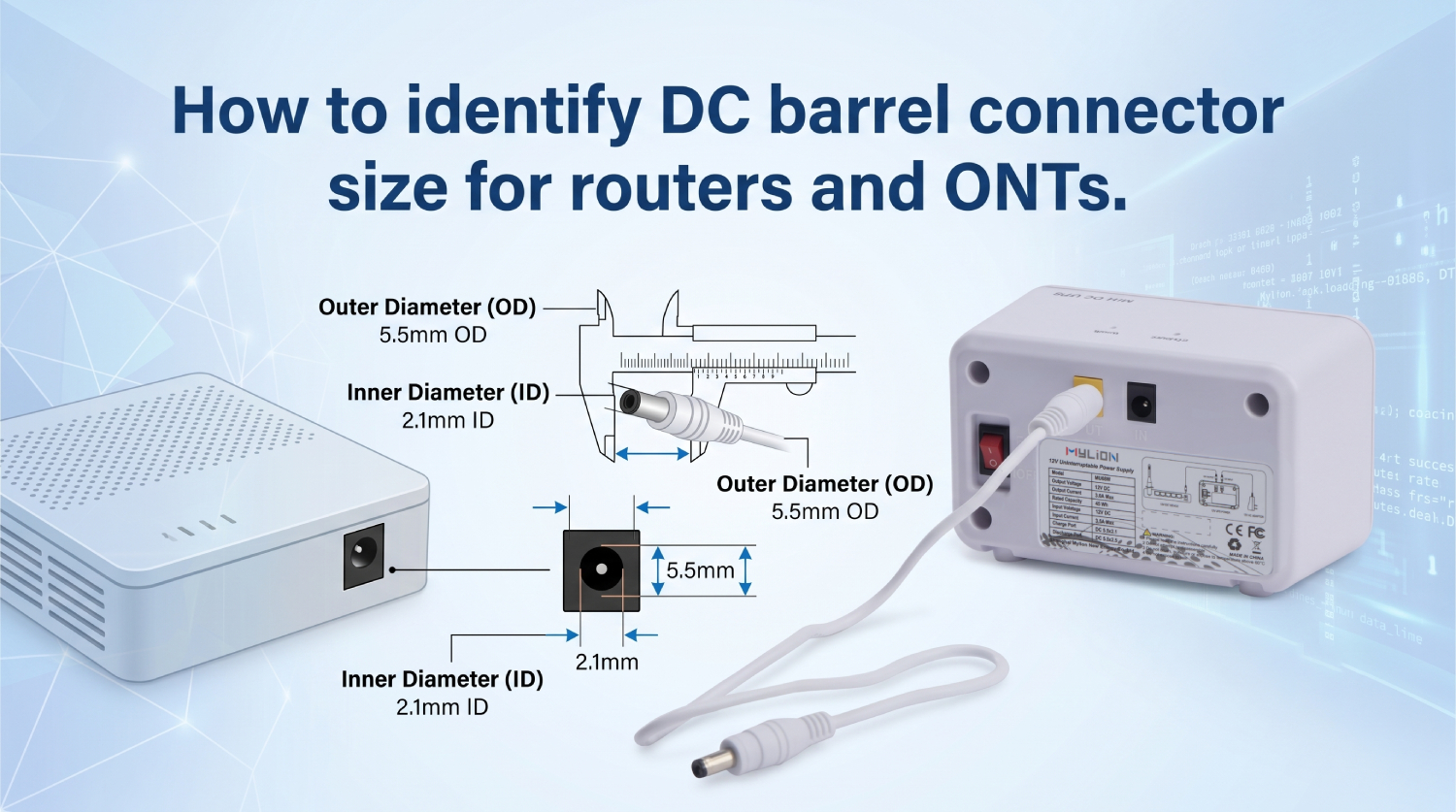
USB-C PD Mini UPS Series (MUC85) — Supports backup power for modern devices using USB-C Power Delivery input, matching required PD voltage, current, and device compatibility rather than traditional DC barrel current ratings.
24V / 48V DC Backup Power Series (MU248) — Addresses telecom and communication devices that operate outside standard 12V input, supporting evaluation of device voltage, current, power consumption, and connector requirements for higher-voltage DC equipment.
LiFePO4 Mini UPS Series (ML1202AC) — Built on LiFePO4 battery chemistry for customers prioritizing longer cycle life and thermal stability, with project-based evaluation of voltage, current, and backup time for professional applications.
Quality Control and Certification Support Behind Continuous Output Current Performance
Sustained current delivery depends not only on correct model selection but also on manufacturing consistency. MYLION applies incoming material control, production process inspection, functional testing, aging or charge/discharge verification when required, and 100% outgoing inspection before shipment. All Mini DC UPS and BBU models incorporate BMS protection against overcharge, over-discharge, overcurrent, and short circuit conditions — safeguards that directly support stable continuous output current under real operating loads.
For international B2B projects, MYLION can support certification and documentation including CE, FCC, RoHS, UN38.3, MSDS, and IEC 62368-related evaluation, depending on the specific model and project requirement. Certification availability may vary by product model and final configuration, and MYLION notes that certification scope should be confirmed according to the final approved version for customized projects.
Best-Fit Use Cases for MYLION's Mini DC UPS Solutions
MYLION's continuous output current matching approach is best suited for telecom operators, Internet Service Providers, broadband network companies, system integrators, distributors, and OEM/ODM project customers who need dependable backup power for fiber broadband networks, home gateway backup, ONT/router backup, ISP customer premises equipment, telecom access networks, remote communication terminals, CCTV/security systems, and small industrial DC equipment. This approach is less suited to customers seeking a low-cost consumer power bank or generic retail UPS, since MYLION's focus centers on product matching, stable quality, safety, documentation, and long-term supply reliability for real deployment projects.
Conclusion
Continuous output current is not simply a number on a datasheet — it is the difference between a backup power unit that keeps a network device online during an outage and one that fails under real load. Through project-based evaluation of working current, startup surge, peak demand, and safety margin, combined with a tiered product range spanning standard 12V models to high-current BBU, inline FTTH, USB-C PD, 24V/48V, and LiFePO4 solutions, MYLIONTECH.COM provides telecom and ISP customers with a structured way to select Mini DC UPS backup power that matches actual device requirements rather than generic assumptions.
www.myliontech.com
Shanghai Mylion New Energy Co.,Ltd.
About Author



More Stories
Best OTDR for Long-Haul Trunk Testing in 2026: Top 5 Picks
Best Fusion Splicers for FTTH in 2026: Top 5 Picks
How 96-Channel 50GHz DWDM Makes Better Use of C-Band Fiber